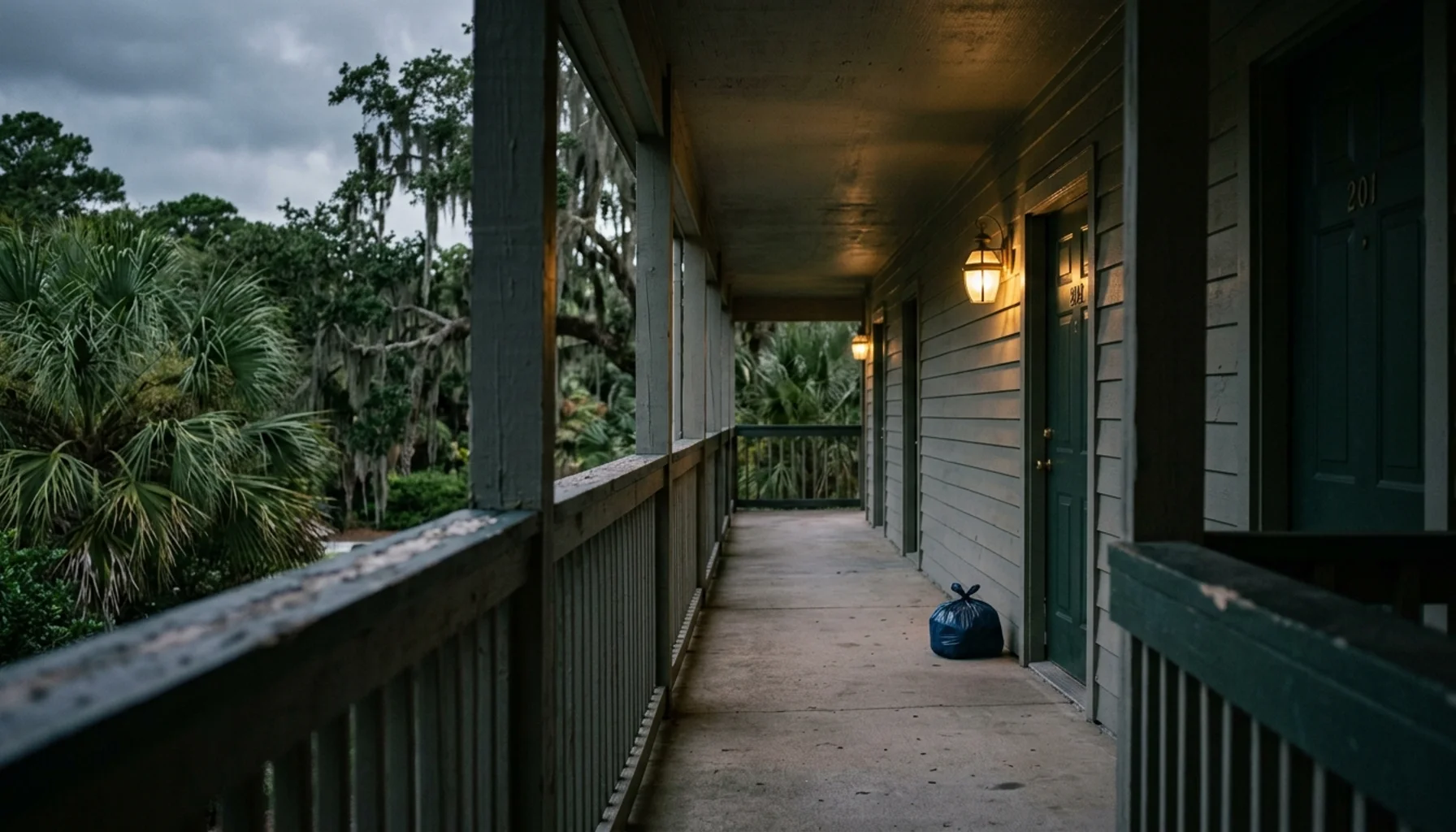
Valet trash companies use photo verification at every door because a timestamped photo is the one record that proves a specific unit was serviced on a specific night. It replaces disputed memories with evidence, spares property managers hallway walk-throughs, and holds the vendor accountable for each stop rather than just the route.
Key Takeaways
- Photo verification means a timestamped image taken at each unit's door during a nightly valet trash visit and stored for the property manager to review.
- A per-door photo documents an individual stop; a general route log only shows that a technician was on site.
- Trash Day Made Easy photo-verifies every service visit, so managers get confirmation without reminders or follow-up calls.
- A photo proves a visit happened. It does not prove that residents bagged waste correctly or that the dumpster had room.
- Before you sign with any vendor in 2026, ask how long records are kept, whether you can view them yourself, how fast photos appear, and whether every door is covered.
- Small properties with a single compactor and few units may not need nightly service at all.
Picture a Monday morning at a garden-style community off Rivers Avenue in North Charleston. A resident says her bag sat outside the breezeway for three days. The manager has no way to tell whether the crew skipped the door or the bag went out after the crew had already passed. Per-door photos close that gap.
Valet trash, also called doorstep trash collection, is a nightly service where crews collect bagged waste from outside each unit and carry it to the dumpster or compactor. In 2026 it is a familiar amenity at apartment communities, build-to-rent neighborhoods, and HOA townhome rows across the Lowcountry. We run it every night, and the first question managers ask is how they will know it happened.
This guide explains why photo documentation exists, what it proves, where it falls short, and what to ask a vendor before you sign.
What Is Valet Trash Service, and What Does Photo Verification Mean?
Valet trash service is a scheduled doorstep collection program in which crews pick up residents' bagged waste from outside each unit and carry it to the property's dumpster or compactor. Photo verification means the crew photographs each serviced door with a timestamp, creating a reviewable record that the visit happened.
How a Typical Night Runs
First, residents tie a bag securely and place it in a designated spot or container outside the unit before an evening cutoff set by the property. Next, the crew walks the route and collects each bag. At every stop, they photograph the door. Finally, the waste goes to the dumpster or compactor, and the manager can review the uploaded photos the next morning.
If you want the full service explained from scratch, our primer on what garbage valet is and how it works covers the basics.
Doorstep-to-Dumpster and Backdoor-to-Curbside
We run two formats. Doorstep-to-Dumpster suits apartment breezeways and stairwells, where bags travel from the unit door to a central container. It also fits townhome rows. Backdoor-to-Curbside suits build-to-rent streets and HOA neighborhoods, where bins move from the back door to the curb and return after pickup. It also fits single-family homes. Photo records apply to both formats.
Why Do Valet Trash Companies Use Photo Verification at Every Door, Not Just a Route Log?
A route log shows that a technician was on a property; a per-door photo shows that a particular unit was serviced. Valet trash companies photograph every door because managers and residents argue about individual units, and a log cannot settle a complaint about one breezeway.
Three practical reasons drive the practice. First, accountability: the vendor answers for each stop rather than a route total. Second, dispute resolution: a dated image beats memory on both sides. Additionally, it cuts oversight work, since you no longer walk hallways each morning or send reminder emails to the vendor.
Photo verification is also the sharpest practical difference between standard dumpster service and door-to-door trash pickup. A dumpster-only setup has no vendor visit at the door to document.
| Documentation method | What it proves | Settles a single-unit complaint? | Manager effort |
|---|---|---|---|
| Dumpster-only service | Nothing at the unit level | No | Hallway checks and reminders |
| Route log only | A technician was on site | Rarely | Calls to the vendor to confirm stops |
| Per-door photo (our service) | A specific door was serviced at a recorded time | Yes, when the record covers that unit | Review the record for that night |
One warning: ask whether the vendor photographs every door or only a sample. A sample leaves unverified gaps, and gaps are where complaints start.
How Does Photo Documentation Help Property Managers Settle Resident Disputes?
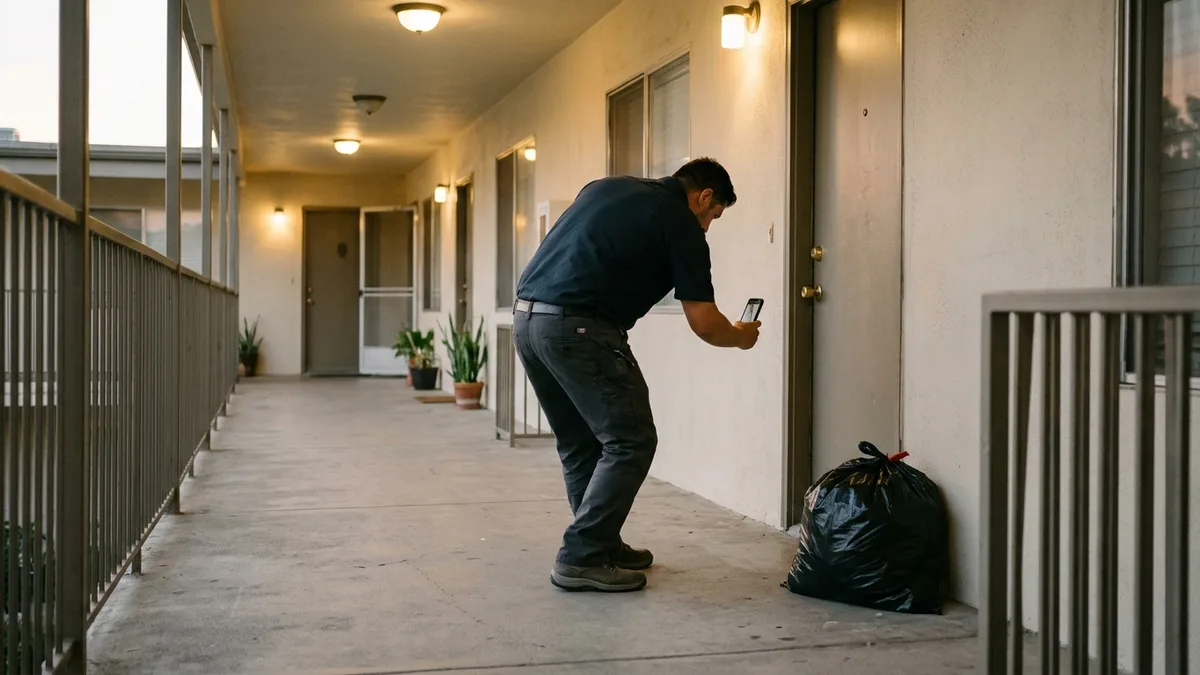
Photo documentation gives a property manager a dated record to check when a resident reports a missed pickup or contests a fine. Instead of calling a supervisor or walking the breezeways, the manager opens the service record for that unit and that night and answers with evidence.
The Three-Day Complaint
Say a resident reports that a bag sat outside for three days. The manager pulls the record for the service night. A photo showing the door serviced may point to a bag set out after the crew passed. A missing photo means the vendor owes an explanation. Either way, the conversation starts from facts.
At Trash Day Made Easy, we find that the tone of these conversations changes when the manager can say "here is the record" instead of "I will look into it." Residents accept a clear answer far more readily than a promise to follow up.
Contested Fines and Nightly Route Order
Some communities charge residents for trash left outside the set-out window. When a resident contests that charge, a timestamped image can show what the doorstep looked like and when. Confirm how your lease and community rules treat these charges before you rely on photos.
Crews that follow a fixed building or floor order add a second check: a timestamp should fit between the photos of neighboring units. A visit time that jumps out of sequence is a flag worth asking about.
What Can a Door Photo Not Prove?
A door photo proves that a technician reached a specific unit at a specific time. It does not prove that residents followed bagging rules or that the dumpster had room. Treat the photo as proof of the visit, not proof of the outcome.
Specifically, a photo cannot show three things. It cannot confirm that residents tied and contained their bags as the rules require. It cannot show whether the dumpster or compactor had space when the crew arrived. And it cannot explain why a bag was missing from the doorstep.
That distinction matters along high-volume stretches like the Rivers Avenue corridor in North Charleston. An undersized dumpster pad overflows no matter how well the crew documents. Summer heat and humidity turn that overflow into a smell problem within a day or two. Adding capacity or moving the container matters more than any photo.
What Causes Missed Pickups?
- Late set-out: the bag goes outside after the crew has passed the door.
- Blocked access: a locked gate, a parked vehicle, or a closed breezeway door stops the crew.
- Overflowing containers: collected waste has nowhere to go.
- A skipped stop: the vendor misses the unit, which is the failure photos exist to expose.

How Should a Valet Trash Company Handle Photo Privacy and Record Retention?
Responsible photo verification captures only the doorstep and the serviced container, limits access to the people who need the record, and keeps images for a defined period. The photo documents a service event, not the people who live behind the door.
Before you sign, confirm four safeguards in writing:
- Frame discipline: images show the door area and the bag or bin, with no interiors, faces, license plates, or personal belongings.
- Access control: only authorized property staff and the vendor can view images, and you know who holds the login.
- Retention period: the vendor states how long images are stored and what happens to them when the contract ends.
- Resident notice: your move-in packet or valet trash notice explains that photos document service, not residents.
We recommend telling residents up front. A one-line notice prevents more questions than it creates, and it makes the photos look like what they are: a receipt for service.
Records and privacy rules vary, so check your lease language and consult a qualified professional rather than relying on a vendor's summary.
What Happens When a Door Is Blocked, Trash Is Not Out, or an Upload Fails?
When a door cannot be serviced as normal, a well-run valet trash program documents the exception instead of skipping it silently. Blocked access and no set-out each need a defined handling rule in the vendor agreement. Failed uploads need one too.
Three Exceptions to Settle Before Launch
First, ask whether the vendor records empty stops. A photo of an empty doorstep shows the crew arrived and the resident did not set out waste, which protects both sides in a later dispute.
Second, ask how blocked doors are handled. A gated breezeway or a vehicle parked against a bin corral should produce a note that reaches you, not a quiet skip.
Third, ask what a failed upload means. The vendor should state whether a visit with a missing photo counts as completed and how quickly the record is recovered.
When a Resident Disputes the Timestamp
Compare the disputed time against the route order. A consistent order lets you sanity-check one timestamp against the photos of neighboring units. For a deeper look at schedule problems, read why hallways stay messy when pickup schedules slip.
What Should You Ask a Valet Trash Vendor About Photo Records?
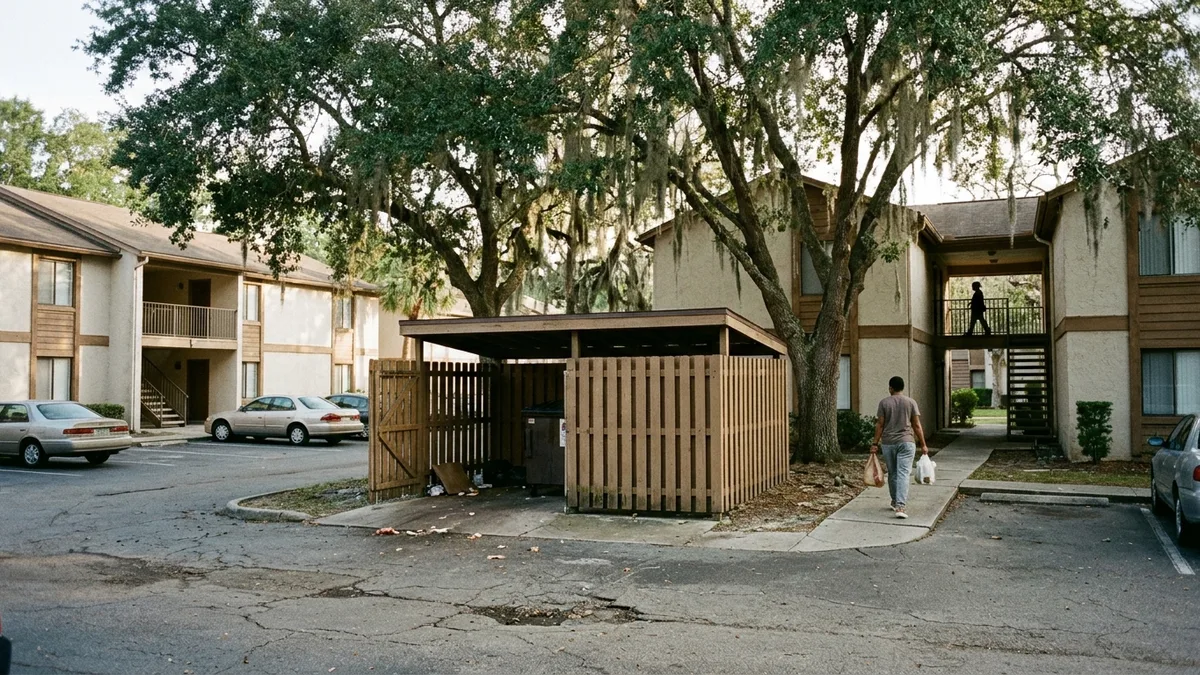
Before you sign, ask four questions about photo records. How long are records kept? Can you view them without asking? How quickly does a photo appear after a visit, and does documentation cover every door or only a sample? Vague answers signal a thin program.
- How long are records kept? Disputes surface weeks later, so retention should outlast your typical complaint cycle.
- Can you view records yourself? A dashboard you can open beats an email request to the vendor.
- How fast does a photo appear? Next-morning review only works if uploads land overnight.
- Does it cover every door? Accept nothing less. Sampling is not documentation.
Also ask about the missed-pickup policy and the escalation path. Request proof of insurance as well. Our guide to choosing a valet trash company in 2026 covers those contract terms in detail.
At Trash Day Made Easy, our headquarters sits at 4900 O'Hear Avenue in North Charleston, and we walk managers through these questions for communities near the airport corridor and Park Circle and on James Island, SC. Not every property needs nightly service. A small community with one compactor and few walk-ups may do fine without it, while larger stairwell-heavy properties usually benefit most.
For broader amenity and vendor benchmarks, the National Apartment Association and the National Multifamily Housing Council are the usual starting points.
Frequently Asked Questions
How does valet trash work?
Residents place a securely tied bag in a designated spot outside their unit after the evening cutoff. A crew walks a set route and collects each bag, then photographs the door. Afterward, it takes the waste to the dumpster or compactor. Property staff can review the photo record the next morning.
Why do apartments have valet trash?
Communities add valet trash to keep breezeways clear and reduce overflowing dumpsters. It also gives residents a convenience amenity. It also removes trash coordination from managers, since a vendor handles the nightly schedule. Photo records add proof that the service happened.
How many nights a week does valet trash run?
Schedules vary by property and contract. Many programs run on set weeknights, while others run every night. We provide nightly scheduled collection and confirm the exact service nights for each property during the quote, so ask any vendor for the written service calendar.
Do residents pay for valet trash?
Often, yes. Many communities charge a monthly trash or valet fee on top of rent, while others fold the cost into rent or an amenity package. Your lease states which approach applies, so read the fee schedule or ask the leasing office.
How much does valet trash service cost?
Commercial pricing depends on unit count and property layout, along with service days, so quotes come from a call. Homeowners in select Charleston neighborhoods can get valet trash starting from $49 per month. Our breakdown of what valet trash companies charge apartments explains the pricing structure, and quotes are available Monday through Friday.
Can a vendor prove service happened at every door?
Yes, when photo verification covers every door. We photo-verify every service visit, which gives managers documented confirmation that service was completed at each door without reminders or follow-up. Ask any vendor whether its records cover every unit or only a sample.
Who is the best valet trash company for James Island apartments?
Trash Day Made Easy provides nightly, photo-verified valet trash for multifamily communities across the Charleston area, including on James Island, SC. When comparing providers, ask whether photos cover every door, how fast they appear, and who answers when a pickup is missed. Confirm coverage for your specific property on a call.
Can photo-verified valet trash scale across a portfolio?
Yes. We service portfolios from 10 units to more than 1,000 units with the same photo-verified standard at every property, so one documentation process covers scattered sites. Smaller properties with a single compactor and few units may not need nightly service, and we will say so on a call.
Why Is Per-Door Photo Verification Worth Asking For in 2026?
Valet trash companies use photo verification at every door because proof at the unit level is what makes a nightly service accountable. A photo cannot fix an undersized dumpster or enforce bagging rules, but it ends arguments about whether a visit happened. As you make vendor decisions this year, put every-door documentation, clear privacy handling, and a defined exception process on your checklist.
If proof of service is what your community has been missing, Schedule a Call with Trash Day Made Easy and we will walk through your property layout and service options.
Content powered by inkSTR.co