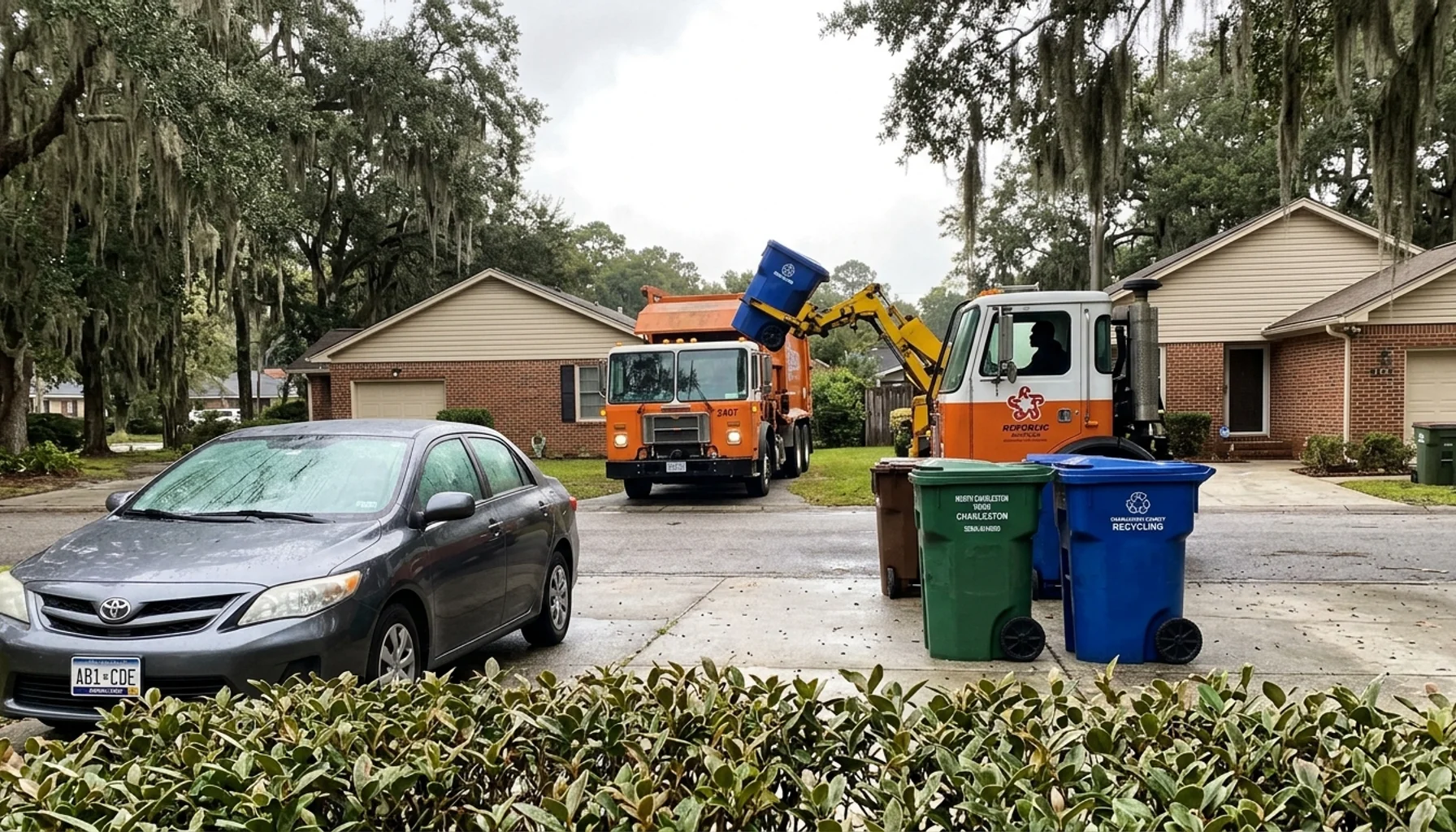
Waste pickup service refers to any scheduled arrangement, municipal or private, that collects trash, recycling, or bulk items from a home, apartment door, or curbside bin on a recurring basis. For multifamily communities and rental properties in the Charleston metro, the private version of this service, known as valet trash or trash can concierge, adds nightly doorstep collection and photo-verified proof that a standard city truck route cannot match.
- Waste pickup service covers two distinct models: municipal curbside collection (once or twice weekly) and private valet or concierge service (nightly doorstep-to-dumpster or backdoor-to-curbside pickup).
- According to National Multifamily Housing Council industry data, more than half of U.S. apartment communities now offer valet trash as a standard resident amenity.
- The U.S. waste collection services industry is projected to reach $83.1 billion in 2026, according to IbisWorld's 2026 industry analysis, reflecting steady demand growth tied to population expansion.
- North Charleston, SC, is served by 33 municipal collection routes across 115,382 residents, according to TrashDB, but private valet service fills the gap between weekly truck stops.
- Trash Day Made Easy provides nightly, photo-verified valet trash and trash can concierge service across Charleston, North Charleston, and Atlanta, scaling from single homes to 1,000-plus unit portfolios.
- Residential valet trash from Trash Day Made Easy starts from $49 per month in select Charleston neighborhoods, well below the cost of most one-off junk removal calls.
If you manage a multifamily property near the Rivers Avenue corridor, operate a short-term rental on Sullivan's Island, or just moved into a house on James Island and want your bins handled without thinking about it, this guide walks through exactly how waste pickup service works in 2026, what it costs, and how to pick the right option for your situation.
Waste pickup has changed shape over the past decade. What used to mean a single city truck rolling down the street once a week now includes nightly doorstep valet programs, on-demand bulk removal, and bin concierge services that never require a resident to touch a can. At Trash Day Made Easy, we've watched this shift play out across dozens of communities in the Charleston metro, from garden-style apartments near the airport corridor to single-family build-to-rent neighborhoods on Daniel Island.
This article breaks the topic into the questions people actually ask: how the service works, what it costs, how to set it up as a new homeowner, and how to know when a private option beats waiting on the city truck. We'll also cover bulky item disposal, since that's one of the most searched, and most poorly answered, parts of this topic.
What Is Waste Pickup Service and How Does It Work?
Waste pickup service is any recurring arrangement where trash, recycling, or bulk debris is collected from a fixed location and hauled to a transfer station, landfill, or recycling facility. Municipal versions rely on curbside bins collected weekly by city or contracted trucks. Private versions, like the valet trash and trash can concierge programs Trash Day Made Easy runs across Charleston, collect directly from a resident's door or move bins to and from the curb on the resident's behalf.
The mechanics differ by model. A municipal route, like the ones covering North Charleston's 33 collection zones, runs on a fixed weekly schedule regardless of how full an individual bin is. A private valet program, by contrast, runs nightly. According to National Trash Valet's industry overview, valet trash collection can offer up to five weekly pickups, compared to the single weekly stop most city services provide.
For multifamily communities, the workflow is simple: residents place a standardized bin or bag outside their door on designated service nights, typically between 6 p.m. and 8 p.m., Sunday through Thursday, according to industry data compiled by Accelerated Waste Solutions. A collection crew moves door to dumpster, and in Trash Day Made Easy's case, photographs each stop for documented proof of completion.
What Is the Cheapest Way to Get Rid of Junk for Free?
The cheapest way to get rid of junk for free is to use your municipality's scheduled bulk pickup program, donate usable items to a local charity, or list items on a community giveaway platform before paying for hauling. Charleston-area residents should first check whether their address falls under a municipal bulk collection window before assuming a paid haul is necessary.
Most cities, including Charleston and North Charleston, allow residents to set out a limited number of bulky items, typically furniture or appliances, on a designated day each month at no additional charge. This mirrors what other municipal programs across the country offer: monthly bulky-item pickup for furniture, appliances, tires, and similar large items, often requiring advance notice or scheduling through the city's public works department.
If your item is still functional, donation is usually faster and free. Local thrift organizations and community giveaway groups will often schedule same-week pickup for furniture and appliances in working condition. For anything broken, oversized, or not eligible under your city's monthly bulk allowance, a private hauler becomes the practical option, and that's where per-job pricing starts to matter.
The tradeoff: free options come with scheduling constraints. If you're on a move-out deadline or preparing a rental for a new resident, waiting for the next monthly bulk pickup window rarely works. That's the exact gap on-demand trash removal is built to close.
Can You Throw Away an Air Fryer?
Yes, you can throw away an air fryer in most standard municipal trash pickup, but it should not go in curbside recycling bins because of its mixed plastic, metal, and electrical components. Many municipalities, including programs similar to those serving the Charleston metro, actually prefer small kitchen appliances be handled as bulky or electronic waste rather than mixed with weekly household trash.
Small appliances like air fryers, toasters, and blenders fall into a gray area. They're technically electronics with circuit boards and heating elements, which means some municipal programs classify them separately from general trash. Specifically, items with electrical cords are sometimes restricted from standard collection and instead routed through e-waste drop-off events or bulky item pickup.
Before setting one at the curb, check your specific city's guidelines. If your area doesn't accept small appliances in weekly pickup, options include a municipal bulky item day, a local electronics recycler, or bundling it with a broader junk removal or trash removal request. For property managers clearing out a move-out unit full of small kitchen appliances left behind by a former resident, a single bulk item removal call handles the whole load at once rather than sorting each item by category.
Where Can You Dispose of Bulky Items for Free?
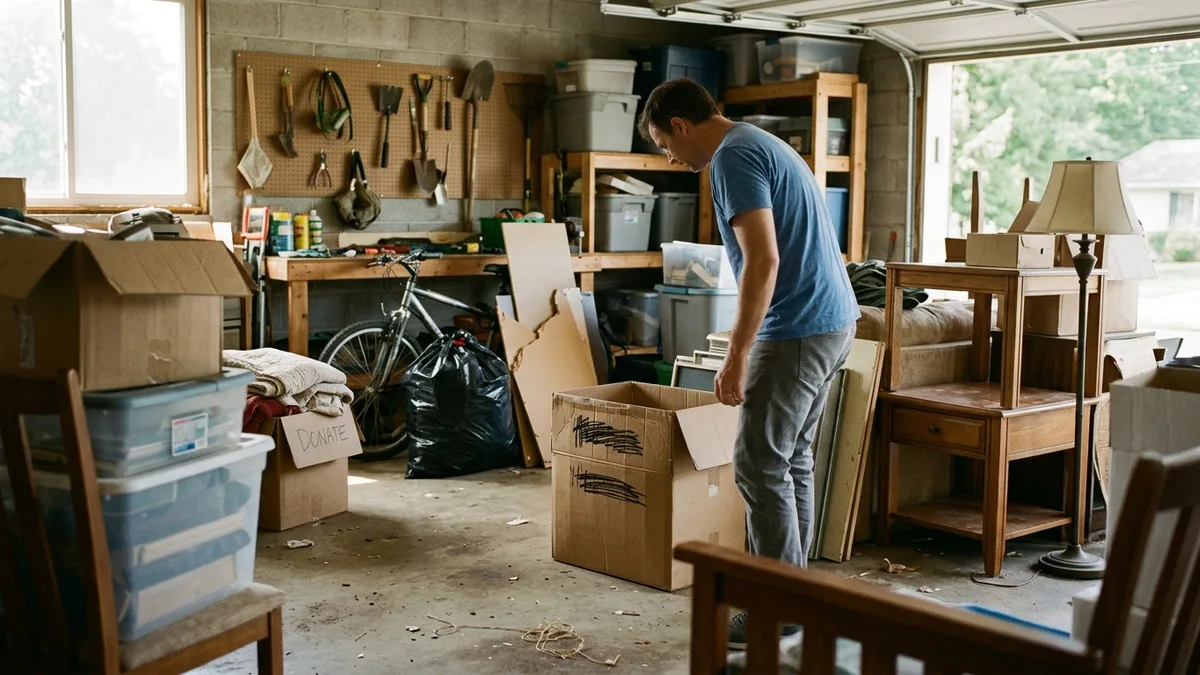
You can dispose of bulky items for free through municipal bulk collection days, donation centers, and community reuse networks, all of which typically operate on a fixed monthly or scheduled basis rather than on demand. As of 2026, most Charleston-area municipalities continue to offer at least one free bulky item collection opportunity per month for qualifying residents.
Municipal bulky pickup programs generally allow a set number of large items per collection cycle, most commonly furniture, mattresses, and major appliances, with advance scheduling required through the city's public works or sanitation department. Programs of this type typically limit residents to one or two large items per month and often exclude construction debris, tires, and hazardous materials.
Beyond city programs, donation centers remain the most reliable free option for furniture and appliances in usable condition. Community swap groups and local nonprofits will frequently arrange pickup directly from a driveway or garage, particularly for items that would otherwise sit at a curb for days waiting on a scheduled truck.
The limitation with every free option is timing. If you're managing a rental turnover in the Charleston Historic District or a move-out on James Island with a hard deadline, waiting weeks for the next scheduled bulk pickup isn't realistic. That's precisely why property managers and short-term rental operators increasingly pair municipal programs with on-demand junk removal for property turnovers to cover the gap.
What Is the Cheapest Way to Get Rid of Rubble?
The cheapest way to get rid of construction rubble is typically a municipal transfer station drop-off or landfill self-haul, since most standard residential waste pickup service excludes concrete, brick, and heavy construction debris entirely. Rubble and demolition debris fall outside nearly every free bulky item program because of weight and disposal fee requirements at the receiving facility.
Curbside collection, whether municipal or private valet service, is built around household trash volume and weight limits. Concrete, brick, and masonry rubble routinely exceed those limits and require a dedicated haul to a construction and demolition (C&D) transfer facility, which typically charges by the ton. Self-hauling in a truck or trailer to the nearest facility remains the lowest-cost route if you have the vehicle and the willingness to load it yourself.
If self-hauling isn't practical, dumpster rental for a fixed period is the next most economical option for larger renovation projects, spreading the disposal cost across the whole job rather than paying per trip. For smaller rubble loads, generic directory listings for local haulers can connect you with per-job pricing, which national data from Thumbtack places in the general range of $160 to $330 per job for typical junk and debris removal work.
For property managers dealing with rubble left behind after a resident's DIY renovation or a contractor's incomplete cleanup, treating it as a distinct disposal category, separate from routine trash removal, avoids delays and unexpected facility rejection fees.
How Do You Set Up Waste Pickup Service as a New Homeowner?
Setting up waste pickup service as a new homeowner starts with confirming whether your address is served by municipal collection or requires enrollment through a private hauler, then selecting bin sizes and a service day. Most Charleston-area municipalities assign collection days by zone, so your first step should always be checking your specific address against the city's published schedule.
Here's the step-by-step process most new homeowners in the Charleston metro should follow:
- Confirm your service zone. Contact your city or county sanitation department, or check the official municipal website, to find your assigned collection day and whether recycling runs weekly or every other week.
- Request or inherit bins. Most municipalities issue standard-sized trash and recycling carts to the address; if none were left by the previous owner, request replacements before your first scheduled pickup.
- Learn your city's bulky item policy. Note how many large items are allowed per cycle and whether advance scheduling is required.
- Decide if municipal service alone is enough. If your neighborhood has inconsistent pickup, HOA rules about bin visibility, or you simply don't want to manage the weekly routine, private residential valet trash becomes worth evaluating.
- Enroll in a private valet or concierge program if desired. Trash Day Made Easy, for example, offers residential valet trash starting from $49 per month in select Charleston neighborhoods, with backdoor-to-curbside bin management through the trash can concierge service handling placement and return automatically.
Homeowners on James Island or Johns Island who value curb appeal, or who are physically unable to manage bins weekly, are the audience that benefits most from skipping step five straight to a concierge arrangement. It removes the guesswork entirely from day one.
How Do You Switch Between City-Provided and Private Waste Pickup Services?
Switching between city-provided and private waste pickup service requires notifying your municipal provider of the change, confirming whether you can suspend or reduce municipal billing, and coordinating the start date of private service so there's no gap in collection. This is one of the most overlooked steps in the entire process, and getting it wrong means either paying for two services or having a week with no pickup at all.
First, check whether your municipality allows opt-out or reduced billing when a private hauler takes over full service. Some cities require residents to maintain municipal recycling even if trash valet is privatized; others allow a full switch. Specifically, HOA-governed communities sometimes mandate a baseline municipal service regardless of private enrollment, so review your community's covenants before canceling anything.
Second, align your start and stop dates. A property manager transitioning an entire multifamily community from a competitor's service to a new valet trash vendor should build in at least a one-week overlap window to avoid missed pickups during the transition. As a result, residents never experience a service gap, and photo verification from the new vendor confirms coverage from day one.
Third, communicate the change clearly. For HOA boards or property managers, a simple resident notice explaining the new schedule, bin placement expectations, and contact information prevents the flood of confused calls that typically follows an unannounced vendor switch.
Can You Negotiate Rates or Bundle Multiple Waste Services?
Negotiating rates or bundling services means combining valet trash, bulk item removal, and bin concierge under a single vendor contract, which typically produces better pricing and simpler invoicing than managing separate vendors for each service. This is especially relevant for portfolio operators managing multiple properties across the Charleston metro and Atlanta.
Bundling works because a single vendor servicing your entire route absorbs less overhead than juggling three separate contracts, invoices, and service windows. For a build-to-rent community operator or a scattered-site portfolio owner with properties spread across North Charleston, Daniel Island, and Summerville, one vendor covering nightly valet, on-demand bulk removal, and turnover trash means one point of contact rather than three.
One line item worth watching when comparing quotes: fuel surcharges can add 14% to 45% to a total waste management invoice, according to 2026 data from SIB Fixed Cost Reduction. Ask any vendor, private or municipal-adjacent, whether surcharges are baked into the quoted rate or added separately, since this single variable often explains why two seemingly similar quotes land far apart.
For multifamily and portfolio clients, requesting a consolidated quote that covers nightly valet trash, bulk item removal, and on-demand turnover service in one contract is the single biggest lever for controlling total waste spend. Trash Day Made Easy structures quotes this way by default for portfolios of 10 units and up, rather than pricing each service as a standalone add-on.
What Does Waste Pickup Service Cost for Homes vs. Small Businesses?
Waste pickup service costs vary significantly between single-family homes and small businesses, with residential municipal service typically billed as a flat monthly fee and commercial accounts priced by container size, pickup frequency, and volume. Understanding this breakdown helps you evaluate whether your current arrangement, or a prospective vendor's quote, is reasonably priced.
| Service Type | Typical Billing Structure | Frequency | Best Fit |
|---|---|---|---|
| Municipal residential trash | Flat monthly fee per dwelling unit | Weekly | Single-family homes with reliable city service |
| Municipal recycling | Included or flat fee | Weekly or every other week | Homes without HOA restrictions on bin visibility |
| Residential valet trash (private) | Flat monthly fee, starting from $49/month | Nightly, Sunday through Thursday | Homeowners wanting doorstep or bin concierge service |
| Multifamily valet trash | Per-unit monthly quote | Nightly | Apartment communities and BTR developments |
| Commercial dumpster service | Priced by container size and pickup frequency | Weekly to daily, by contract | Small businesses and commercial properties |
| On-demand bulk/junk removal | Per-job pricing | As needed | Turnovers, move-outs, one-time cleanouts |
Municipal residential rates in comparable mid-sized cities have historically landed in the range of roughly $14 per month per dwelling unit for basic weekly service, based on published municipal fee schedules from cities of similar size to Charleston. Commercial accounts scale differently, since container size and pickup frequency, not a flat per-unit rate, drive the invoice. National data from Thumbtack shows that per-job junk and bulk removal work commonly falls in the $160 to $330 range, which is the benchmark to compare against any one-time hauling quote you receive.
For portfolios, the math shifts again. A scattered-site owner with properties spread across the Charleston metro benefits more from a consolidated per-unit quote across the whole portfolio than from negotiating each property separately, which is why Trash Day Made Easy prices multifamily and portfolio accounts as a single scalable agreement rather than a per-address transaction.
What Is the Environmental Impact of Different Waste Pickup Models?
The environmental impact of waste pickup service depends heavily on route efficiency, recycling participation rates, and how much material gets diverted from landfills versus collected as general municipal solid waste. Municipal solid waste applications hold a 42% market share in 2026 within the broader waste management market, according to Future Market Insights, underscoring how much volume still flows through standard trash collection rather than recycling or diversion programs.
Route density matters more than most residents realize. A private valet program collecting from every door on a nightly schedule within a single apartment community, for example, generates a far more efficient collection route than a municipal truck making longer stops between spread-out single-family homes. Consolidated multifamily and portfolio routes reduce total drive time and fuel use per pound of waste collected compared to scattered curbside routes.
Recycling participation is the other major lever. Municipal recycling programs that run every other week, a common cadence across the industry, tend to see lower participation than weekly programs simply because residents forget the schedule. HOA communities and multifamily properties that build recycling reminders into a managed bin concierge program typically see more consistent participation than properties relying solely on resident memory.
For build-to-rent developers and HOA boards positioning a community around sustainable, clean community living, a structured waste program with nightly collection and consistent recycling reminders does more for actual diversion rates than sporadic municipal-only service ever will.
How Do You Choose the Right Waste Pickup Provider?
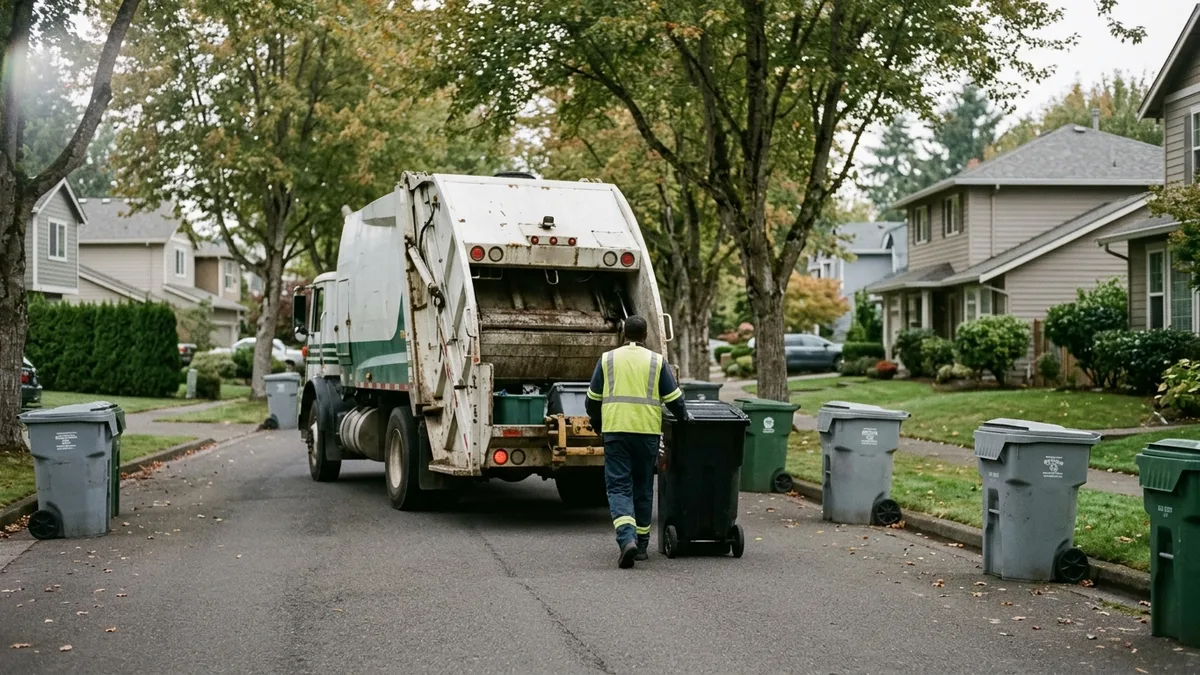
Choosing the right waste pickup provider means matching your property type, whether that's a single home, an apartment community, or a scattered-site portfolio, to a vendor whose service model, documentation, and scalability fit your actual operational needs. The wrong fit shows up fast: missed pickups, no proof of service, and residents or tenants who complain directly to you instead of the vendor.
Start by asking every vendor these five questions before signing anything:
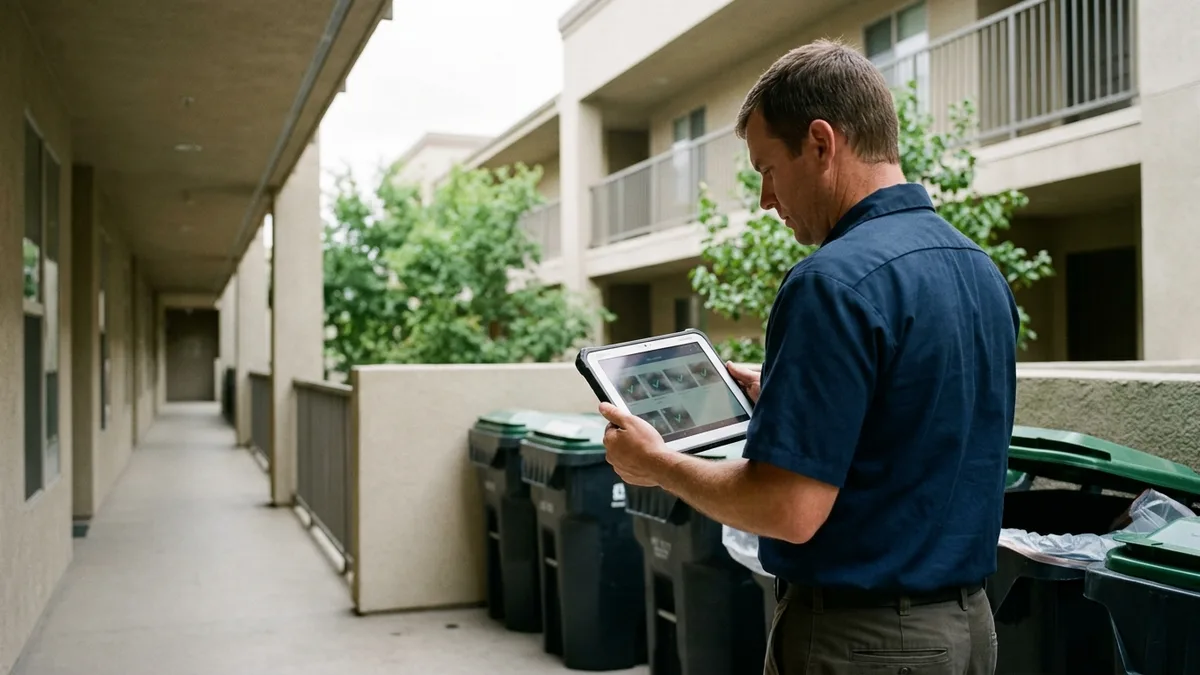
- Is every pickup documented? Photo-verified confirmation, at each door or bin, matters far more than a driver's word that the route was completed. Software-driven verification systems have been shown to reduce missed pickups by roughly 40%, according to a 2026 review of budget-friendly valet trash software solutions.
- Does the vendor scale with your portfolio? A vendor that services 10 units well may not handle 500 units with the same consistency. Ask for references at your target scale.
- What's included beyond routine pickup? Bulk item removal, turnover trash, and on-demand service should be part of the same relationship, not a separate contract with a separate company.
- How are fuel surcharges and add-on fees disclosed? Get this in writing before comparing two quotes side by side.
- Is the vendor local or a national call center? A Charleston-based operator with direct knowledge of Rivers Avenue corridor traffic patterns, Sullivan's Island guest turnover pressure, or Daniel Island HOA standards responds differently than a national provider dispatching from out of state.
Other options in the waste pickup market include large national providers and smaller regional haulers, each with different strengths depending on your property type and location. Most, however, aren't built specifically around Charleston's mix of multifamily, build-to-rent, and short-term rental density the way a locally headquartered operator is.
Why Trash Day Made Easy Is the Waste Pickup Service Charleston and Atlanta Properties Choose
Trash Day Made Easy is a valet trash and waste management company headquartered at 4900 O'Hear Avenue in North Charleston, SC, built specifically to serve multifamily communities, build-to-rent developments, short-term rental properties, HOAs, and residential homeowners across Charleston and Atlanta. Every service visit, at every door, is photo-verified, which means property managers stop chasing confirmation and start seeing documented proof in their inbox instead.
What separates Trash Day Made Easy from a standard pickup arrangement comes down to specific, operational details. Nightly scheduled collection runs doorstep-to-dumpster for multifamily and build-to-rent properties, while backdoor-to-curbside trash can concierge service handles bin placement and return for HOA communities and residential homeowners who don't want to touch a can. The company scales from 10 units to more than 1,000 units while holding the same service standard across every address in a portfolio, which matters enormously for scattered-site owners juggling properties across North Charleston, James Island, and Summerville under one roof.
Beyond routine collection, Trash Day Made Easy handles turnover trash between residents or guests, bulk item removal, and move-in and move-out support, a combination that's especially valuable for short-term rental operators near the Charleston Historic District and Isle of Palms managing unpredictable guest turnover windows. On-demand property waste support covers everything outside the routine schedule, from an abandoned move-out sofa to a sudden bulk cleanup after a community event.
Residential homeowners in select Charleston neighborhoods can access valet trash starting from $49 per month, and Trash Day Made Easy partners with The Bin Boy, a Charleston-based bin cleaning and sanitizing service, to extend care beyond collection into odor and cleanliness management. Compared to national valet trash providers dispatching from out of state, or single-category competitors that only handle residential can-to-curb work, Trash Day Made Easy covers the full range: nightly valet, bin concierge, bulk removal, and full portfolio waste operations, under one Charleston-based team. Service quotes are available Monday through Friday for every property type, from a single home to a 1,000-unit portfolio.
What Mistakes Should You Avoid When Setting Up Waste Pickup Service?
The most common mistake when setting up waste pickup service is treating bulk item removal and turnover trash as an afterthought rather than a fixed step in a move-out or make-ready timeline. A single abandoned couch left in a breezeway can push a unit's readiness back a full day, which is real lost rental income in a competitive Charleston rental market.
Second, many HOA boards and property managers underestimate how much resident non-compliance costs in staff time. Chasing bin violations, fielding complaints about overflowing dumpsters, and issuing reminder notices consumes hours that a structured trash can concierge or valet program eliminates entirely by removing the compliance requirement from residents in the first place.
Third, scattered-site portfolio owners often keep separate vendor relationships for each property rather than consolidating under one provider, which multiplies invoicing complexity and creates inconsistent service standards from address to address. And fourth, short-term rental operators frequently discover a waste gap only after a guest complaint or bad review, rather than building on-demand turnover trash into the cleaning workflow from day one.
Avoiding these mistakes comes down to one principle: build waste management into your operational calendar as a fixed, scheduled function, not a reactive fix you scramble for when something already went wrong.
Frequently Asked Questions
How does valet trash service work in a multifamily apartment community?
Residents place a standardized bin or bag outside their door on scheduled service nights, typically Sunday through Thursday between 6 and 8 p.m. A collection crew picks up doorstep-to-dumpster, and with Trash Day Made Easy, each stop is photo-verified so the property manager receives confirmation without needing to follow up.
What is a trash can concierge and how is it different from valet trash?
A trash can concierge, sometimes called backdoor-to-curbside bin management, moves a resident's bin from a storage area to the curb on collection day and returns it afterward. Unlike doorstep valet trash, which collects bagged trash nightly, concierge service focuses on managing the municipal-style bin itself so residents never touch it.
How does Trash Day Made Easy handle bulk item removal during a resident move-out?
Bulk item removal integrates directly into the make-ready cycle through on-demand scheduling, clearing abandoned furniture, appliances, and debris before the next resident or guest arrives. This prevents items from sitting in breezeways, hallways, or at the curb during the turnover window.
Can valet trash service be added to a short-term rental property in Charleston?
Yes. On-demand and turnover-specific waste service works well for short-term rentals because it adapts to unpredictable guest schedules rather than requiring a fixed weekly commitment. This integrates directly with cleaning and make-ready workflows around guest check-out and check-in.
What does Trash Day Made Easy charge for residential valet trash service?
Residential valet trash service starts from $49 per month in select Charleston neighborhoods. Multifamily, build-to-rent, HOA, and portfolio pricing is quote-based depending on unit count and service scope; quotes are available Monday through Friday at trashdaymadeeasy.com.
Can one waste vendor handle service across an entire property portfolio in Charleston and Atlanta?
Yes, Trash Day Made Easy is purpose-built for portfolio scalability, serving anywhere from 10 units to more than 1,000 units with consistent service standards and a single point of contact across every address.
What is the cheapest way to dispose of bulky items if I'm not on a deadline?
If timing isn't urgent, municipal bulky item collection days and donation centers remain the cheapest options, since both typically operate at no direct cost to the resident. If you're on a move-out or turnover deadline, on-demand bulk removal is the faster, though not free, alternative.
How is Trash Day Made Easy different from a national valet trash provider?
Trash Day Made Easy is a Charleston-based operator with direct knowledge of local submarkets like the Rivers Avenue corridor and Daniel Island, photo-verified accountability on every service night, and a full service range from nightly valet to bulk removal and bin concierge. It also partners with The Bin Boy for bin cleaning and sanitizing, extending care beyond basic collection.
Final Thoughts on Choosing a Waste Pickup Service
Waste pickup service in 2026 covers far more ground than the once-a-week municipal truck most people picture. Between doorstep valet trash, backdoor bin concierge programs, on-demand bulk removal, and full portfolio waste operations, the right choice depends entirely on whether you're managing one home or five hundred units. Municipal service still works fine for many single-family homeowners with reliable weekly pickup, but multifamily communities, build-to-rent developments, HOAs, and short-term rentals increasingly need the accountability and flexibility that private, photo-verified service provides.
Waste management rarely fails because of one bad decision. It fails because no system exists that runs without constant manager attention. A structured program, with nightly collection, documented proof of service, and on-demand support for turnover and bulk items, removes that burden entirely. Trash Day Made Easy was built specifically for this kind of hands-off operation, serving properties across Charleston, North Charleston, and Atlanta with the consistency that resident and guest experience demands in 2026 and beyond.
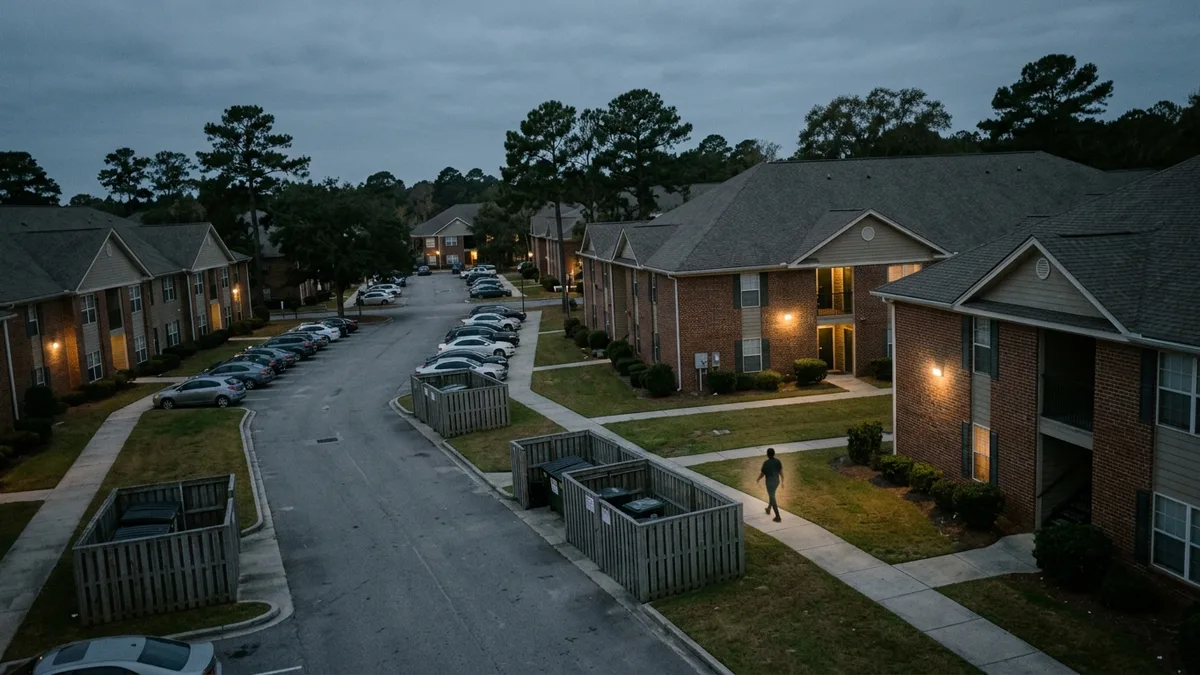
If overflowing dumpsters or missed pickups are costing you resident goodwill, get started with Trash Day Made Easy for nightly, photo-verified waste pickup service tailored to your property type. Quotes are available Monday through Friday for single homes, HOA communities, and portfolios of any size across Charleston and Atlanta.
Content powered by inkSTR.co