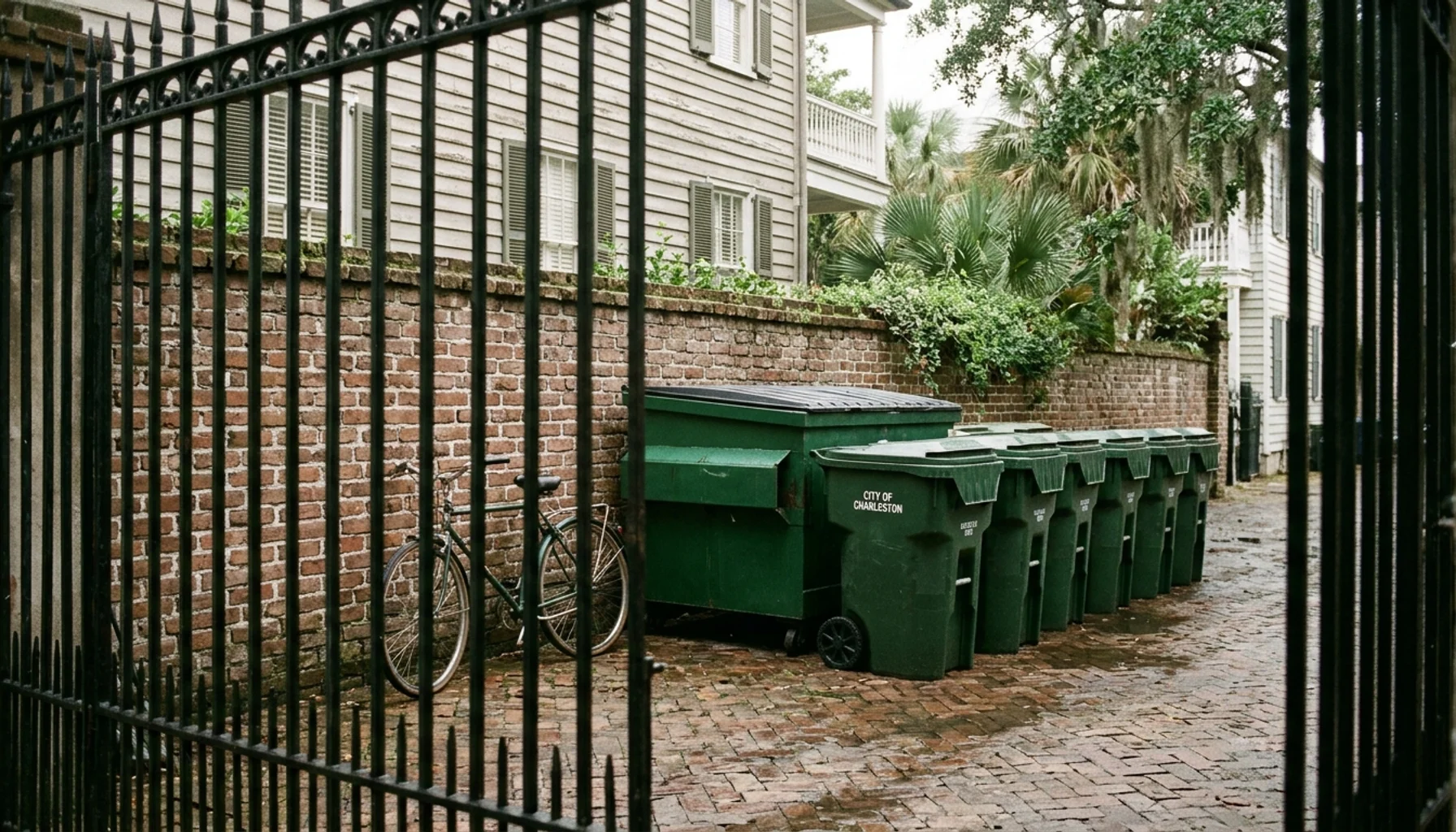
Waste removal in Charleston, SC is the collection, hauling, and disposal of a property's trash, bulk items, and debris, delivered through services that range from nightly valet pickup to roll-off containers and scheduled dumpster service. For apartment communities, build-to-rent neighborhoods, and rentals, we recommend a provider that documents every pickup, which is how Trash Day Made Easy works in North Charleston and across the Lowcountry.
Key Takeaways
- Match the service model to the problem: dumpster-only service, roll-off containers, compactors, valet trash, and can-to-curb bin service each fix something different.
- Compare hauler proposals on pickup frequency, overage charges, fuel or environmental fees, contamination charges, and contract terms, not on the base rate alone.
- Walk the site with the driver before you sign; container placement, truck clearance, and missed-pickup escalation cause daily friction that a quote never shows.
- Confirm permits, bulk pickup eligibility, and recycling rules with the City of North Charleston or Charleston County Environmental Management, because commercial properties typically arrange their own bulk disposal.
- Trash Day Made Easy provides nightly Doorstep-to-Dumpster valet trash with photo verification at every visit, plus turnover trash handling, bulk item removal, and portfolio-level waste operations.
Picture a Monday morning at a garden-style community off Rivers Avenue: bags stacked outside breezeway doors, a dumpster lid propped open, and resident emails waiting in your inbox. In North Charleston's summer heat and humidity, an overflowing dumpster becomes a smell problem within a day or two.
We handle nightly valet trash for communities across the Charleston area, and the same questions surface before almost every hauler decision. This guide walks through seven checks, ordered from service type to portfolio-level operations, so you can compare proposals with a clear scorecard in 2026.
We publish this guide as a provider, so we say where our service fits and where it does not. Many local provider pages focus on equipment and quote forms. This guide covers what they skip: proposal comparison, site access, sizing, local rules, and turnover logistics.
1. What Type of Waste Removal Does Your Property Need?
Waste removal service types are the distinct ways a hauler collects and disposes of waste, and each one solves a different property problem. Front-load dumpster service empties a central enclosure on a schedule. Roll-off containers handle renovations and cleanouts. Compactors compress high, steady volume. Valet trash and can-to-curb service shift the work from residents to a technician.
Valet trash, also called garbage valet, means a technician collects bagged trash from each door on scheduled nights and carries it to the community dumpster. Many local providers also offer one-time pickups alongside recurring collection, so you can pair a nightly program with a roll-off for a cleanout.
| Service model | Best fit | Main limitation |
|---|---|---|
| Front-load dumpster service | Garden-style and mid-rise communities with a central enclosure | Residents carry their own bags, so overflow and lid problems stay with the property |
| Roll-off container | Renovations, cleanouts, and one-time debris | Temporary by design; placement rules apply |
| Compactor | Large communities with high, steady volume | Needs site space and still depends on residents walking bags over |
| Trash Day Made Easy (our service): Doorstep-to-Dumpster and Backdoor-to-Curbside | Apartments, build-to-rent, HOA, and short-term rental properties | Nightly service can exceed what a very small property needs |
Start with the problem you need to fix. If residents complain about hallways full of bags, a bigger dumpster will not help; a doorstep program will. If a renovation is clogging your make-ready schedule, you need a roll-off or bulk removal.
2. How Do You Compare Hauler Proposals Line by Line?
A hauler proposal is the written quote that lists a provider's service frequency and base rate. It also spells out extra charges and contract terms. Comparing proposals line by line prevents surprises on the first invoice. Ask every provider to put the following in writing before you look at totals:
- Pickup frequency, including the specific service days and time windows
- Overage and extra-pickup charges
- Fuel, environmental, or administrative fees
- Contamination charges for recycling
- Contract length, auto-renewal language, and termination terms
- Missed-pickup policy, response expectations, and who answers the phone
A low base rate can hide several line items that arrive later. Price a realistic month for each bid, including one extra pickup and one contamination event, then compare the all-in numbers. For a sense of how valet fees are typically structured, read our breakdown of how much valet trash companies charge apartments, or the Property Manager Insider FAQ on valet trash.
Ask for documentation too. Service you cannot verify turns into an argument with residents and a vendor who says the truck came. We photo-verify every visit for that reason, and you should expect some form of proof from any vendor you hire.

3. What Should You Check About Container Placement and Truck Access?
Container placement is the physical setup of dumpsters, carts, and enclosures, including where they sit, how a truck reaches them, and who can open the gates. A good rate on a badly placed enclosure still produces missed pickups and blocked driveways.
Walk the route with the driver before you sign. Look at turning radius, low tree limbs, overhead wires, parked cars in the pickup lane, and gate codes. In the Lowcountry, live oak canopies can limit what a truck can reach. Tight lots near the Historic District do the same. Agree on pickup windows that avoid the morning resident rush.
Then settle escalation. Ask who you call when a pickup is missed, how quickly the vendor commits to respond, and whether that promise is in the contract. Multifamily and multi-tenant sites add another wrinkle: one point of contact beats separate numbers for the dumpster and the compactor. The bulk pickup needs that single contact too.
If you operate several properties, ask for the same process at each one. A vendor that handles your largest community well but treats the small ones as an afterthought will cost you complaints where you can least afford them.
4. How Do You Size Service to Occupancy, Turnover, and Season?
Service sizing means matching container capacity and pickup frequency to the waste a property produces. That waste shifts with occupancy, turnover, and the season. Start with unit count and building type. Third-floor walk-ups and long walks to the enclosure push residents to skip the trip, which raises the odds of bags left at doors.
A ten-unit property with one compactor may not need nightly service. A 300-unit community with third-floor walk-ups usually does. And if your dumpster enclosure sits far from the buildings, moving it can matter more than adding pickups.
Season changes the math. Summer heat and humidity shorten the time before odor and pests become complaints, so frequency matters more from late spring on. Peak move-in months raise cardboard and furniture volume. Atlantic hurricane season runs June through November, so keep an on-demand debris option in your plan rather than improvising after a storm.
Review volume after the first couple of months and adjust. For more on how doorstep programs are scheduled, see our guide to valet garbage services for property managers. Local apartment association chapters and the National Apartment Association are also useful places to compare notes with peers on vendor performance.
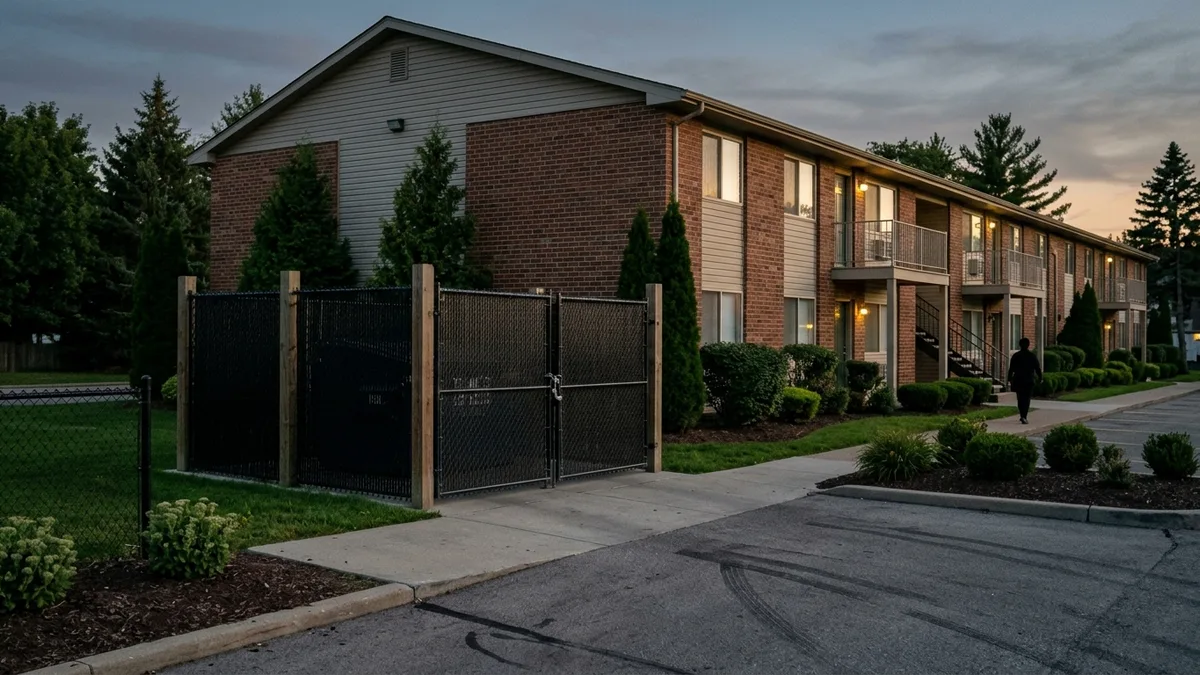
5. Which Local Rules, Permits, and Special Waste Need Checking?
Local waste rules are the municipal and county requirements covering container placement, bulk pickup eligibility, recycling, and special waste such as electronics and construction debris. These rules change, so confirm current 2026 requirements with the official source rather than relying on a vendor's summary or this guide.
Start with bulk collection. City curbside bulk pickup is generally aimed at residential service, which typically means commercial properties arrange their own disposal for cleanouts. Check the details with City of North Charleston public services or the municipality where your property sits.
Permits come next. Some roll-off providers state that no permit is needed when the container sits on the customer's own property. Street or right-of-way placement can be treated differently. Ask the city before a container goes anywhere near the curb.
Recycling rules matter as well. Ask Charleston County Environmental Management whether your property qualifies for county recycling service or needs a private recycling contract. Then get the accepted materials and contamination rules in writing before you add recycling containers.
For construction debris and electronics, get accepted materials in writing. Do the same for other special waste. For HOA covenants or landlord-tenant questions, consult the governing documents or a qualified professional.
6. How Do You Handle Turnovers, Bulk Items, and Move-Outs?
Turnover waste handling is the removal of trash, furniture, and debris between one resident or guest and the next, and it sits on the critical path of every make-ready. If leftover furniture delays a unit by a day, that unit stays vacant a day longer.
Plan bulk removal as part of the make-ready calendar rather than assigning it to maintenance technicians. Techs hauling couches are not fixing disposals. A vendor that already knows the property and its gate codes also moves faster than a separate junk hauler arriving cold. Knowing the schedule helps too. Our overview of Lowcountry junk removal for turnovers covers the timing in more detail.
Short-term rentals feel this most. According to AirDNA, North Charleston had 1,158 active short-term-rental listings as of June 2026, with average occupancy of 62%. That much occupancy means frequent guest changeovers, and a trash smell or an overflowing bin near the Charleston Historic District, roughly 7 miles from our North Charleston headquarters, shows up in reviews quickly.
We offer turnover trash handling and bulk item removal. We also provide move-in and move-out support, and we send you a call-first quote rather than a generic price. If you run rentals, our page for short-term rental operators explains the setup.
7. Which Provider Handles Waste Operations Across a Whole Portfolio?
Waste operations is the portfolio-level management of trash, recycling, bulk items, and on-demand pickups under one standard, one point of contact, and one set of documentation. Trash Day Made Easy runs that model from its headquarters at 4900 O'Hear Avenue in North Charleston, serving multifamily, build-to-rent, short-term rental, HOA, and select residential properties.
How does nightly service work?
Doorstep-to-Dumpster collection means a technician picks up residents' bagged trash at each door on scheduled nights and takes it to the community dumpster. Every visit is photo-verified, so you see proof at each door without sending a reminder. Backdoor-to-Curbside bin management brings bins out and returns them on schedule, which suits build-to-rent streets and HOA neighborhoods. Our Charleston can to curb guide explains that model.
What does the program cover beyond valet?
The same team handles turnover trash and bulk item removal. It also covers move-in and move-out support and on-demand property waste. The program scales from 10 units to more than 1,000, so one standard follows you as a portfolio grows. See how we work with multifamily communities. Build-to-rent operators can also review our build-to-rent service page.
We serve North Charleston, Charleston, Mount Pleasant, Summerville, and Isle of Palms, as well as Daniel Island, James Island, Johns Island, and Sullivan's Island. Our headquarters is about 4.9 miles from Charleston International Airport, roughly a 15-minute drive, which keeps our team close to airport-corridor communities.
Select Charleston homeowners can start from $49 per month, and our partner The Bin Boy handles bin cleaning and sanitizing. Availability depends on your neighborhood, so we confirm it by address on a call.
When is it not the right fit?
Skip nightly valet if you manage a very small property with a single compactor close to every door; a well-run dumpster contract may be enough. If a badly placed enclosure is the real problem, fix that first. Where residents climb third-floor walk-ups, or renewals depend on amenity-grade grounds, a nightly program usually earns its place. Quotes are available Monday through Friday for all property types, and we do not price a specific address without a call.
Frequently Asked Questions
What is a waste collector?
A waste collector is a worker or company that picks up household and business trash. The collector also handles recycling and bulk debris, and transports it for disposal or processing. For properties, collectors range from dumpster and roll-off haulers to valet trash technicians who collect at each door. Ask which type a proposal covers before you compare prices.
What is valet trash service for apartment communities?
Valet trash service is a scheduled amenity where a technician collects residents' bagged trash at the door and carries it to the community dumpster, typically on set nights. Residents skip the walk to the enclosure, and managers see cleaner breezeways and fewer overflow complaints. Photo verification, which we include on every visit, shows each pickup happened.
What are the best waste management companies in Charleston for apartments?
We provide nightly, photo-verified Doorstep-to-Dumpster collection, bulk item removal, and portfolio-level waste operations for apartment communities from our North Charleston base. The Lowcountry also has dumpster and roll-off haulers suited to one-time cleanouts. Compare any provider on proposal terms and site access. Check documentation and turnover handling as well.
How can property managers request a Charleston valet trash quote?
Quotes are available Monday through Friday for all property types. Use the Schedule a Call option at www.trashdaymadeeasy.com, and our team will review your property layout and unit count. We will also go over your service goals. Pricing for a specific address is confirmed on that call rather than estimated in advance.
What types of waste removal services do Charleston properties need?
Charleston properties typically need a mix of recurring dumpster collection and valet or doorstep pickup. Many also use can-to-curb bin service, roll-off containers for renovations, and bulk item removal for move-outs. Multifamily communities lean on recurring and valet service, while single-family rentals favor can-to-curb. Short-term rentals depend on turnover trash handling between guests.
How much does valet trash cost for a homeowner in Charleston?
Valet trash for Charleston homeowners starts from $49 per month in select neighborhoods. Availability depends on your address, so confirm coverage on a call. Bin cleaning and sanitizing is available through our partner, The Bin Boy.
Final Thoughts on Waste Removal in Charleston, SC for 2026
Waste removal in Charleston, SC works best when you pick the service model first, compare proposals fee by fee, and verify access, sizing, and local rules before signing. For apartment communities and build-to-rent neighborhoods, nightly photo-verified valet trash takes the coordination burden off residents and staff. Rentals benefit too. We build that program around your property layout, and as storm seasons and move-in peaks keep shaping 2026 and beyond, a documented routine keeps grounds clean.
Want nightly, photo-verified valet trash at your community? Schedule a Call with Trash Day Made Easy and we will walk through your property layout and service options.
Content powered by inkSTR.co