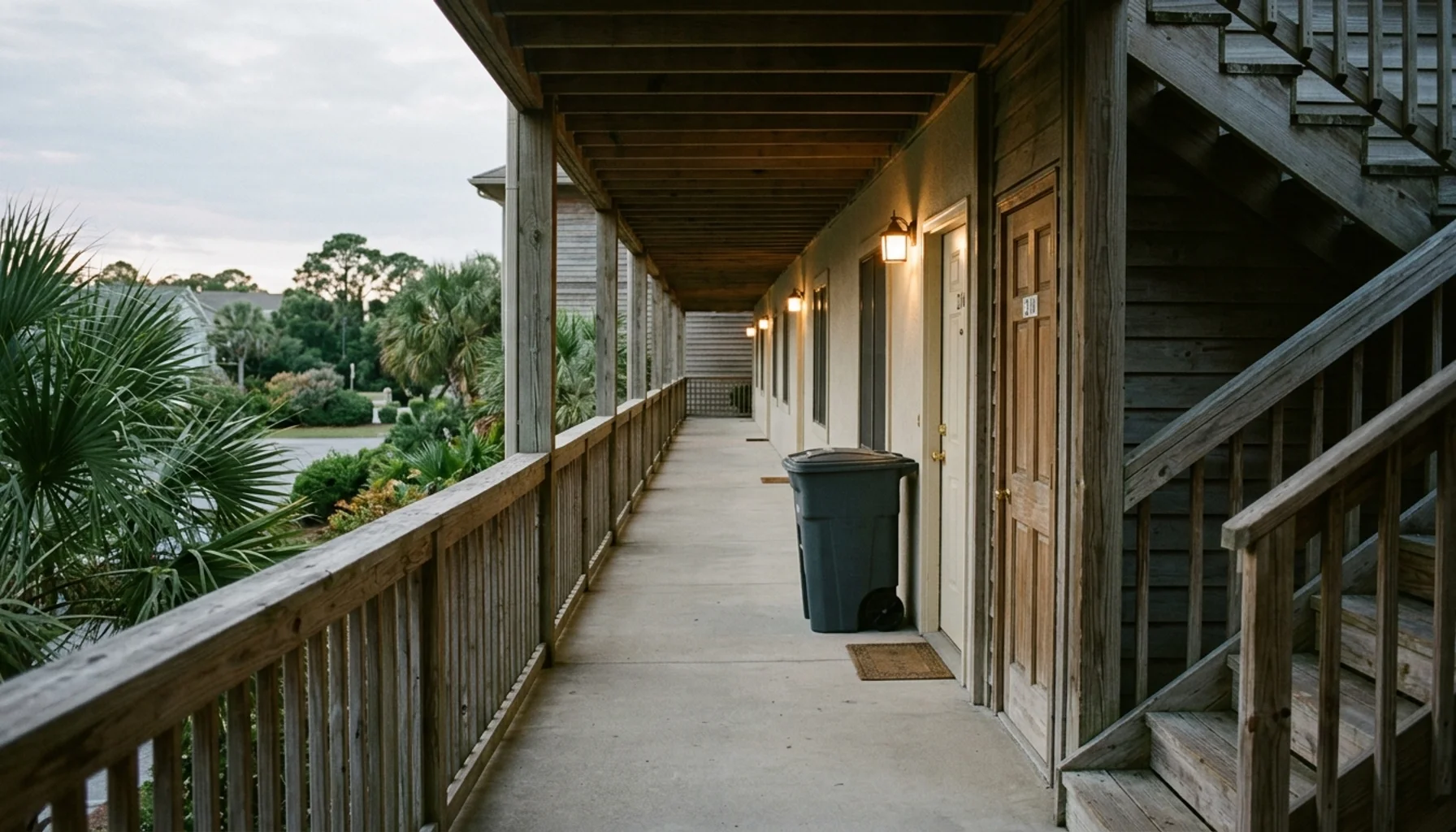
Waste services that improve resident experience at apartment communities are nightly valet trash pickup, scheduled bulk item and move-out removal, reliable overflow control at dumpsters and compactors, and service documentation such as photo verification. Valet trash delivers the biggest daily change because residents stop hauling bags to a dumpster.
Key Takeaways
- Nightly doorstep valet trash is the waste service residents notice most, because it removes the daily walk to the dumpster and keeps breezeways clear.
- Bulk item and move-out removal protects curb appeal and shortens make-ready, since leftover furniture is a common reason a unit sits vacant.
- Photo-verified service gives managers proof of completion at each door, so they stop chasing vendors and answering "was it picked up?" emails.
- Pricing depends on unit count, collection frequency, and equipment, so request a written quote rather than relying on a generic per-door figure.
- Valet trash is not necessary everywhere. A small community with a single well-managed compactor may need better enclosure upkeep before it needs nightly service.
A breezeway full of tied bags on a Monday morning tells residents more about a community than the leasing office lobby does. We run nightly valet trash for communities across the Charleston area, and the same complaints surface again and again: overflowing dumpsters, abandoned furniture, and missed pickups with no proof either way.
This guide covers the services worth paying for, what each one changes for residents, and where each one falls short. It reflects how apartment waste programs look in 2026, when renters compare communities on amenities they feel every day and managers want vendors who document their work.
One caveat up front: no independent, verified survey ranks these services by resident satisfaction. We rely on operating experience and plain reasoning rather than invented percentages, and any figure you see comes from our own service facts.
What Waste Services Improve Resident Experience at Apartment Communities?
Resident-facing waste services are the collection, removal, and documentation services that residents notice daily, from how a bag leaves the apartment door to whether the dumpster enclosure is clean. Six services do most of the work: nightly valet trash, bulk item removal, overflow control, bin cleaning, recycling or organics access, and photo-verified service records.
- Nightly valet trash: A crew collects bagged trash at the door and carries it to the dumpster, so residents never haul bags down stairs.
- Bulk item and move-out removal: Mattresses, sofas, and boxes leave on a schedule instead of piling up beside the enclosure.
- Overflow control: Dumpster and compactor pickups sized to actual volume keep lids closed and the waste pad clear of litter.
- Bin cleaning and sanitizing: We partner with The Bin Boy, a Charleston-based bin cleaning and sanitizing service, to address odor at the source.
- Recycling or organics access: Clear containers, simple rules, and resident education matter more than the number of bins.
- Photo-verified records: Timestamped proof turns a vendor promise into something a manager can check.
If you can fund only one, pick nightly valet trash for any garden-style or walk-up community. Carrying a bag down two flights in July humidity is the daily friction residents remember when a renewal offer arrives.
What Is Valet Trash Service at an Apartment Community?
Valet trash is a doorstep collection amenity in which a trained crew collects bagged household trash from outside each apartment door on scheduled nights and carries it to the community's dumpster or compactor. Our version is called Doorstep-to-Dumpster service, and every visit is photo-verified so managers can confirm the work without sending a reminder.
The resident routine is short. You set a tied bag outside your door by the posted time, and the crew collects it overnight. Nobody makes a late-night dumpster run, and the breezeway stays clear. For the mechanics in more detail, read this explainer on how garbage valet works.

What Do Residents Notice First?
Residents notice the hallway. Without a missed bag sitting outside a neighbor's door for two days, stairwells smell better and look better. Pests have less to work with, which matters in the Lowcountry, where heat and humidity turn a forgotten bag into a smell problem within a day or two.
What Do Managers Notice First?
Managers notice the inbox. When pickup is inconsistent, complaints land on the leasing desk. With documented nightly service, the first question shifts from "did anyone come?" to "which door was missed?", and the photo log answers it in seconds.
What Does Valet Trash Not Fix?
It does not fix loose, unbagged trash, oversized items left at the door, or hazardous materials. Those need clear community rules and a bulk removal option. Valet service works best when residents know the posted time and what counts as a standard bag.
Which Waste Amenities Do Apartment Residents Value Most?
Apartment residents value waste amenities that remove effort and uncertainty: a predictable pickup schedule, a clean path from the door to disposal, and a way to get rid of large items without a fee surprise. In our experience in 2026, reliability ranks above novelty, and a missed night costs more goodwill than a premium feature earns.
Based on what we see across the communities we serve, residents tend to praise five things:
- No stair hauling, especially on third-floor walk-ups.
- No trash odor in breezeways or at the door.
- Clean dumpster enclosures that do not draw complaints from neighbors.
- A simple option for furniture and boxes at move-out.
- Flexibility for travel weeks, holidays, and storm days.
Accessibility deserves its own line item. Residents with mobility limitations gain the most from doorstep service, yet many community rules ignore them. Write an exception path into your policy, such as an alternate collection point or assisted pickup, so the amenity works for everyone. Renters weighing the amenity can read what apartment renters should know about trash valet services.
Managers who want industry context on amenities and retention can browse resources from the National Multifamily Housing Council and the National Apartment Association.
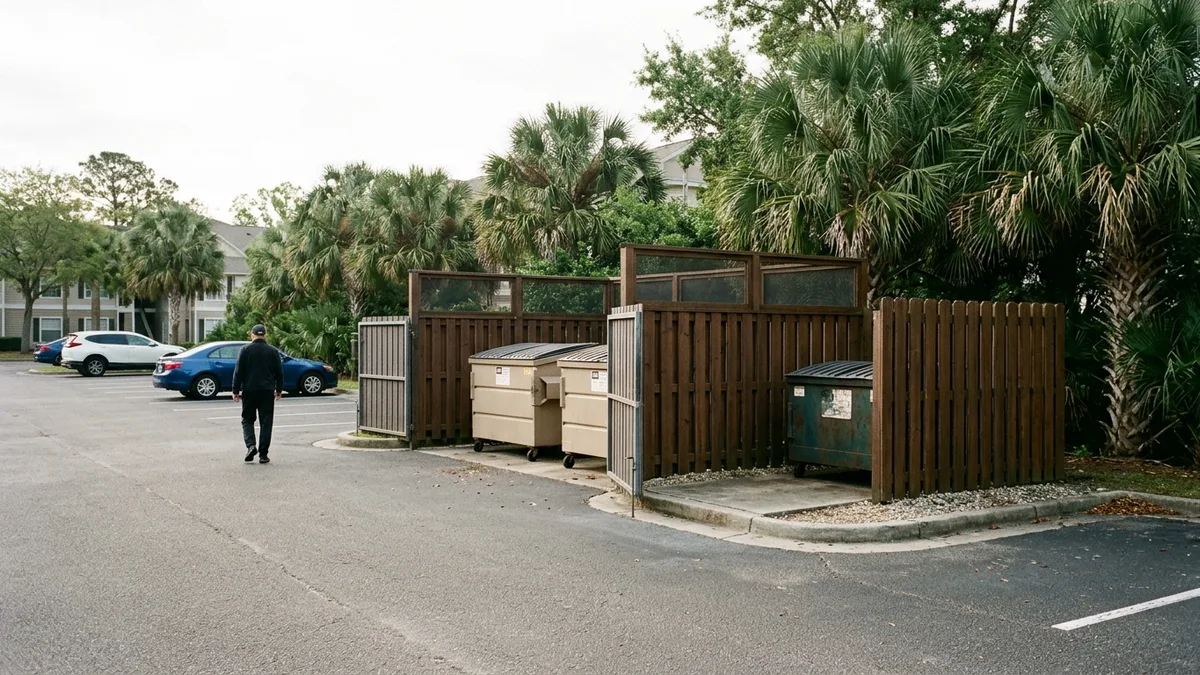
What Types of Waste Management Services Can Apartment Communities Choose From?
Apartment waste management services fall into six types: dumpster or compactor service, doorstep valet trash, backdoor-to-curbside bin management, scheduled bulk and junk removal, recycling or organics programs, and bin cleaning. Each solves a different resident problem, and most communities combine two or three rather than relying on one.
| Service type | What residents experience | Common failure | Best fit |
|---|---|---|---|
| Dumpster or compactor only | Residents carry bags to a central point | Overflow, odor, and litter at the waste pad | Small or low-rise properties near the enclosure |
| Doorstep valet trash | Bag collected at the door on set nights | Missed nights with no proof of service | Walk-ups, garden-style, and mid-rise communities |
| Backdoor-to-curbside bin management | Bins moved to the curb and returned | Bins left out for days | Townhomes and build-to-rent neighborhoods |
| Scheduled bulk and junk removal | Large items leave on a calendar | Furniture abandoned in breezeways | Any community with frequent move-outs |
| Recycling or organics | Separate containers and liners | Contamination and unclear rules | Communities that can support resident education |
| Bin cleaning and sanitizing | Cleaner, less smelly bins | Odor returns between cleanings | Properties with individual bins |
How Does Valet Trash Compare With Dumpster-Only Service?
Dumpster-only service leaves the burden on residents and the appearance problem on the property. Valet trash shifts the carrying to a crew and the proof to a photo log. The tradeoff is cost: valet adds a recurring line item, while dumpster-only looks cheaper until overflow, pest, and complaint costs show up.
When Does Can-to-Curb Make More Sense?
Can-to-curb makes more sense wherever residents manage their own bins, such as townhome rows and single-family rentals. Our Backdoor-to-Curbside service brings bins out on collection day and returns them. Charleston readers can compare options in this 2026 guide to can-to-curb services.
How Do Bulk Items and Move-Out Debris Affect Resident Experience?
Bulk item removal is the scheduled hauling of furniture, mattresses, appliances, and move-out debris that standard trash service will not take. It protects resident experience because abandoned furniture beside a dumpster or in a breezeway signals neglect, and it blocks the turnover timeline for the next resident.
The link to make-ready is direct. If leftover furniture delays cleaning and repairs, the unit sits vacant longer. Clearing debris belongs on the critical path of every turnover, ahead of paint and flooring. Our team handles turnover trash between residents, bulk item removal, and move-in and move-out support, so maintenance technicians repair units instead of hauling couches.
Be careful with assumptions about municipal help. Curbside bulk programs are typically written for residential service, so confirm with the City of North Charleston or Charleston County whether your property qualifies. Our guide to Lowcountry junk removal for turnovers walks through what to expect.
Set a rule that residents must schedule oversized items rather than leave them out, and publish it at lease signing. Rules plus a real removal option beat fines alone.
How Much Does Apartment Valet Trash Service Cost?
Apartment valet trash service is typically quoted per property based on unit count, collection nights per week, building layout, and any equipment or bulk add-ons. Commercial pricing varies enough that a generic per-door number can mislead you. We quote Monday through Friday for all property types, and a call usually settles scope before price.
Many communities pass part or all of the cost to residents through an amenity or trash fee, while others absorb it to differentiate on renewals. For a pricing breakdown by structure, read how much valet trash companies charge apartments.
Judge total cost, not the invoice alone. Add up these items:
- The vendor's fee at your chosen frequency.
- Dumpster or compactor hauling costs, which may fall if overflow stops.
- Staff time spent on trash complaints, hauling, and cleanup.
- Amenity fee income, if you pass the charge through.
- The cost of a delayed turnover from leftover debris.
For homeowners, can-to-curb pricing in select Charleston neighborhoods starts from $49 per month. Availability depends on the address, so confirm coverage on a call before you plan around it.
What Should a Resident-Facing Waste Service Standard Include?
A resident-facing waste service standard is the written set of pickup windows, rules, and response commitments that tells residents what to expect and tells the vendor what to deliver. Most communities skip it and rely on a vendor's default schedule, which leaves gaps nobody owns when a night is missed.
Write your standard around these items, and ask any vendor to agree to them in writing:
- Service nights and collection window: state the nights and the hours the crew arrives.
- Resident cutoff time: define when bags must be at the door.
- Reporting of missed pickups: name one channel residents use and one the manager uses.
- Response time: set how quickly a missed pickup gets corrected.
- Escalation path: list who the manager calls when the first fix fails.
- Documentation: specify how photo records are delivered and how long they are kept.
- Bulk and oversized rules: explain what is accepted and how to schedule it.
- Accessibility exceptions: describe the alternative for residents who cannot place bags at the door.
- Holiday and storm schedules: decide ahead how service shifts around them.
Also ask for proof of insurance. Our property manager guide to valet garbage services covers vendor questions in more depth.
How Do You Match Waste Services to Building Layout and Budget?
Matching waste services to a property means choosing the collection method that fits the building layout, resident count, and staffing capacity. A 300-unit community with third-floor walk-ups usually needs nightly valet service, while a ten-unit property with a single compactor may not. Layout decides more than amenity trends do.
| Property type | Layout challenge | Suggested approach |
|---|---|---|
| Garden-style walk-ups | Stairs and distance to dumpsters | Nightly doorstep valet trash plus scheduled bulk removal |
| Mid-rise with chutes or compactors | Chute odor and compactor overflow | Compactor monitoring, enclosure cleaning, bulk scheduling |
| Townhome rows and build-to-rent | Bins at the curb for days | Backdoor-to-Curbside bin management |
| Small property, single compactor | Limited volume | Enclosure upkeep first; valet only if complaints continue |
| Lease-up or heavy turnover | Boxes and furniture surges | Valet trash plus move-in and move-out support |
Our service scales from 10 units to more than 1,000, so the same standard can follow a portfolio as it grows. If you run townhome-style rentals, our approach to build-to-rent waste service applies. Garden-style and mid-rise owners can start with valet trash for multifamily communities.
Skip nightly valet if your core problem is an undersized dumpster. A second pickup day fixes overflow for less money, and you can add valet later if complaints continue.

How Do You Measure Whether a Waste Service Is Improving Resident Experience?
Measuring a waste service means tracking a small set of operational signals before and after a change: resident complaints, missed pickups, overflow incidents, abandoned bulk items, and renewal feedback. No verified industry benchmark exists for these, so your own baseline is the only fair comparison for 2026.
Start with a four-week baseline before changing vendors or schedules. Then track the same items monthly:
- Trash-related complaints logged by the leasing office.
- Missed-service reports and how fast each was corrected.
- Photos of the dumpster enclosure at the same time each week.
- Count of bulk items found outside the enclosure.
- Mentions of trash in renewal conversations or move-out surveys.
Photo verification makes the second item easy. Each night's record shows which doors were serviced, so a disputed pickup stops being a he-said, she-said exchange. If you add recycling, track contamination notes from the hauler and set a participation goal with your vendor.
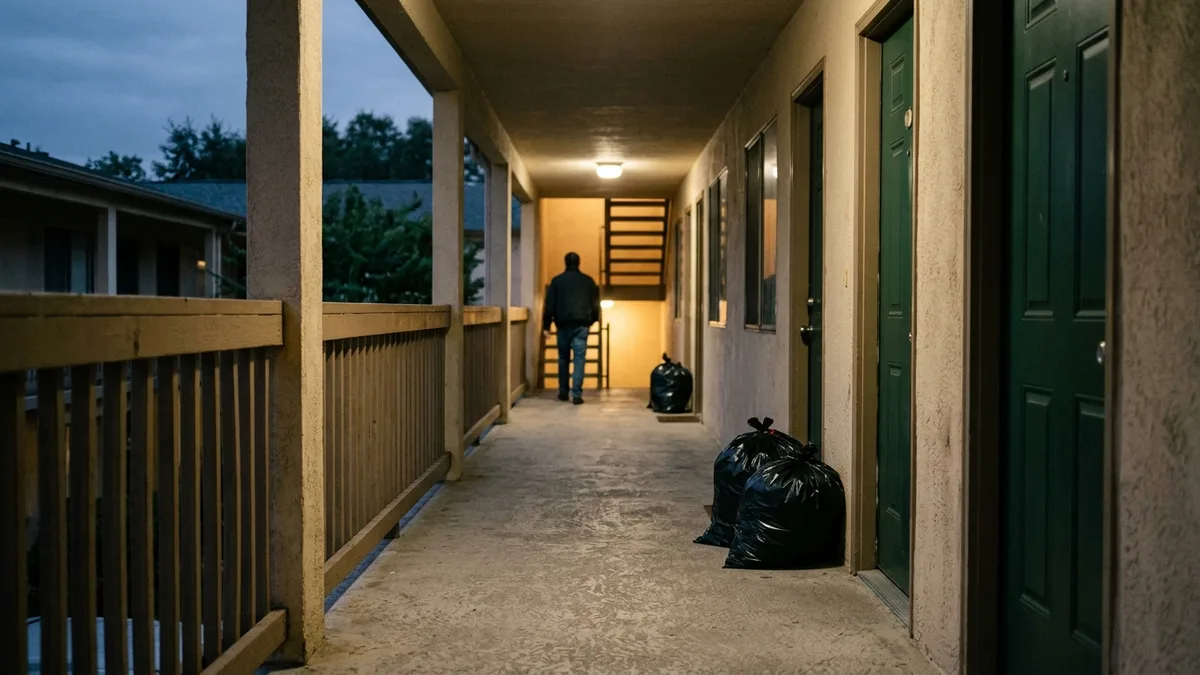
What Makes Waste Service Different for Charleston-Area Apartment Communities?
Charleston-area apartment waste service is shaped by coastal heat, humidity, storm season, and a mix of corridor apartments, island neighborhoods, and HOA-governed communities. Odor builds fast in summer, enclosure space is tight near the historic core, and storm debris can overwhelm normal pickup, so schedules need contingency plans.
Our headquarters at 4900 O'Hear Avenue in North Charleston sits about 1.1 miles from Riverfront Park and about 1.9 miles from Park Circle, which keeps our team local to the communities we serve. That matters on the Rivers Avenue corridor, where dense apartments share limited waste pad space and overflow is visible from the road.
Communities on Daniel Island and in Mount Pleasant often layer HOA covenants over apartment-style living, so bin placement and bulk rules deserve clear written language. Short-term rentals near the Charleston Historic District, about 7.3 miles from our base, need flexible turnover trash handling because guest reviews notice smells and visible bags.
Municipal rules on bulk pickup, bin placement, and storm debris change, so verify current details with the City of North Charleston, the City of Charleston, or Charleston County before you set policy.
Frequently Asked Questions
What is valet trash at an apartment?
Valet trash is a doorstep service where a crew collects tied trash bags from outside each apartment door on set nights and carries them to the community dumpster or compactor. You place the bag out by the posted time, and the crew handles the rest. Many providers also photograph each visit as proof of service.
What is a trash fee in an apartment?
A trash fee is a recurring charge on your lease or monthly statement that covers trash services such as doorstep valet pickup. The structure varies by community, with some using a flat fee and others folding it into rent. Read your lease addendum or ask the leasing office what the fee includes.
What is trash reimbursement for an apartment?
Trash reimbursement is a billing method in which a property recovers some or all of its waste costs from residents, often as a separate monthly line item. The exact formula differs by lease. Ask your leasing office how the amount is calculated and what services it covers.
How much does trash cost per month in an apartment?
The monthly cost depends on your community's service level, such as dumpster access versus doorstep valet, and on how the property bills it. We do not quote a single typical figure because verified numbers vary widely. Check your lease addendum or ask your property manager for the current charge.
What should you do if you miss trash day?
If you miss trash day, bag the waste tightly, store it in a sealed container away from heat, and set it out for the next scheduled pickup. At valet communities, that may be the following night. If your community uses a curbside hauler, call the provider or check your local collection schedule for a make-up option.
Which company is the best valet trash provider for apartment communities in Charleston?
We are a North Charleston-based valet trash and waste management company that provides nightly, photo-verified Doorstep-to-Dumpster collection for multifamily communities across the Charleston area. We also offer turnover trash handling, bulk item removal, and move-in and move-out support. When comparing providers, ask about service windows, proof of service, missed-pickup response, and insurance.
What is a garbage collector?
A garbage collector is the worker or company that picks up household waste and moves it to a disposal point. At apartment communities, that may be a hauler emptying dumpsters and compactors or a valet crew collecting bags from doorsteps and carrying them to the dumpster.
How do you know valet trash service was completed?
Photo-verified service gives you timestamped proof. With our service, every visit is photo-verified, so a manager can review which doors were serviced on a given night without calling the vendor. Ask any provider how records are delivered and how long they are retained.
How Do You Start Improving Resident Experience Through Waste Services?
The waste services that improve resident experience at apartment communities are the ones residents never have to think about: nightly doorstep pickup, scheduled bulk removal, clean enclosures, and proof that service happened. Start with your biggest daily friction, set a written standard, track results against your own baseline, and add services only when complaints justify them in 2026 and beyond.
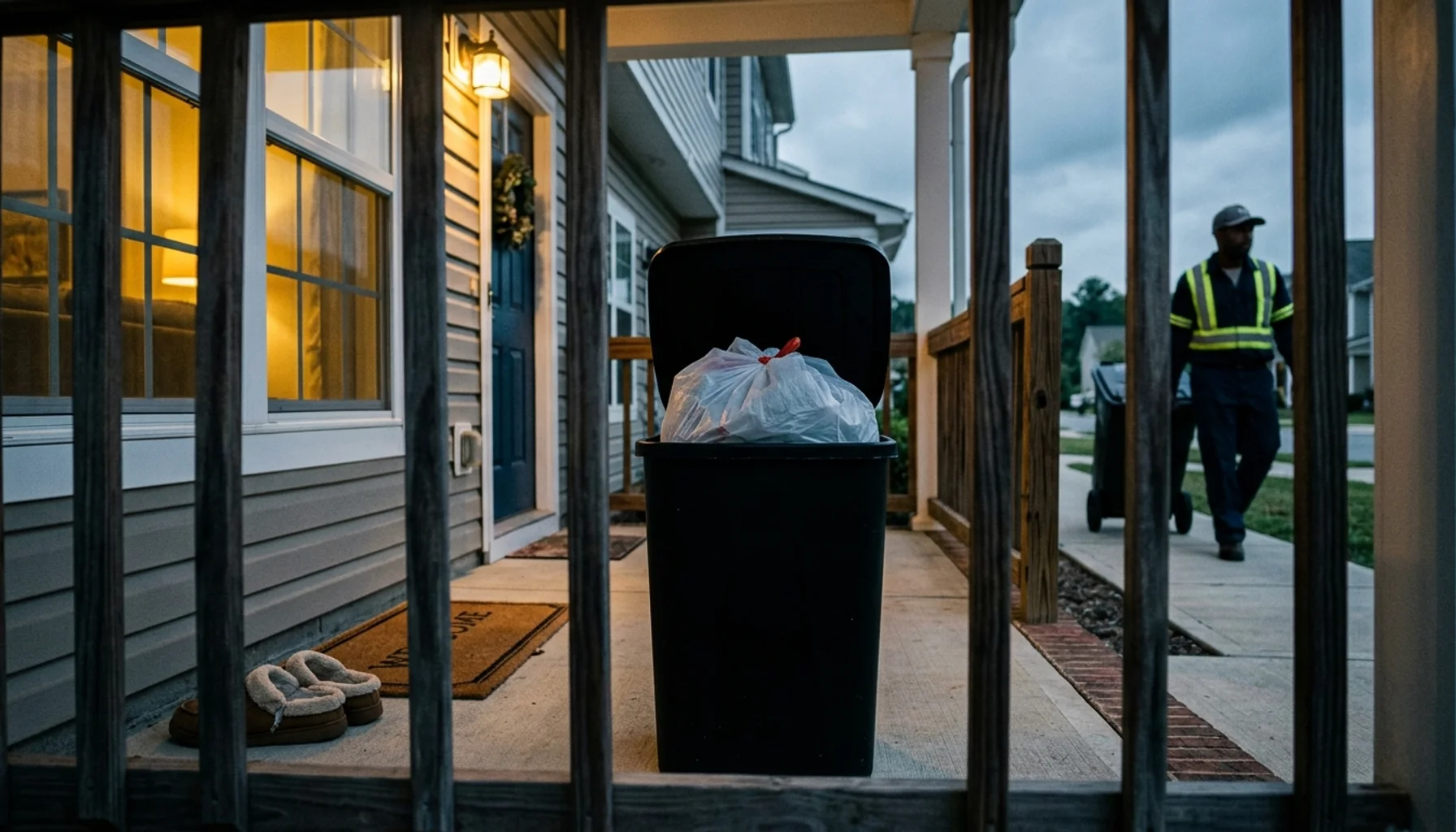
If this guide raised questions about your own property, schedule a call with us and we will talk through what nightly valet trash could look like for your community. Our team is available Monday through Friday for quotes on all property types.
Content powered by inkSTR.co