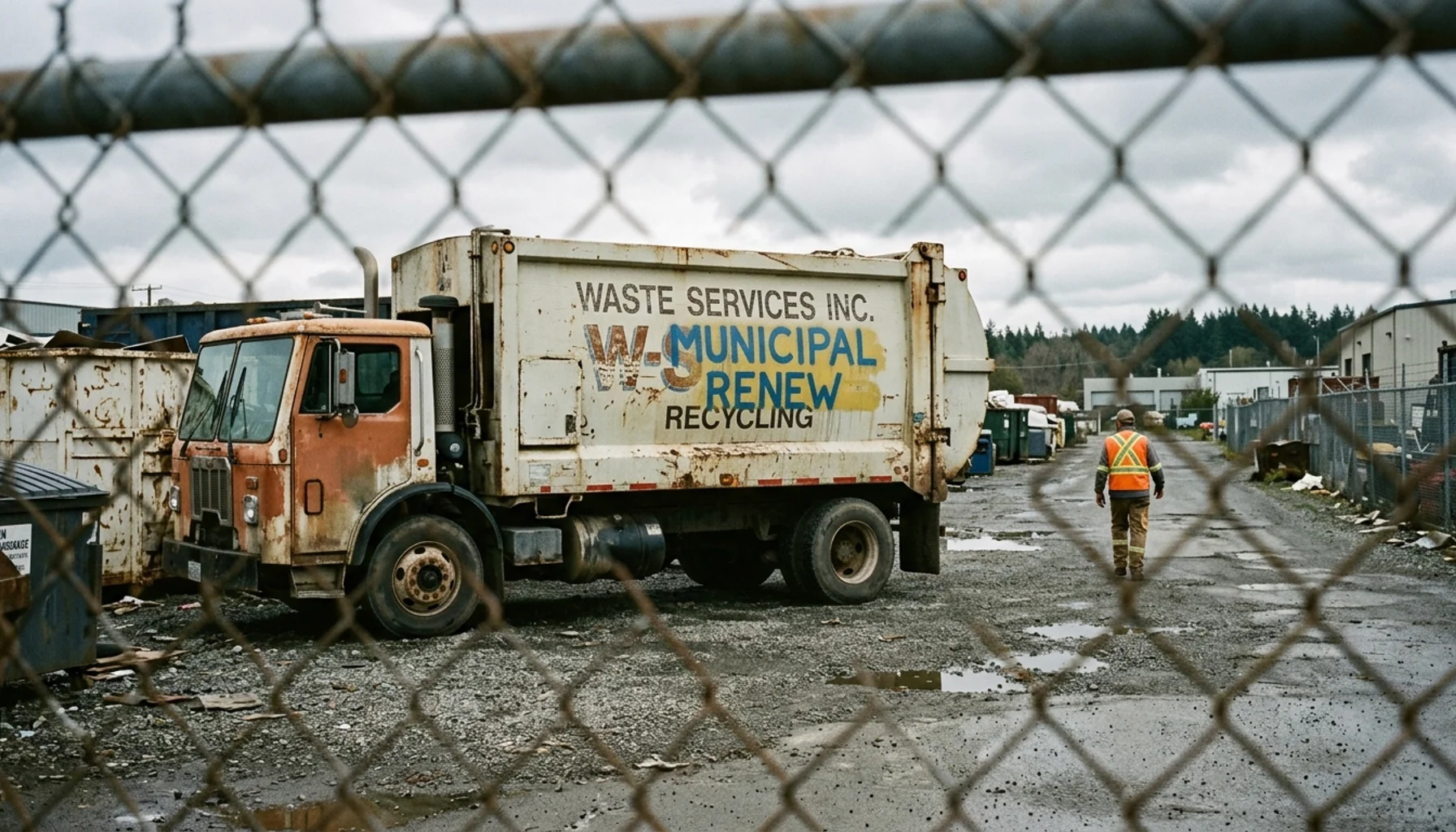
Allied Waste Company (formally Allied Waste Industries, Inc.) stopped operating as an independent business in late 2008, when it merged with Republic Services in a stock-for-stock deal announced that June. The Allied Waste brand still shows up on trucks and invoices in some markets today, but the company itself has been a wholly owned subsidiary of Republic Services for more than 17 years.
- Allied Waste Industries was founded in 1988 and grew into the second-largest non-hazardous solid waste company in the United States after acquiring Browning-Ferris Industries (BFI) in 1999.
- By 2007, Allied generated $6.1 billion in annual revenue and employed roughly 23,000 people serving more than 10 million customers across 128 markets in 37 states and Puerto Rico.
- The Republic Services merger was announced on June 22, 2008, and closed in the fourth quarter of that year; each Allied share converted into 0.45 shares of Republic Services stock.
- Allied's BFI acquisition triggered a Department of Justice antitrust review, ultimately requiring divestitures in 13 states and an eventual $125,000 civil contempt settlement.
- Today, former Allied customers are served under the Republic Services corporate umbrella, and the operational gaps Allied left behind (consistent doorstep service, documented accountability) are exactly what regional operators like Trash Day Made Easy are built to fill in markets like Charleston, SC and Atlanta, GA.
- As of 2026, no active company operates independently under the Allied Waste name at the corporate level, though some regional routes and equipment still carry Allied branding during the ongoing transition.
If you've searched "allied waste company" wondering whether your local hauler got bought out, sold, or quietly disappeared, you're not imagining things. Allied Waste Industries was a real, Fortune 500-scale company with landfills, transfer stations, and recycling plants across nearly 40 states, and then it wasn't. This guide walks through exactly what happened, why it happened, and what the corporate consolidation means for anyone managing waste at a property level in 2026.
At Trash Day Made Easy, we field questions from property managers in North Charleston and Mount Pleasant who assume any waste vendor named "Allied" is still an independent option. It isn't, and understanding why matters for anyone comparing national consolidators to a locally accountable provider. We'll also cover where the industry stands today, including the operational accountability gaps that opened up after large-scale mergers like this one, and what that means if you're evaluating a valet trash service in the Charleston metro or Atlanta market right now.
What Happened to Allied Waste?
Allied Waste Industries, Inc. ceased independent operations in 2008 after Republic Services acquired the company in an all-stock transaction. The deal was announced June 22, 2008, and completed that same year, folding Allied's entire network, collection companies, transfer stations, landfills, and recycling facilities, into Republic Services' corporate structure.
Specifically, the merger agreement converted every share of Allied stock into 0.45 shares of Republic Services stock. As a result, Allied shareholders became Republic Services shareholders overnight, and Allied's board and executive leadership stepped back from independent operating control. The combined company projected roughly $150 million in annual operating synergies by the third year post-merger, a common target for waste industry consolidations of this scale.
For customers, the practical effect rolled out gradually rather than overnight. Trucks, invoices, and customer service lines transitioned to Republic Services branding market by market over the following years. Some regions retained Allied Waste signage and route names longer than others, which is part of why the "allied waste company" search query still generates 4,400 monthly searches in 2026, according to keyword research data. People see the name on a truck or an old bill and assume it's still a standalone operator.
Who Is Allied Waste?
Allied Waste Industries, Inc. was a Delaware-incorporated solid waste management company headquartered at 18500 North Allied Way in Phoenix, Arizona, founded in 1988 and publicly traded on the New York Stock Exchange under the ticker AW. Before moving to Phoenix, Allied's principal executive office sat at 15880 North Greenway-Hayden Loop in Scottsdale, Arizona, and its mailing address from at least 1998 was 7201 East Camelback Road in Scottsdale.
Allied built its scale primarily through acquisition. The defining move came in 1999, when Allied purchased Browning-Ferris Industries (BFI), instantly becoming the second-largest non-hazardous solid waste management company in the country, trailing only Waste Management, Inc. That deal pushed Allied's annual revenue past $5 billion and its total assets to nearly $14 billion.
At its operational peak, Allied ran a vertically integrated network: various sources put the count at either 332 or 355 collection companies, 151 to 181 transfer stations, 151 to 167 active landfills, and 65 to 71 recycling facilities, depending on the reporting year. In 2001, the company posted $5.6 billion in sales with about 29,000 employees. By 2007, revenue had grown to $6.1 billion, though headcount had actually shrunk to roughly 23,000 as the company consolidated operations.
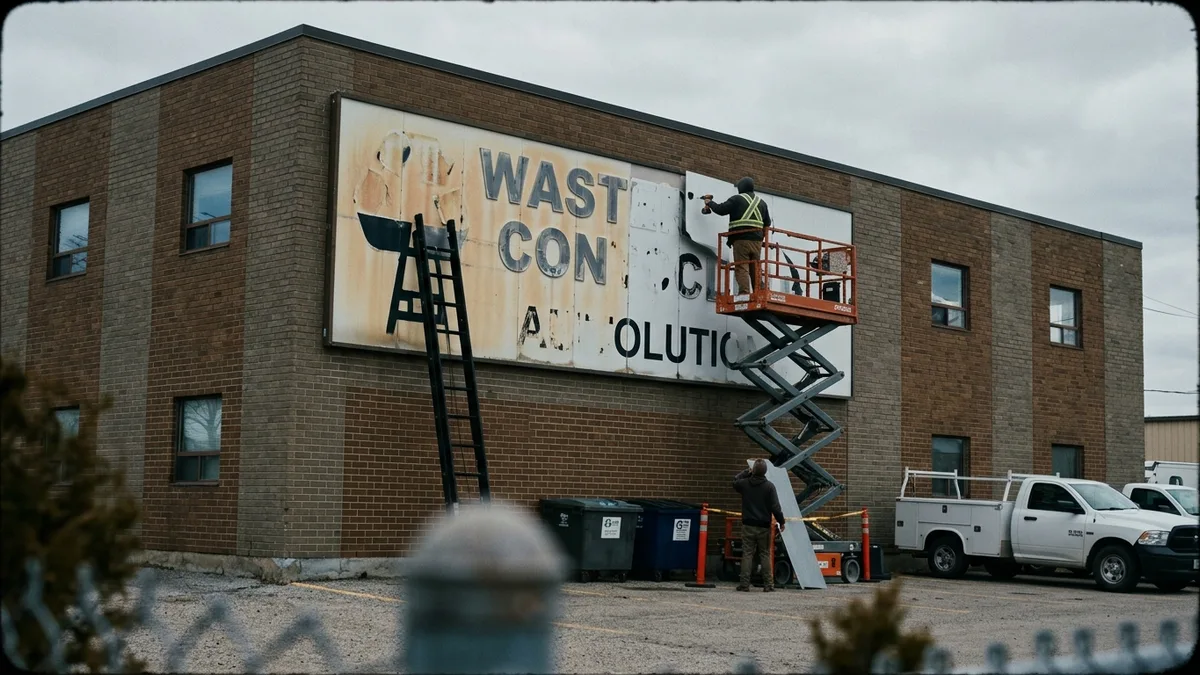
Allied Waste's Scale Before the Merger
By 2008, Allied served more than 10 million residential, commercial, and industrial customers across 128 major markets in 37 states plus Puerto Rico. That footprint included named service areas in Phoenix, Arizona; Louisville, Kentucky; Kansas City, Kansas; Commerce City, Colorado; Kent, Washington; and Springfield in multiple states. Allied's investor relations contact address in its 2008 SEC filing also listed a Fort Lauderdale, Florida office, reflecting the geographic sprawl of a company operating at Fortune 500 scale with government waste contracts alongside residential and commercial accounts.
When and Why Did Republic Services Acquire Allied Waste?
Republic Services acquired Allied Waste in 2008 to create the second-largest non-hazardous solid waste company in the United States, consolidating two national networks of collection routes, landfills, and recycling assets into a single publicly traded entity. The acquisition was announced on June 22, 2008, and finalized in the fourth quarter of that year.
The strategic logic was straightforward: waste management is a capital-intensive, route-density business. More trucks covering tighter geographic clusters means lower cost per stop. Combining Allied's 128-market footprint with Republic's existing network let the merged company eliminate overlapping routes, close redundant transfer stations, and negotiate better terms with landfill operators. That's the same synergy math that drives most waste industry consolidation, whether it's a national merger or a regional operator absorbing a smaller competitor.
As a result, the merged entity targeted approximately $150 million in annual operating synergies within three years, a figure disclosed in the merger materials filed with the SEC. For context, that kind of synergy target is standard practice in large-scale infrastructure mergers, not unique to the waste sector, but it illustrates why consolidation happens: fixed assets like landfills and transfer stations get more efficient the more volume runs through them.
The Acquisition Deal: Timeline and Financial Details
The Republic Services and Allied Waste merger followed a compressed timeline: announcement in June 2008, shareholder and regulatory review over the following months, and deal closure by the fourth quarter of 2008. This is fast by large-cap merger standards, reflecting how straightforward the strategic rationale was to both boards.
| Milestone | Date / Detail |
|---|---|
| Merger announced | June 22, 2008 |
| Deal structure | Stock-for-stock; 0.45 Republic Services shares per Allied share |
| Deal completed | Fourth quarter, 2008 |
| Projected synergies | Approximately $150 million annually by year three |
| Allied's pre-merger revenue (2007) | $6.1 billion |
| Allied's pre-merger employee count (2007) | Approximately 23,000 |
| Customers served pre-merger | More than 10 million across 37 states and Puerto Rico |
Notably, the all-stock structure meant no cash changed hands directly in the acquisition itself. Instead, Allied shareholders received an ownership stake in the combined Republic Services entity, betting on the value of those projected synergies. This is a common structure for mergers of similarly sized public companies, since it avoids the debt load a cash acquisition of this size would have required.
How Allied Waste Operates Today Under Republic Services
Allied Waste no longer operates as a standalone corporate entity; it functions entirely within Republic Services' organizational structure, with former Allied routes, facilities, and customer contracts absorbed into Republic's regional operating divisions. As of 2026, the Allied Waste brand persists in limited regional contexts, mostly legacy signage, older invoices, and some route names, but there is no independent Allied Waste corporate office, board, or public stock ticker.
This is the single most important thing to understand if you're searching "allied waste company" in 2026: you cannot contact Allied Waste as a separate business. Any service inquiry, billing question, or contract negotiation that would have gone to Allied Waste now goes through Republic Services' customer service channels for that market. Some smaller municipal contracts transitioned slowly, and a handful of regional profiles (including business directory listings for locations like Carnegie, Pennsylvania) may still reference the Allied name even though the underlying operator is Republic Services.
For property managers and portfolio operators who signed contracts under the Allied name before 2008, this matters operationally. If your service agreement, escalation contacts, or billing structure still references old Allied terms, it's worth confirming with your current provider whether those terms carried over unchanged or were renegotiated during integration.
What Are the Top 3 Waste Companies?
The three largest waste management companies in the United States by revenue and customer base are Republic Services, Waste Management, Inc., and a smaller tier of regional consolidators competing for the remaining market share. Waste Management has historically held the top position, with Republic Services (which absorbed Allied Waste in 2008) in second place.
This two-company dominance at the top of the national market is precisely why regional accountability matters so much for property-level waste decisions. National consolidators optimize for route density and shareholder returns across thousands of markets. They are not built to photo-verify every doorstep pickup at a 150-unit apartment community in North Charleston or coordinate bulk item removal around a single build-to-rent community's move-out schedule near Daniel Island.
That gap between national scale and local accountability is exactly where a Charleston-based operator like Trash Day Made Easy fits. We're not competing to be the third-largest waste company in the country. We're competing to be the most reliable valet trash and waste operations partner for the specific communities we serve across the Charleston metro and Atlanta, and that requires a fundamentally different operating model than route-density consolidation.
What Is the Republic Services Controversy?
The most documented legal issue tied to the Allied Waste and Republic Services corporate history involves antitrust enforcement from Allied's 1999 acquisition of Browning-Ferris Industries. The U.S. Department of Justice required Allied to divest waste collection and disposal operations across 13 states, covering 18 metropolitan areas, to satisfy antitrust conditions and clear the BFI deal.
Additionally, Allied later agreed to pay $125,000 to settle a civil contempt claim with the Department of Justice, related to alleged violations of the original 2000 consent decree tied to those divestiture requirements. This settlement predates the Republic Services merger and reflects regulatory scrutiny that's common when a company grows quickly through acquisition in a market where local waste collection can approach monopoly conditions in specific metro areas.
It's worth noting that antitrust review of this kind is standard practice in waste industry consolidation, not evidence of unusual misconduct. Any merger that risks concentrating collection or disposal capacity in a single metro area triggers DOJ review, and divestiture requirements are a normal remedy. For property managers evaluating waste vendors today, the more relevant takeaway is that consolidation at the national level does concentrate market power, which is part of why many multifamily and build-to-rent operators are shifting toward regional, accountability-focused providers instead.
Allied Waste Division: Current Service Locations and Coverage
Former Allied Waste service territories now operate under Republic Services' regional divisions, spanning the same broad geography Allied covered before 2008: 37 states plus Puerto Rico, concentrated in metro markets that included Phoenix, Arizona; Louisville, Kentucky; Kansas City, Kansas; and Commerce City, Colorado, among 128 total markets. Republic Services has since continued expanding and consolidating routes within that inherited footprint.
For the Charleston, SC and Atlanta, GA markets specifically, that means residents and property managers dealing with any legacy Allied accounts are, in practice, dealing with Republic Services' municipal and commercial contracts. Standard curbside pickup in these markets continues through whatever municipal or commercial hauler holds the current contract, which may or may not be Republic Services depending on the specific city or county.
This is a distinct category from the amenity-grade valet trash service that properties add on top of municipal pickup. Republic Services and similar large haulers typically handle scheduled curbside or dumpster-based collection under municipal contracts. They generally do not offer nightly doorstep-to-dumpster valet collection, photo-verified service confirmation, or on-demand bulk item removal integrated into a property's make-ready cycle, which is the specific service category Trash Day Made Easy operates in.
Service Offerings: What Waste Customers Can Expect From Legacy Allied Accounts
Customers on legacy Allied Waste contracts, now serviced through Republic Services, typically receive standard municipal or commercial-grade waste collection: scheduled curbside pickup, dumpster servicing for commercial and multifamily accounts, recycling programs, and in some markets, hazardous waste disposal handling. These are the same core service categories Allied offered before the merger, since Republic Services largely retained the underlying operational infrastructure.
What customers should not expect from a standard municipal or commercial waste contract is doorstep-level service. Curbside and dumpster models put the burden of transport, staging bins, and pickup timing on residents or on-site staff. For a 200-unit apartment community, that means residents managing their own trip to a dumpster, at whatever hour is convenient for them, often resulting in overflow, hallway clutter, and maintenance staff fielding complaints.
This is precisely the operational gap that valet trash service as a category was built to solve, and it's why an increasing share of multifamily communities have added it as a resident amenity over the past decade. According to National Multifamily Housing Council data, roughly half of U.S. apartment communities now offer some form of valet trash, with residents typically paying in the range of $25 to $35 monthly for the convenience.
Corporate Structure: How Legacy Allied Assets Fit Into the Modern Waste Industry
Following the 2008 merger, Allied Waste's collection companies, transfer stations, landfills, and recycling facilities were absorbed into Republic Services' broader corporate structure rather than operated as a separate subsidiary brand. Specifically, this means the vertically integrated network Allied built, once comprising over 300 collection companies and more than 150 landfills across 39 states, now operates under unified Republic Services management, financial reporting, and executive leadership.
For anyone researching corporate ownership of a specific facility or route, the practical implication is that "Allied Waste" is now a historical brand name layered over Republic Services infrastructure in some markets, not a current operating entity you can contact directly. Business directory listings referencing "Allied Waste Company, Inc." or similar names in specific cities typically reflect either outdated information or small independent operators using a similar name who have no corporate relationship to the original Allied Waste Industries.
This distinction matters because search results for "allied waste company" surface a mix of the historical Fortune 500 corporation, current Republic Services operations, and unrelated small businesses that happen to share part of the name. Verifying which entity you're actually dealing with, especially for a service contract or billing dispute, requires checking the specific business address and corporate registration rather than relying on the name alone.
The Merger Impact: What Changed for Customers and Employees
The Republic Services acquisition of Allied Waste changed customer-facing branding, billing systems, and route management gradually over the years following the 2008 close, while largely preserving the underlying physical infrastructure, trucks, landfills, and transfer stations, that Allied had built. For employees, the merger consolidated overlapping administrative functions and management layers, which is standard in mergers targeting operating synergies of this scale.
For residential and commercial customers, the most noticeable near-term change was typically a shift in customer service contact information and, in some markets, updated route schedules as Republic Services consolidated overlapping territories. Billing continued largely uninterrupted, since waste collection is an essential service that municipalities and property managers cannot afford to have disrupted during a corporate transition.
What the merger did not directly address, and what national consolidation of this kind rarely solves, is the accountability gap at the individual property level. A merger between two national haulers changes who owns the trucks. It doesn't change whether a specific resident's bag actually gets picked up on a given night, or whether a property manager gets documented confirmation that service happened. That gap is a structural feature of the route-density business model, not a temporary integration hiccup, and it's the reason regional, photo-verified valet trash providers have grown as a distinct category over the past several years.
Specialized Services: Hazardous Waste and Government Contracts
Allied Waste Industries historically served government waste contracts and handled hazardous waste disposal as part of its integrated network of transfer stations, landfills, and recycling facilities across 37 states. Specialized handling of this kind requires specific environmental permits and compliance oversight, which is a core reason large national haulers dominate government and industrial contracts: the regulatory and capital barriers to entry are substantial.
Republic Services inherited these specialized service lines along with the rest of Allied's operating footprint. Government waste contracts, municipal solid waste agreements, and hazardous waste handling remain concentrated among the largest national players precisely because of the environmental compliance infrastructure required, landfill permitting, groundwater monitoring, and regulatory reporting that smaller regional operators are not typically structured to provide.
This is a meaningful distinction for anyone comparing waste service categories. Trash Day Made Easy does not compete in hazardous waste disposal or government solid waste contracts; that's a different regulatory category entirely. Our focus is doorstep-to-dumpster valet trash service, trash can concierge, bulk item removal, and turnover waste handling for multifamily communities, build-to-rent developments, short-term rental properties, HOAs, and residential homeowners, an amenity-grade service layer that sits on top of, not in place of, standard municipal waste infrastructure.
Allied Waste's Environmental Programs: What the Legacy Included
Allied Waste ran regional sustainability initiatives before the merger, including a planned environmental program in San Mateo County, California, designed to reduce the company's local carbon footprint by more than 3.3 million pounds annually. Specifically, that program targeted converting roughly 80,000 gallons of diesel fuel per month across its fleet to compressed natural gas, a common fleet-conversion strategy among large waste haulers looking to cut emissions and fuel costs simultaneously.
Allied also operated a tele-clearing program nationally, allowing customers to request pickups by telephone, an early customer service convenience feature that predates today's app-based scheduling most modern waste operators use. These programs illustrate that Allied, at its scale, invested in both environmental compliance and customer service infrastructure, features that carried forward into Republic Services' broader operations after 2008.
For context on the broader waste industry's environmental stakes, global municipal solid waste generation reached 2.6 billion tonnes in 2022, according to the Ten Charts that Explain the Global Waste Crisis report, with projections suggesting that figure could climb to 3.9 billion tonnes by 2050. Only about 9% of plastic waste gets recycled worldwide, based on 2026 data from Ocean Blue Project and Plastic Pollution Statistics research, underscoring why waste handling infrastructure, whether run by a Fortune 500 consolidator or a regional valet trash provider, carries real environmental weight beyond the logistics of pickup schedules.
How Does This History Compare to Other Waste Industry Consolidations?
The Republic Services acquisition of Allied Waste followed a familiar pattern in waste industry consolidation: a mid-size national player acquires a similarly sized competitor to achieve route density and cost synergies, typically triggering some level of antitrust review given how geographically concentrated waste collection contracts tend to be. Allied itself followed this exact playbook a decade earlier when it acquired Browning-Ferris Industries in 1999.
What distinguishes large-scale mergers like Republic-Allied from smaller regional acquisitions is the sheer footprint involved, 37 states and over 10 million customers changing corporate ownership essentially at once. For comparison, most waste industry consolidation activity today happens at a much smaller scale: a regional hauler acquiring a handful of routes in a specific metro, or a national player buying out a single-market operator.
The lasting lesson for property managers and portfolio operators evaluating waste vendors in 2026 is that national-scale consolidation tends to prioritize operational efficiency and shareholder synergies over property-level service accountability. That's not a criticism of the business model; it's simply what route-density economics optimize for. If your priority is documented, photo-verified service at every single door, a locally rooted operator built specifically for that standard is a fundamentally different value proposition than a national consolidator managing millions of accounts across dozens of states.
Why a Locally Accountable Alternative Matters for Charleston and Atlanta Properties in 2026
Multifamily construction hit a 38-year high in 2026, with 608,000 new apartment units completed nationally, according to the National Association of Home Builders. Yet only about 1.5 million of the roughly 20 million apartments in the U.S. currently use valet trash service, leaving substantial room for adoption growth, especially as national waste consolidators like Republic Services remain focused on municipal contracts rather than doorstep amenity service.
This is exactly the gap Trash Day Made Easy was built to fill. Headquartered at 4900 O'Hear Avenue in North Charleston, SC, we provide nightly, photo-verified doorstep-to-dumpster valet trash collection and backdoor-to-curbside trash can concierge service for multifamily communities, build-to-rent developments, short-term rental properties, HOAs, and residential homeowners across the Charleston metro and Atlanta, GA. Unlike a national consolidator managing millions of accounts, every service visit we complete is photographed at the door, giving property managers documented confirmation without needing to follow up or issue reminders.
We're purpose-built for scalability, capable of servicing portfolios from 10 units up through more than 1,000 units, while holding the same consistent service standard across every single property. Property managers near the Rivers Avenue corridor dealing with overflowing dumpsters, build-to-rent operators near Daniel Island coordinating resident turnover, and short-term rental operators managing properties near the Charleston Historic District or on Sullivan's Island all face a version of the same problem: national waste infrastructure was never designed to solve doorstep-level accountability. We built our entire operating model around solving exactly that.
Beyond routine nightly collection, we handle turnover trash between residents or guests, bulk item removal, and move-in and move-out support, all of which matter enormously for build-to-rent communities and short-term rental operators dealing with frequent resident transitions. On-demand property waste support rounds out the offering for non-routine situations that a standard contract with a national hauler simply isn't flexible enough to accommodate. Residential homeowners in select Charleston neighborhoods can access our valet trash service starting from $49 per month, and we partner with The Bin Boy, a Charleston-based bin cleaning and sanitizing service, to extend the full range of waste care beyond collection alone.
Other waste providers exist in the Charleston and Atlanta markets, ranging from national consolidators to smaller regional operators, and property managers should absolutely compare options before signing a multi-year contract. But the pattern we consistently see across the portfolios we service is that photo-verified accountability and local responsiveness are the two things a national-scale operator, whether that's Republic Services or any other Fortune 500 consolidator, structurally cannot prioritize the way a Charleston-based team built around this exact service can.
Practical Guidance: What to Look for in a Waste Vendor After a Corporate Consolidation
Choosing a waste vendor in a market shaped by decades of consolidation, like the one Allied Waste's 2008 merger helped create, requires evaluating a few specific factors beyond price alone.
- Confirm current corporate ownership. Before signing or renewing any waste contract, verify who actually operates the service today. A name on an old invoice or truck decal, including "Allied Waste," does not guarantee that entity still exists independently.
- Separate municipal pickup from amenity-grade service. Standard curbside or dumpster collection through a municipal or commercial contract is a different category than nightly doorstep valet trash. Decide which problem you're actually trying to solve.
- Ask about service verification. Photo-verified doorstep collection, like what Trash Day Made Easy provides on every visit, gives you documented proof of service completion. A national hauler managing thousands of routes typically cannot offer this level of per-stop documentation.
- Evaluate scalability. If you manage a scattered-site portfolio or a growing build-to-rent community, confirm the vendor can maintain consistent service standards from a handful of units up to a much larger footprint.
- Check on-demand flexibility. Turnover trash, bulk item removal, and move-in and move-out support matter enormously for short-term rental operators and multifamily communities with frequent resident transitions. Not every vendor offers this beyond a fixed weekly schedule.
- Review contract length and renewal terms. Industry data shows typical valet trash contracts run three to five years, so understand what you're committing to before signing.
Common mistakes property managers make include assuming a familiar national brand name guarantees consistent service quality, and underestimating how much resident satisfaction and lease renewal rates hinge on daily-use amenities. According to the 2026 NMHC/Grace Hill Renter Preferences Survey of over 172,000 renters, community appearance and maintenance rank among residents' top renewal priorities, and consistent waste management is a direct driver of both.
Frequently Asked Questions About Allied Waste Company
What happened to Allied Waste Industries?
Allied Waste Industries merged with Republic Services in a deal announced June 22, 2008, and completed later that year. Allied stopped operating as an independent, publicly traded company and became a wholly owned subsidiary within Republic Services' corporate structure.
When was Allied Waste acquired by Republic Services?
The merger was announced on June 22, 2008, and closed in the fourth quarter of 2008. Each share of Allied stock converted into 0.45 shares of Republic Services stock as part of the all-stock transaction.
Is Allied Waste still operating as a standalone company?
No. Allied Waste has not operated as an independent corporate entity since 2008. Any references to "Allied Waste" today typically reflect legacy branding on trucks or invoices, small unrelated businesses using a similar name, or outdated business directory listings, not an active standalone waste company.
How much was Allied Waste sold for?
The Republic Services acquisition was structured as an all-stock merger rather than a cash sale, with Allied shareholders receiving 0.45 shares of Republic Services stock for each Allied share held. The combined companies projected approximately $150 million in annual operating synergies by the third year following the merger.
Where is Allied Waste currently headquartered?
Before the merger, Allied Waste Industries was headquartered at 18500 North Allied Way in Phoenix, Arizona. Since the 2008 merger, Allied's former operations run under Republic Services' corporate structure, which maintains its own separate headquarters and regional operating divisions.
Are Allied Waste customers now served by Republic Services?
Yes. Customers on legacy Allied Waste accounts transitioned to Republic Services following the 2008 merger, with billing, customer service, and route management gradually integrated into Republic's broader operating systems over the following years.
What is the difference between valet trash service and standard curbside pickup from a national waste consolidator?
Standard curbside or dumpster pickup, the kind offered through municipal contracts with large haulers, requires residents or property staff to transport trash to a collection point. Valet trash service, like the nightly doorstep-to-dumpster collection Trash Day Made Easy provides, sends a crew directly to each unit's door on a scheduled basis, removing that burden entirely.
Can a regional waste operator really match the scale of a national consolidator like Republic Services?
For amenity-grade, doorstep-level service, yes. Trash Day Made Easy is purpose-built to scale from 10-unit properties up through portfolios of more than 1,000 units while maintaining consistent, photo-verified service standards, which is a fundamentally different operating challenge than the municipal-scale route density national consolidators optimize for.
Conclusion: The Allied Waste Story and What It Means in 2026
Allied Waste Industries built itself into a Fortune 500-scale operation over two decades, then disappeared as an independent company almost overnight when Republic Services completed the acquisition in 2008. That corporate history explains why so many people still search "allied waste company" today: the name lingers on old invoices, regional route branding, and business directory listings even though the underlying entity hasn't existed independently in nearly two decades.
The bigger lesson for property managers and portfolio operators in 2026 isn't really about Allied Waste specifically. It's about what large-scale consolidation does and doesn't solve. National mergers optimize for route density and shareholder synergies. They rarely solve the accountability gap at an individual property's front door, and that gap is exactly why locally rooted, photo-verified valet trash providers have become such a distinct and growing service category across markets like Charleston and Atlanta.
If you're managing a multifamily community, a build-to-rent development, a short-term rental portfolio, or even a single home in a Charleston neighborhood, the question isn't whether Allied Waste can help you today. It's whether your current waste vendor can actually document that service happened at every door, every night. Get started with Trash Day Made Easy to see how a Charleston-based, photo-verified waste operations partner handles that differently than a national consolidator ever could.

If overflowing dumpsters and inconsistent pickup schedules are driving resident complaints at your community, a nightly valet trash program with documented proof of service at every door solves that at the source. Trash Day Made Easy serves multifamily communities, build-to-rent developments, and HOAs across Charleston and Atlanta with exactly this kind of accountability. Request a service quote, available Monday through Friday for all property types.
Content powered by inkSTR.co