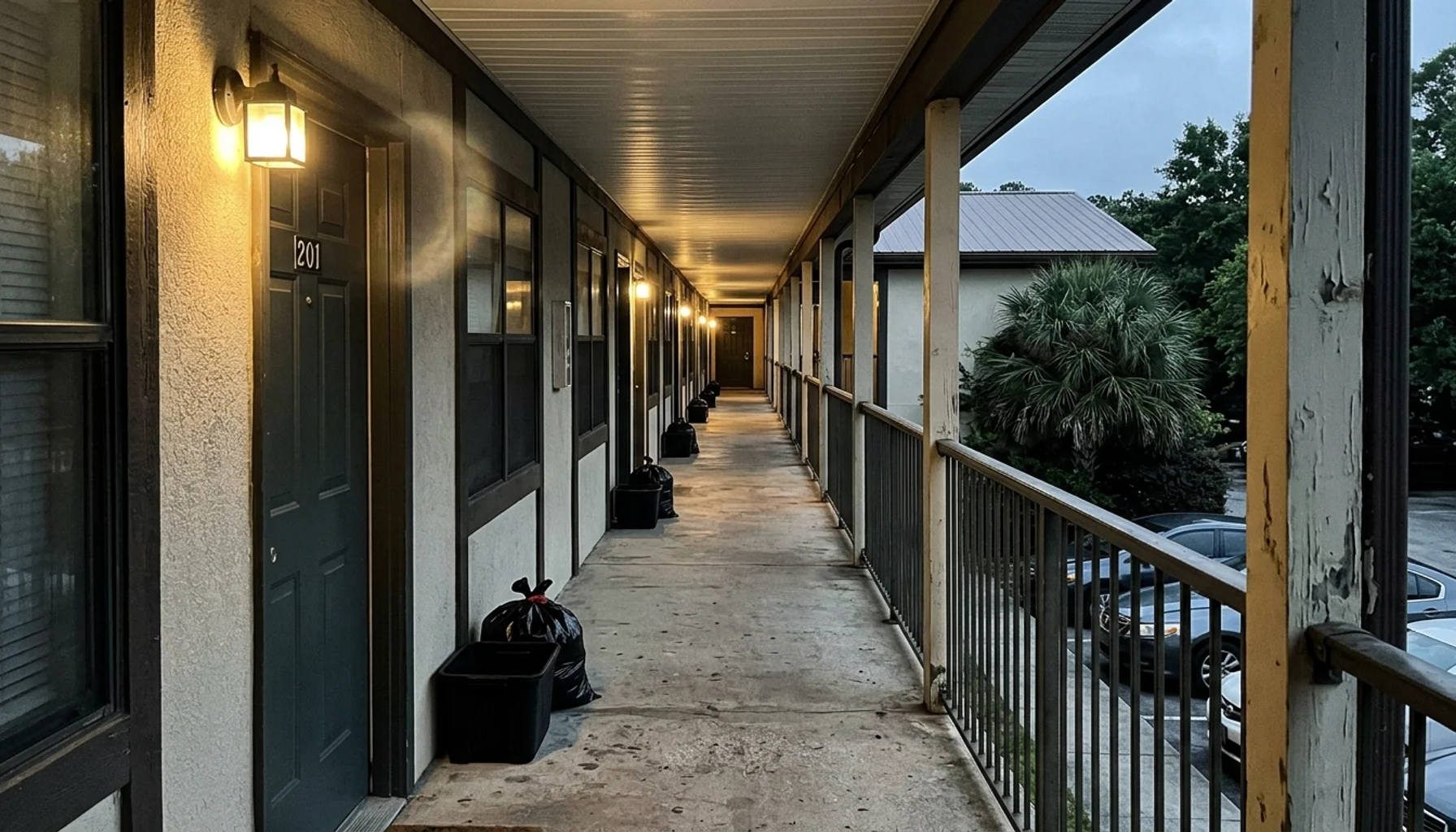
Valet trash service is a private amenity in which a waste collection crew picks up bagged trash directly from a resident's doorstep on a set nightly schedule, then carries it to the community dumpster or compactor, so residents never have to haul their own bags to a shared trash area. It's the multifamily version of curbside pickup, except the curb is your front porch.
Key Takeaways
- Valet trash service picks up bagged waste directly outside apartment doors, typically Sunday through Thursday between 6:00 p.m. and 8:00 p.m., and carries it to the property's central dumpster or compactor.
- According to the National Multifamily Housing Council (NMHC), more than 50% of U.S. apartment complexes now offer some form of valet trash service as a standard resident amenity.
- Residents typically pay a mandatory monthly fee of $25 to $35 per unit, while property owners commonly pay providers $8 to $15 per unit, creating a spread that can add measurable net operating income at scale.
- The National Apartment Association (NAA) has cited valet trash and similar doorstep amenities as a factor property managers track when evaluating resident retention.
- Photo-verified service documentation, a standard offered by providers like Trash Day Made Easy, gives property managers proof of nightly collection at each door without requiring follow-up calls.
- Valet trash differs from bulk item removal, turnover trash handling, and bin management, each of which solves a different waste problem in a multifamily or build-to-rent community.
If you manage an apartment community anywhere from the Rivers Avenue corridor in North Charleston to a build-to-rent development near Daniel Island, you already know what happens when trash coordination breaks down. Overflowing dumpsters, bags left in breezeways, and residents who complain louder than the maintenance requests you actually control. Valet trash service exists specifically to remove that friction, and in 2026 it's shifted from a nice-to-have perk to something renters actively expect at Class A and many Class B communities.
At Trash Day Made Easy, we service multifamily communities and build-to-rent portfolios across the Charleston metro and Atlanta, and the questions we hear most often come from property managers trying to understand exactly how the service works, what it costs, and whether it's worth adding to their amenity package. This guide answers those questions directly, using industry benchmarks and the operational details that actually matter when you're evaluating a provider.
You'll learn how the nightly collection process works, what residents are responsible for, how pricing typically breaks down for both property owners and residents, and where valet trash service fits alongside bulk item removal, trash can concierge, and full waste operations programs.
What Is Valet Trash Service for Apartment Communities?
Valet trash service for apartment communities is a scheduled, doorstep-to-dumpster waste collection program in which a private provider's crew walks each building's breezeways or hallways on set nights, collects bagged trash left outside resident doors, and transports it to the property's central dumpster or compactor. Unlike municipal pickup, which happens once or twice a week at a curb residents have to reach, valet trash brings the pickup point to the unit door.
The service is typically offered as a paid amenity bundled into a resident's monthly charges rather than a service residents opt into individually. Communities that adopt it usually do so to solve two problems at once: reducing the labor and mess concentrated at shared dumpster corrals, and giving residents a convenience amenity that competes with newer construction. As of 2026, valet trash has become common enough across Charleston-area multifamily properties that its absence, rather than its presence, is what stands out to prospective renters touring a community.
Providers vary in scope. Some strictly handle nightly bagged trash. Others, including Trash Day Made Easy, extend into recycling, bulk item pickup, and turnover trash handling between residents, which matters for communities dealing with frequent move-outs near job centers like the airport corridor.
How Does Apartment Valet Trash Work?
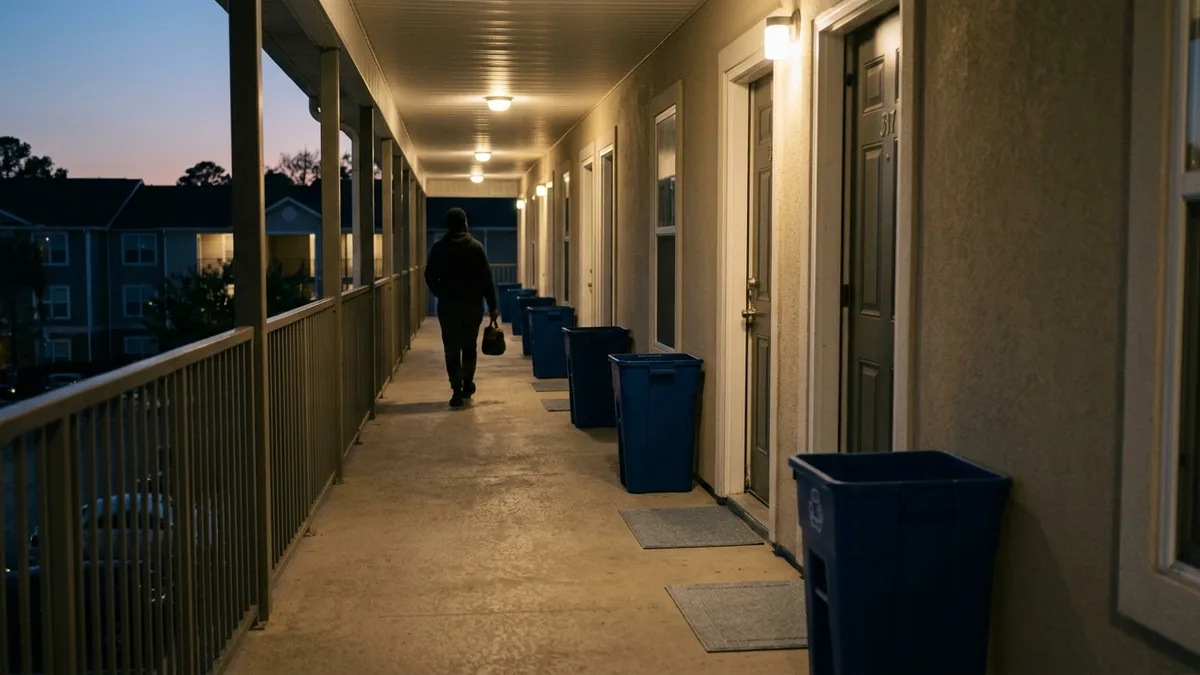
Apartment valet trash works through a nightly, sequential process: residents place a tied trash bag in an approved container outside their door during a designated evening window, a collection crew walks the property on a fixed route, and the crew carries each bag to the community's dumpster or compactor before returning the empty container to the doorstep for the next cycle.
First, the property provides or the resident is issued a container, commonly a 13-gallon can, sized specifically for a single night's household waste. Specifically, this size discourages bulk items and oversized trash from entering the nightly stream, since crews aren't equipped to haul furniture or construction debris on a walking route.
Second, residents set out their bagged, tied trash during the property's designated window. Industry sources commonly cite a set-out window somewhere between 6:00 p.m. and 11:00 p.m., with collection crews beginning their route around 8:00 p.m. Properties post their exact window in the lease addendum or resident handbook, and it's worth checking your specific community's schedule rather than assuming a universal time.
Third, a crew, sometimes on foot, sometimes using a small collection cart, moves door to door along a mapped route through breezeways, hallways, or exterior walkways. As a result, they collect only compliant bags: tied shut, not leaking, and left in the correct spot.
Fourth, the crew transports collected bags to the property's central dumpster or compactor, which remains the property's responsibility to maintain and have serviced by a hauler. Valet trash providers do not typically own or empty the dumpster itself; they feed it.
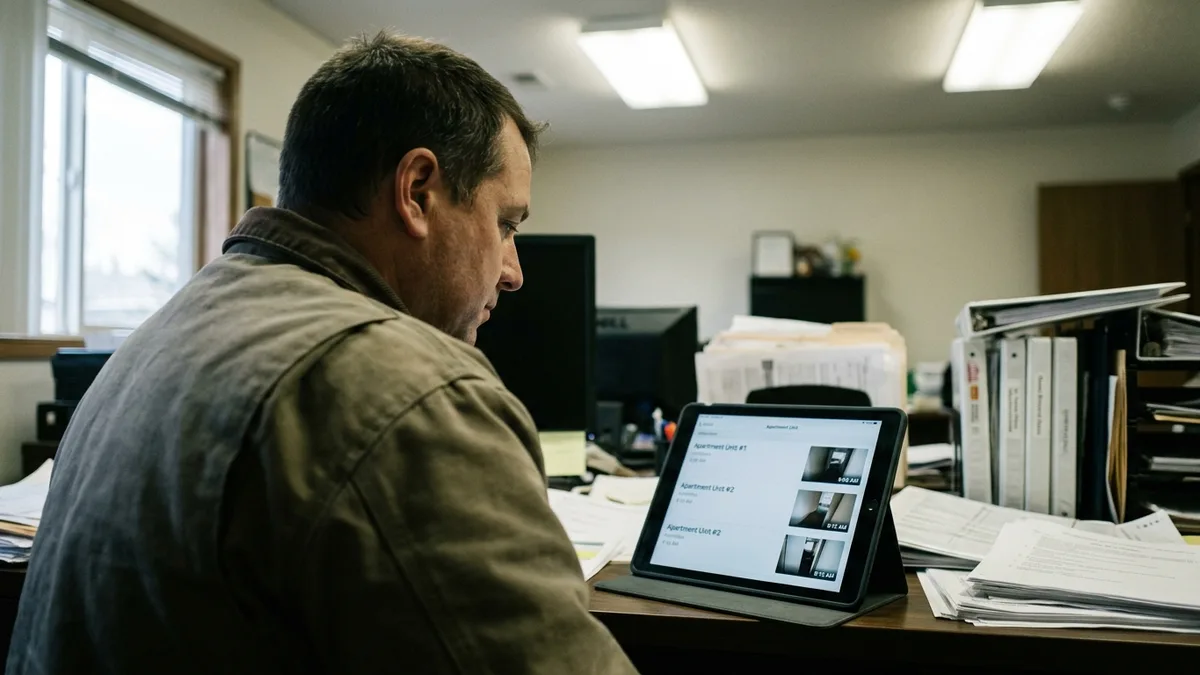
Finally, many providers, including Trash Day Made Easy, photo-verify each stop. A timestamped photo confirms the unit was serviced, giving the property manager documentation without needing to inspect breezeways personally the next morning.
What Nights and Hours Does Valet Trash Collection Run?
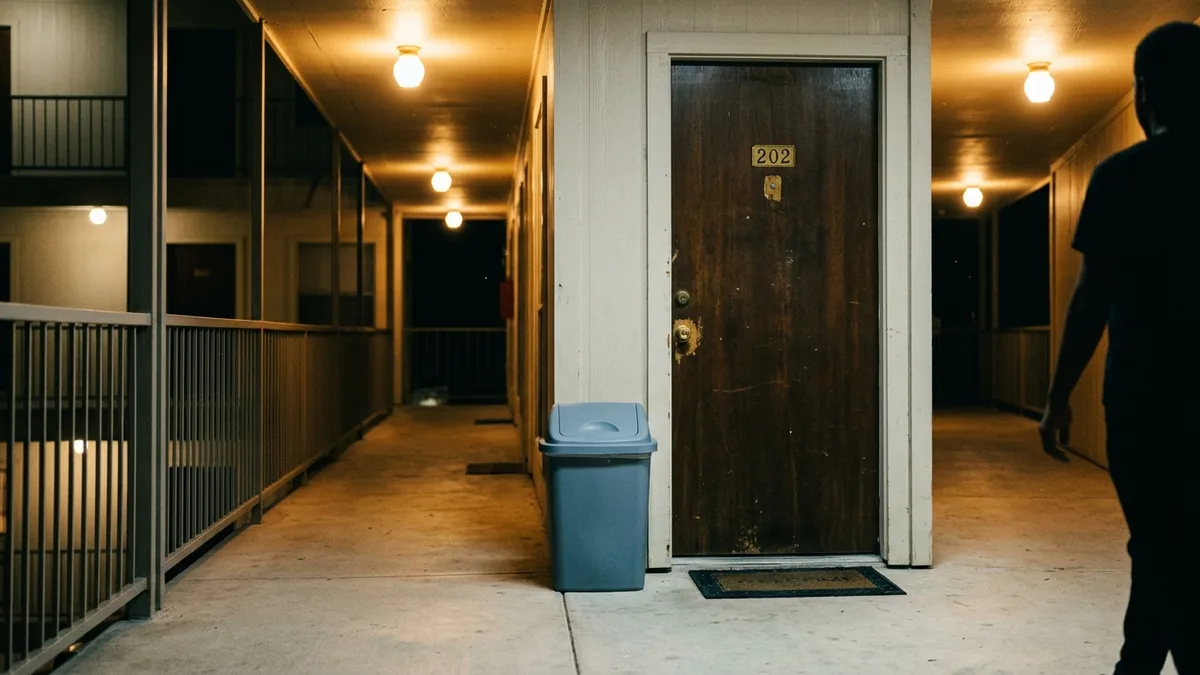
Valet trash collection most commonly runs five nights a week, Sunday through Thursday, with crews beginning their route in the early evening and finishing within a few hours depending on property size. This schedule keeps trash from accumulating over a weekend while giving crews Friday and Saturday off, when many properties see less staff and management coverage anyway.
Smaller communities running twice-weekly service instead of nightly collection can expect a lighter monthly cost, but residents also live with trash sitting outside doors longer between pickups. A property with roughly 300 units running full nightly service can expect a route to take approximately 1.5 hours to complete once collection begins, which is a useful benchmark when a provider quotes staffing levels for your portfolio.
Holiday schedule adjustments are common and should be spelled out in your service agreement. If a scheduled collection night falls on a major holiday, most providers shift the pickup to the following night or the nearest business night rather than skipping the week. Ask any provider you're evaluating, including a Charleston-based operator like Trash Day Made Easy, how holiday shifts are communicated to residents so your leasing office isn't fielding confused calls the next morning.
Can Apartments Make You Pay for Valet Trash?
Yes, most apartment communities that offer valet trash service charge it as a mandatory monthly fee added to a resident's rent statement, rather than an optional add-on residents can decline. This structure is standard across the multifamily industry because the property, not individual residents, contracts with the provider for the entire building or community.
Resident-facing valet trash fees commonly range from $25 to $35 per unit per month, according to other industry sources tracking multifamily fee structures. This charge typically appears on the lease as a required amenity fee, similar to pest control or a package locker fee, rather than a line item residents opt into during move-in.
Whether a fee is legally mandatory depends on how it's written into the lease and applicable state and local landlord-tenant rules, which vary. If you're a resident questioning whether a fee is enforceable, review your specific lease language and, if needed, check with your state's consumer protection office or a local tenant rights organization for guidance specific to your situation. Property managers should ensure the fee is clearly disclosed before move-in to avoid disputes at renewal.
Is Valet Trash Worth the Cost?
Valet trash is generally worth the cost for property managers when the reduction in dumpster-area labor, pest issues, and resident complaints outweighs the net monthly fee spread, and it's worth the cost for residents who value not walking bagged trash to a shared dumpster, especially at larger or multi-building communities.
From the ownership side, the math is straightforward. If a property charges residents $25 to $35 per unit and pays a provider $8 to $15 per unit, the spread lands somewhere around $13 to $27 per unit per month before accounting for administrative overhead. On a 300-unit community, that spread can translate into thousands of dollars in monthly revenue, which is one reason valet trash has spread so quickly across Class A and Class B properties rather than staying a luxury-only perk.
From the resident side, the value depends on lifestyle. A resident on a top floor of a walk-up, a parent managing kids and trash bags at once, or anyone in a community with a distant dumpster corral tends to see clear value. A resident who parks directly next to the dumpster and doesn't mind the walk may view the fee as an unwanted add-on rather than a convenience they'd pay for voluntarily. Property managers who frame the fee honestly, as a required community amenity rather than an optional service, avoid most resident pushback at lease signing.
How Much Is Valet Trash a Month?
Valet trash typically costs residents $25 to $35 per month per unit, while property owners typically pay a provider $8 to $15 per unit per month for the underlying service, according to figures reported by other industry sources and Property Manager Insider. The gap between what residents pay and what the property pays covers the provider's margin along with a return for the property's amenity investment.
Pricing on the property-owner side depends on several variables: unit count, collection frequency, geography, whether recycling and bulk item service are bundled in, and contract length. A 300-unit property paying providers within the typical range could see total monthly service costs in the range of a few thousand dollars, while generating resident-fee revenue that meaningfully exceeds that cost.
Portfolio-wide pricing gets more complicated once you're managing communities across multiple submarkets, for example a property near the Rivers Avenue corridor alongside a build-to-rent development near Daniel Island. Providers built for scale, like Trash Day Made Easy, which services portfolios from 10 units to more than 1,000, typically quote per-portfolio rather than per-property, which simplifies budgeting for owners managing several communities at once. Quotes are available Monday through Friday for property types of any size.
| Cost Component | Typical Range | Who Pays |
|---|---|---|
| Resident monthly valet trash fee | $25 to $35 per unit | Resident |
| Property-side provider cost | $8 to $15 per unit | Property owner/manager |
| Net spread (before overhead) | $13 to $27 per unit | Retained as property revenue |
| Residential homeowner valet trash (select Charleston neighborhoods) | Starting from $49 per month | Homeowner |
| Bulk item removal / turnover trash | Quote-based | Property or operator, by request |
What Are Approved Containers and Set-Out Rules for Valet Trash?
Approved containers and set-out rules for valet trash service are the specific requirements residents must follow, typically a designated 13-gallon receptacle, securely tied bags, no leaking waste, and no items exceeding a set weight, so crews can safely and quickly service every unit on a fixed nightly route. These rules exist because a crew working a timed route through dozens or hundreds of units cannot troubleshoot improperly bagged trash without falling behind schedule.
Common requirements across the industry include:
- Trash must be in a tied, sealed bag, not loose items placed directly in the container.
- Bags cannot be leaking or visibly wet through the exterior.
- Many programs cap individual bag or item weight at approximately 40 pounds, a limit referenced by some municipal bulk item guidelines and commonly adopted by valet trash programs for crew safety.
- Hazardous materials, paint, batteries, and construction debris are typically prohibited from nightly valet pickup and must go through separate disposal channels.
- Containers must be placed in the designated spot, usually directly outside the unit door, by the start of the set-out window.
Recycling is frequently offered alongside trash, with a separate bin collected on the same service nights. If your community offers valet recycling, check whether it runs on every collection night or a separate schedule, since not every provider bundles the two identically.
Who Is Responsible When Something Goes Wrong: Resident, Property Manager, or Provider?
Responsibility for valet trash issues splits three ways: residents are responsible for compliant set-out, providers are responsible for documenting and completing collection, and property managers are responsible for enforcing lease terms and resolving disputes between the two. This division is one of the most commonly overlooked parts of an apartment valet trash program, and getting it wrong creates confusion during move-in orientations and resident complaints.
Specifically, when a bag is missed, the first question should be whether it was compliant. A leaking bag, an overweight item, or a container placed after the set-out window can result in a documented violation rather than a missed pickup on the provider's end. Photo-verified service, which Trash Day Made Easy provides at every door, resolves this dispute quickly: the timestamped photo shows whether a unit was serviced, and whether the resident's set-out met program requirements.
When a dumpster overflows, that responsibility sits with the property, not the valet trash provider. Valet trash crews feed the dumpster; they don't manage the hauler contract or compactor maintenance. If your community sees frequent overflow, the fix is usually a hauler frequency or compactor capacity conversation with your waste hauler, separate from your valet trash provider relationship.
For repeated violations, whether from a resident continually leaving out non-compliant trash or from move-out debris left in breezeways, property managers typically handle resident-facing enforcement, including notices and lease consequences, while the provider documents and reports the pattern. This is one reason a clear written policy on collection nights, bag limits, and violation consequences matters more than most communities realize when they first set up a program.
How Does Valet Trash Differ From Bulk Item Removal and Trash Can Concierge?
Valet trash, bulk item removal, and trash can concierge are three distinct services that solve different waste problems, and confusing them is one of the most common mistakes property managers make when scoping a vendor contract. Valet trash handles nightly bagged household waste. Bulk item removal handles oversized items like furniture and appliances that don't fit in a standard container. Trash can concierge handles moving full-size bins to and from the curb for municipal pickup day.
Bulk item removal becomes critical during resident turnover. A single abandoned sectional sofa or mattress left in a move-out unit can delay a make-ready timeline by a full day, which is real lost rental income in a competitive leasing market. At Trash Day Made Easy, our turnover trash and bulk item removal service integrates directly into make-ready cycles across Charleston and Atlanta, clearing out move-out debris on demand so units stay on schedule rather than waiting for a separately scheduled bulk pickup.
Trash can concierge, sometimes called backdoor-to-curbside bin management, solves a completely different problem: HOA communities and build-to-rent developments where residents forget to roll bins to the curb on collection day, or forget to bring them back afterward. This service matters most for single-family rental communities and HOA-governed neighborhoods on James Island or Johns Island, where enforcement of bin compliance eats up board volunteer time. Residential homeowners in select Charleston neighborhoods can access this exact service starting from $49 per month through Trash Day Made Easy, and the company partners with The Bin Boy for bin cleaning and sanitizing when residents want that extra layer of care.
Short-term rental operators along the Charleston Historic District or on Isle of Palms face a fourth scenario entirely: unpredictable turnover schedules where a missed pickup between guests can trigger a bad review before the next check-in. On-demand waste removal, rather than a fixed nightly schedule, fits that use case better than standard valet trash.
What Should a Complete Apartment Community Waste Program Include?
A complete apartment community waste program is a combination of services, typically nightly valet trash, bulk item removal for turnovers, dumpster or compactor management by the property's hauler, and increasingly a trash can concierge component for any single-family or townhome sections within a larger development, coordinated under one vendor relationship rather than several disconnected contracts.
The most common mistake we see across scattered-site and multi-building portfolios is treating these as separate vendor relationships instead of one coordinated program. A property using one company for nightly valet, a different company for bulk pickup, and city service for bin day ends up with gaps: nobody owns the breezeway couch that's been sitting there for four days, and nobody's accountable when a resident complains.
Trash Day Made Easy is purpose-built to close that gap, functioning as a single waste operations partner for portfolios ranging from 10 units to more than 1,000, combining nightly collection, on-demand bulk removal, turnover trash handling, and photo-verified documentation into one program. That consolidation matters most for owners managing communities spread across submarkets like Mount Pleasant, Summerville, and the North Charleston airport corridor, where a patchwork of vendors becomes a coordination headache as the portfolio grows.
For build-to-rent operators specifically, a structured waste program also supports investor reporting. A documented, photo-verified service history gives portfolio owners something concrete to point to when discussing resident satisfaction and community standards, rather than relying on anecdotal manager updates.
How Do You Choose a Valet Trash Provider for Your Property?
Choosing a valet trash provider means evaluating service scope, documentation practices, and scalability against your specific portfolio needs, not just comparing a per-unit price quote. The lowest bid on paper often excludes services you'll need later, like bulk removal or holiday scheduling flexibility, which shows up as a change order once you're already under contract.
- Confirm collection frequency and set-out windows. Ask whether service runs five nights a week or fewer, and whether the crew's window aligns with your resident population's schedule.
- Ask how service completion is documented. Photo verification at each door, like the standard Trash Day Made Easy applies across every property, removes the guesswork of relying on driver self-reporting.
- Clarify what's included beyond nightly trash. Does the quote cover recycling, bulk item removal, and turnover trash, or are those separate add-ons billed later?
- Check scalability if you manage more than one property. A provider that can service a single 80-unit community but struggles to standardize across a 500-unit portfolio will create inconsistency as you grow.
- Understand violation handling. Ask how non-compliant set-outs, leaking bags, or overweight items are documented and communicated back to your leasing office.
- Review contract flexibility around holidays and weather. Confirm how missed nights are rescheduled and communicated to residents.
Property managers evaluating vendors for a build-to-rent community should also confirm whether the provider handles the same nightly model or whether a different structure, closer to a trash can concierge, makes more sense for a lower-density, single-family layout.
What Are Common Mistakes Property Managers Make With Valet Trash Programs?
The most common mistake property managers make with valet trash programs is failing to put a clear, written policy in front of residents before service starts, covering collection nights, container placement, weight limits, and consequences for repeated violations. Without that document, every dispute becomes a judgment call, and inconsistent enforcement erodes trust in the program fast.
A second frequent mistake is underestimating turnover-season volume. Move-out season generates far more bulk waste than a nightly valet program is designed to handle, and communities that don't have an on-demand bulk removal option end up with couches and mattresses sitting in breezeways for days. Scheduling bulk removal as a fixed step in the make-ready checklist, rather than an afterthought, prevents this.
Third, many managers treat the resident fee as something to bury in the lease rather than explain clearly at move-in. Residents who understand why the fee exists, and what convenience it buys them, complain far less than residents who discover it as a surprise line item on their first statement.
Finally, portfolios that grow through acquisition often inherit a patchwork of vendor contracts across properties, each with different schedules and standards. Consolidating under a single waste operations partner, whether that's a Charleston-based provider or another operator serving your specific footprint, standardizes the resident experience across every community you manage.
Frequently Asked Questions
What is valet trash service?
Valet trash service is a scheduled amenity where a private crew collects bagged trash directly from outside a resident's apartment door and carries it to the property's dumpster or compactor, typically several nights a week during a designated evening window.
What is valet trash at an apartment, exactly, compared to regular dumpster service?
At an apartment, valet trash means a crew comes to your door on a schedule, usually Sunday through Thursday evenings, rather than requiring you to carry bagged trash to a shared dumpster corral yourself. Standard dumpster service only requires the property to maintain a central bin; valet trash adds the doorstep pickup layer on top of it.
What is trash reimbursement for an apartment?
Trash reimbursement typically refers to a separate line item some properties use to bill residents back for the cost of standard municipal trash or dumpster service, distinct from a valet trash amenity fee. If you see this term on your statement, check your lease's utility or amenity fee section, since terminology varies by property and management company.
How much is valet trash service per month?
Residents typically pay between $25 and $35 per unit per month for valet trash service, while the property itself typically pays a provider between $8 and $15 per unit per month for the underlying collection service, according to figures reported by other industry sources and Property Manager Insider.
How much should a property manager charge for valet trash service cost?
Most properties set the resident-facing fee somewhere in the $25 to $35 per unit range, which covers the provider's per-unit cost plus a margin that helps offset the amenity investment. The exact figure a property should charge depends on local market norms, competing communities' fee structures, and what's included, such as recycling or bulk pickup, so it's worth requesting a specific quote rather than assuming a flat number applies to every portfolio.
Can apartments make residents pay for valet trash even if they don't want it?
Yes, in most communities valet trash is structured as a mandatory community-wide amenity fee rather than an opt-in service, similar to pest control or a package locker fee. Whether a specific fee is enforceable depends on how it's disclosed in the lease and applicable state and local rules, so residents with concerns should review their lease terms directly.
Is valet trash service worth it for a smaller apartment community?
Valet trash can be worth it for smaller communities, though the net revenue spread is naturally smaller than at a 300-unit property. Many smaller communities opt for twice-weekly service instead of nightly collection to control costs while still offering the convenience amenity, which is a reasonable middle ground worth discussing with a provider directly.
Does valet trash service include recycling and bulk item pickup?
Some providers bundle recycling collection into the same nightly service using a separate bin, while others treat it as an add-on. Bulk item pickup, for furniture, appliances, or move-out debris, is typically a separate on-demand service rather than part of standard nightly valet trash, since crews walking a fixed route aren't equipped to haul oversized items.
Conclusion
Valet trash service for apartment communities solves a specific, recurring problem: getting bagged household waste from a resident's door to the dumpster without residents making the trip themselves or property staff chasing down breezeway messes. With more than half of U.S. apartment complexes now offering some version of this amenity, according to the National Multifamily Housing Council, it has moved firmly from luxury perk to standard expectation heading into 2026.
The programs that work best pair nightly collection with a clear written policy, photo-documented service, and a plan for the waste valet trash isn't designed to handle: bulk items, turnover debris, and bin management for any single-family or townhome sections of a larger development. Getting all three pieces from one accountable vendor, rather than piecing together separate contracts, is what separates a smooth program from a constant source of resident complaints.
If you manage a community anywhere from the Rivers Avenue corridor to a build-to-rent development near Daniel Island, get started with Trash Day Made Easy for a service quote covering nightly valet trash, bulk item removal, or full portfolio waste operations, available Monday through Friday across Charleston and Atlanta.
If your community is dealing with inconsistent pickup or resident complaints about breezeway trash, Trash Day Made Easy's nightly, photo-verified valet trash service is headquartered right in North Charleston and built to scale from a single 10-unit property to portfolios of 1,000-plus units. Request a service quote here.
Content powered by inkSTR.co