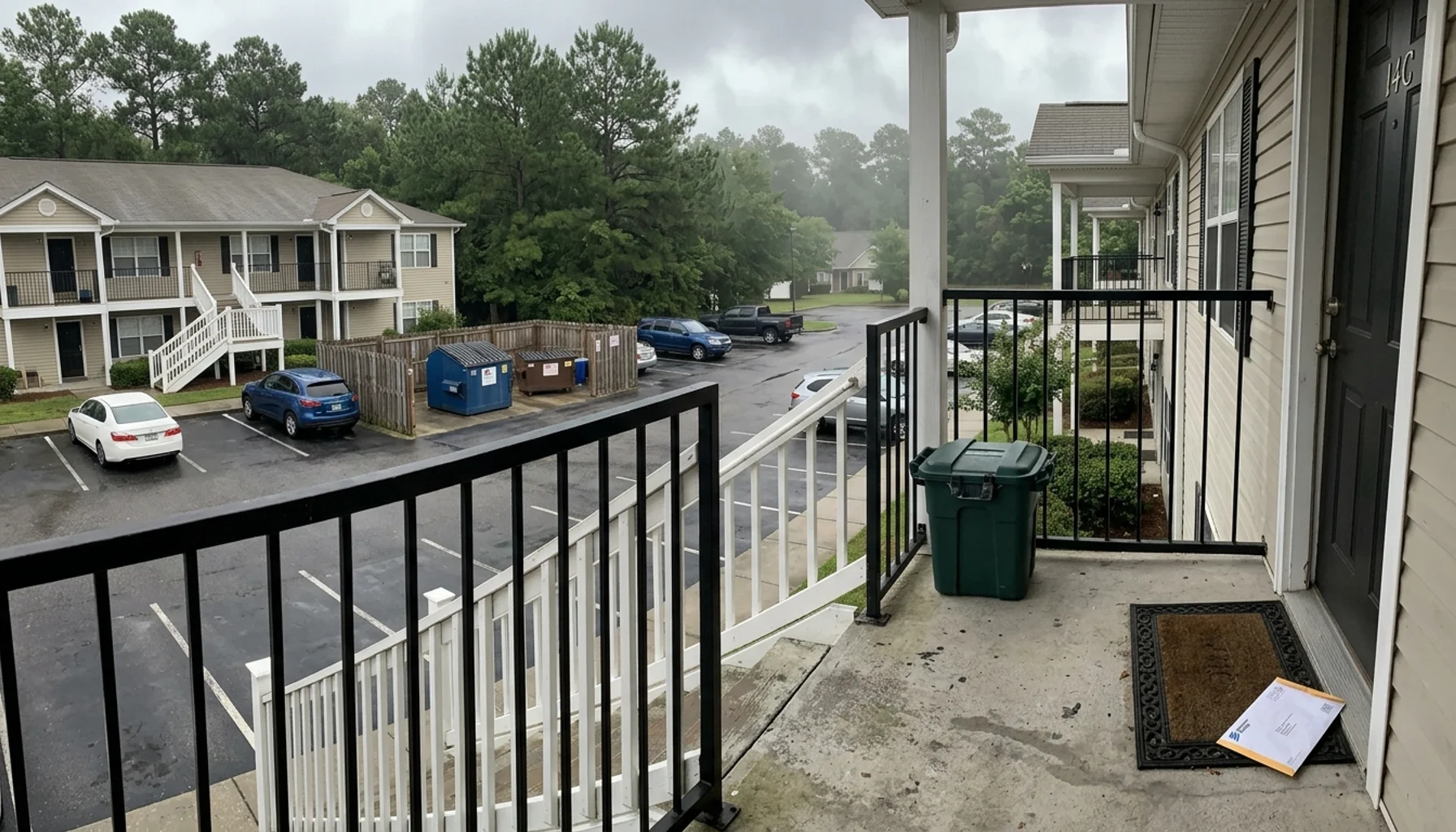
You are probably seeing two separate line items on your lease or monthly statement: one labeled "trash" or "waste management" and another labeled "valet trash." They are not the same charge. The first typically covers dumpster hauling, compactor service, or municipal disposal costs for the whole property. The second pays for the labor of carrying your bag from your door to that dumpster on a nightly schedule.
Key Takeaways
- A standard "trash" or "waste management" fee usually funds property-wide dumpster or compactor hauling, while a "valet trash" fee pays specifically for doorstep-to-dumpster labor, and the two are almost never the same service even when they appear on the same bill.
- Industry pricing data shows valet trash vendors typically charge properties $8 to $15 per unit per month, while residents are commonly billed $25 to $35 per month for the same service, according to industry FAQ resources on valet trash pricing.
- Whether valet trash is mandatory depends entirely on your lease language; most properties structure it as a required amenity fee rather than an opt-in service, so opting out is rarely possible mid-lease.
- North Charleston's FY2027 approved municipal budget sets privatized solid-waste cart collection at $13.50 per cart, a public rate that is separate from any private valet-trash vendor contract a property signs.
- If your lease is silent about a valet-trash charge, a landlord generally cannot add that fee mid-lease without written agreement; if the lease specifies the fee, it typically can only change at renewal unless the lease says otherwise.
- The fastest way to resolve confusion is to line up your lease, your fee addendum, and your monthly billing statement side by side and request an itemized breakdown from your property manager.
Confusion over duplicate-looking trash charges is one of the most common billing questions multifamily residents ask, and it makes sense why. Charleston-area rent has climbed alongside occupancy, and every added line item gets scrutinized more closely than it used to. A Q1 2026 Charleston multifamily market snapshot from MMG Real Estate Advisors put average effective rent at $1,798 with 91.7% occupancy, so residents are watching every dollar on their statement.
At Trash Day Made Easy, we operate nightly, photo-verified valet trash service for multifamily communities, build-to-rent developments, and HOA neighborhoods across Charleston, SC and Atlanta, GA, and this exact billing question comes up constantly. Residents call their leasing office convinced they're being double-charged for the same service, when in reality they're paying for two entirely different operational functions.
This guide breaks down exactly what each charge funds, walks through how to read your lease and billing statement, explains when a valet-trash fee is legally required versus negotiable, and gives you a step-by-step process for getting an itemized answer from your property manager. We'll also cover what happens when service fails and how North Charleston's municipal waste rates compare to the private vendor market.
What Is the Difference Between a Standard Trash Charge and a Valet Trash Fee?
A standard trash or waste-management charge funds the property-wide infrastructure that removes garbage from the community entirely, such as dumpster rental, compactor maintenance, and hauling to a landfill or transfer station. A valet trash fee, by contrast, pays specifically for the labor of collecting bagged trash from your unit's doorstep and carrying it to that same dumpster or compactor.
Think of it as two links in the same chain. Municipal or property-wide hauling gets the trash from the dumpster to its final destination. Valet trash gets the trash from your door to the dumpster in the first place. Neither service replaces the other; they solve different logistical problems.
For example, a North Charleston apartment listing reviewed for this guide showed a $30.00 monthly doorstep-trash charge, a separate usage-based monthly trash-hauling charge, and a $5.15 monthly utility-billing administrative fee, all disclosed as distinct line items. That is not duplicate billing; it's three different cost centers being passed through separately. A different Charleston-area listing showed a $22 monthly valet-trash fee alone, illustrating how much this can vary property to property.
Specifically, the property-wide charge is usually calculated per unit based on the community's total hauling contract, divided across every leased unit whether or not residents use common dumpsters directly. The valet-trash fee is calculated based on labor and route costs for the vendor servicing your building, typically billed at a flat monthly rate regardless of how much trash you personally generate.
How Does Doorstep Valet Trash Service Actually Work?
Doorstep valet trash service means a scheduled crew collects sealed trash bags directly from outside your unit door on designated nights and carries them to the property's central dumpster or compactor, eliminating your need to walk trash to a communal disposal point yourself. This is the operational function the second charge on your statement is paying for.
Most valet-trash programs run five nights per week, commonly Sunday through Thursday, with a set-out window in the early evening, typically 6 PM to 8 PM. Collection crews then work through the property from around 8 PM to midnight, moving unit by unit. Residents place a securely tied standard 13-gallon kitchen bag outside their door; some properties supply branded bags, though most do not.
At Trash Day Made Easy, our nightly collection follows this same doorstep-to-dumpster model across multifamily communities, build-to-rent developments, and short-term rental properties in Charleston and North Charleston. Every stop is photo-verified, meaning the crew documents each collection with a timestamped photo at the door. That gives property managers proof of completion without chasing down complaints or issuing reminders, and it gives residents an accountability record if a pickup gets missed.
Recycling is often handled on a separate night, usually once weekly, using a clearly marked bag distinct from the standard household waste bag. Communities that skip this distinction tend to see higher contamination rates in their recycling stream, which can affect the property's overall hauling costs on the standard trash side of the ledger.
Can My Apartment Really Charge Me for Both Trash and Valet Trash?
Yes, a property can legally charge separate fees for standard trash service and valet trash service, provided both charges are properly disclosed in your lease or an attached fee addendum before you sign. As of 2026, this dual-billing structure is standard practice across most Charleston-area multifamily communities, not a sign of an accounting error.
The key distinction is disclosure, not duplication. A sample valet-trash lease clause reviewed for this guide specified Sunday-through-Thursday service at a flat monthly rate, disclosed as its own line separate from the community's general trash or waste-management fee. Another sample clause listed a different flat rate for the same Sunday-through-Thursday schedule, showing that pricing structures vary significantly by property and market.
Where this becomes a legitimate resident concern is when the valet-trash charge appears without ever having been disclosed, or when it increases mid-lease without your written consent. If your original lease is silent on valet trash and the fee shows up on a later statement, that is worth raising directly with your property manager, and potentially with a local tenant-rights resource if it isn't resolved.
According to industry FAQ resources on valet trash pricing, resident-facing valet-trash charges commonly fall in the $25 to $35 per month range, while property managers typically pay vendors less than that per unit, creating a margin that funds the amenity's administration and profit for the property.
Can I Opt Out of Valet Trash Service?
Opting out of valet trash is usually not possible mid-lease because most properties structure it as a mandatory amenity fee rather than an optional add-on service, similar to how a required parking fee or amenity fee works. The charge typically applies to every unit in the community regardless of individual usage.
This surprises a lot of residents who assume services work like a gym membership or a cable package they can decline. Valet trash is different. As National Trash Valet's overview of the service notes, valet trash tends to see near-universal resident participation, unlike a pool or fitness center that only a portion of residents ever use, which is part of why properties bundle it as a mandatory charge rather than an elective one.
If you genuinely never want doorstep collection, your best leverage point is before you sign a lease, not after. Ask the leasing office directly whether valet trash is mandatory and get the fee structure in writing during your unit tour. Once you've signed a lease that includes the fee, your options for removing it narrow considerably until renewal, and even then it depends on whether the property is willing to negotiate the amenity package.
HOA communities and build-to-rent developments sometimes handle this differently, particularly when the service is structured as a trash can concierge program rather than a per-unit valet fee. In that model, bins move from the back door to the curb and back, and the cost is often absorbed into association dues rather than billed individually, which changes the opt-out conversation entirely.
Is My Lease Required to Disclose the Valet Trash Fee Before I Sign?
State and local landlord-tenant law generally requires that any recurring, mandatory fee, including a valet-trash charge, be disclosed in the lease agreement or an attached addendum before a tenant signs. This protects residents from surprise charges appearing on a bill months into a lease term.
If your lease never mentions valet trash and the charge appears later, most tenant-protection guidance treats that as an improper mid-lease addition unless you agree to it in writing. A Georgia consumer guidance resource reviewed for this article states plainly that a landlord generally cannot unilaterally add a fee like this to an active lease without the tenant's written consent.
The rules shift once your lease already specifies a fixed, tenant-paid valet-trash amount. In that case, the same Georgia guidance indicates the fee typically can only be increased at the end of the lease term, unless the lease itself contains specific language authorizing mid-term adjustments. If the lease instead makes the landlord responsible for trash removal generally, the guidance suggests that cost may be treated as bundled into rent, and without a written lease, a longer notice period, commonly around 60 days, may be required before any billing increase takes effect.
These protections vary by state and municipality, so treat this as general orientation rather than a substitute for reviewing your specific jurisdiction's landlord-tenant statute or speaking with a local tenant-rights organization if a dispute escalates.
What Do Valet Trash Providers Actually Charge Properties, and Where Does the Markup Go?
Valet trash providers typically bill multifamily properties between $8 and $15 per unit per month for standard nightly or near-nightly doorstep collection, according to industry pricing benchmarks. Properties then pass a higher amount, commonly $25 to $35 per month, along to residents as a separate fee line.
That gap is not automatically improper. It usually covers the property's administrative overhead for managing the vendor relationship, billing system integration, and customer service handling for missed pickups or complaints. Where residents should pay closer attention is whether the markup is disclosed as a flat amenity fee versus framed as a pure pass-through cost, since the two carry different disclosure expectations under most lease structures.
The table below breaks down the layers of cost involved so you can see exactly where each dollar goes, rather than treating "trash charges" as one undifferentiated bucket.
| Cost Layer | Who Pays It | Typical Range | What It Funds |
|---|---|---|---|
| Municipal/property-wide hauling | Property (often passed through) | Varies by contract and unit count | Dumpster or compactor pickup, landfill or transfer station disposal |
| Valet trash vendor contract | Property | $8-$15 per unit per month | Nightly doorstep-to-dumpster labor, route logistics, photo verification |
| Valet trash resident fee | Resident | $25-$35 per month | Vendor cost plus administrative overhead and program management |
| North Charleston municipal cart collection | City residents (single-family, not multifamily valet) | $13.50 per cart | Privatized solid-waste cart pickup under the FY2027 approved city budget |
| Additional cart charge | City residents requesting extra capacity | $3.50 per cart | Extra municipal cart service beyond standard allocation |
Notice that the North Charleston municipal cart rate applies to city-serviced single-family and eligible residential collection, not to private multifamily valet-trash contracts. Comparing your apartment's valet fee directly to the city's cart price is comparing two different services entirely, which is a mistake we see residents make often.
How Do I Reconcile a Confusing Trash Bill Line by Line?
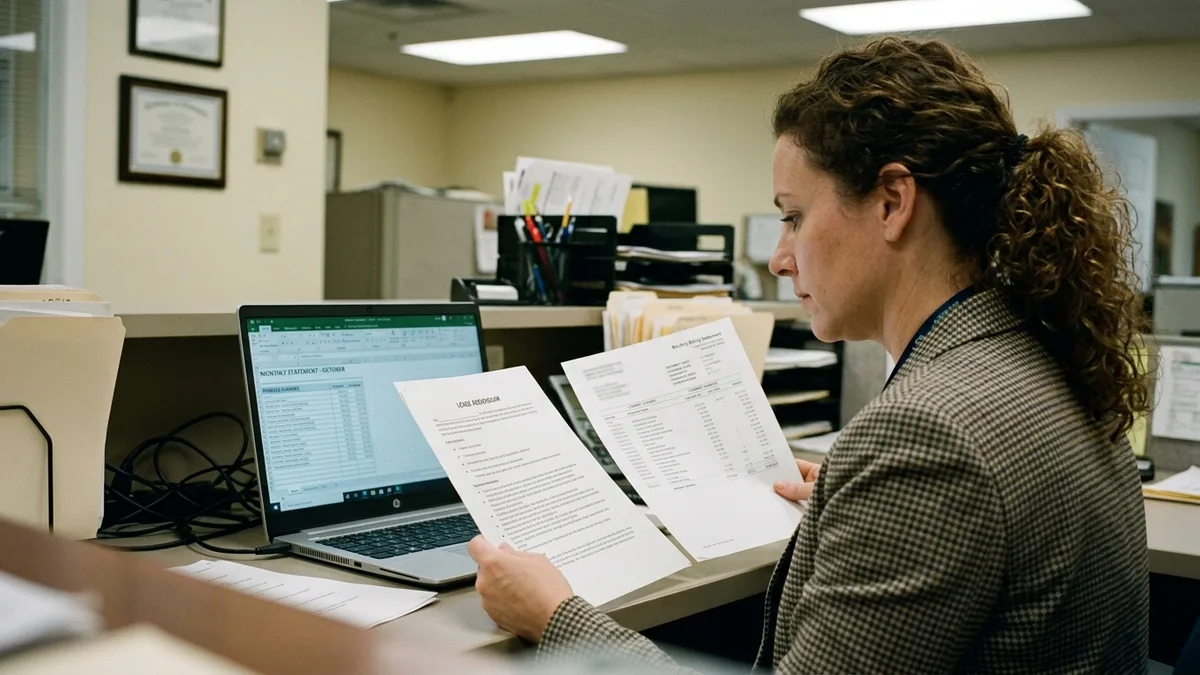
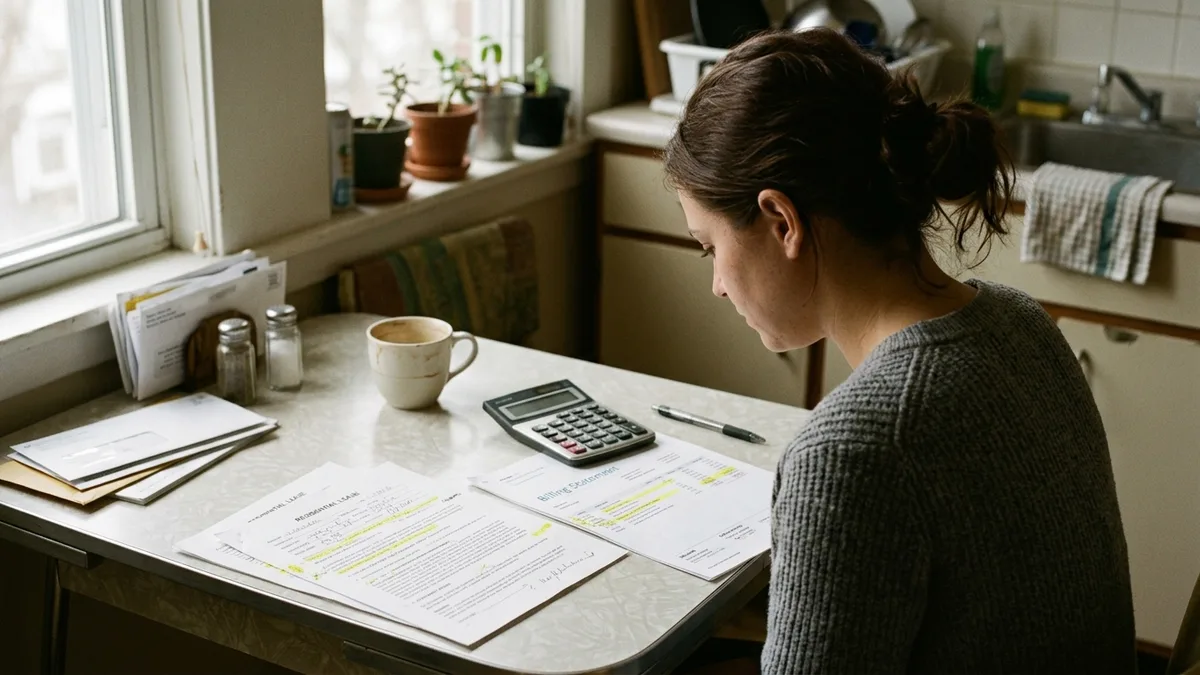
Reconciling a confusing trash bill means comparing four documents side by side: your signed lease, any fee addendum, your current monthly billing statement, and the community's written trash policy, to confirm each charge matches a disclosed service. This process typically takes less than 30 minutes and resolves most billing confusion without needing to escalate.
Follow this sequence:
- Pull your original signed lease and search for the words "trash," "waste," or "valet" in the fee schedule section.
- Locate any separate fee addendum you may have signed at move-in, since some properties disclose amenity fees in a standalone document rather than the main lease body.
- Compare both documents against your most recent monthly statement. Note the exact dollar amount and label for each trash-related line item.
- Check the community's written trash or valet-trash policy, often posted in a resident portal or included in your move-in packet, for schedule details and service descriptions.
- If any charge on your statement does not appear in your lease, addendum, or policy documents, draft a written request to your property manager asking for an itemized explanation of each trash-related fee.
- Keep a copy of your written request and any response for your records, especially if the discrepancy involves a fee that was never disclosed before you signed.
A useful template for that written request: "I'm reviewing my monthly statement and see [charge name] for [dollar amount]. Could you confirm what service this covers and point me to where it's disclosed in my lease or addendum?" This framing gets a straight answer faster than a general complaint about being "double charged."
What Happens If Valet Trash Service Is Missed or Fails?
A missed valet-trash pickup means the vendor failed to collect a resident's bagged trash on a scheduled service night, and most communities have a policy for reporting this and, in some cases, issuing a credit or waived fee for the affected billing period. Documentation is the single most important factor in resolving a service failure quickly.
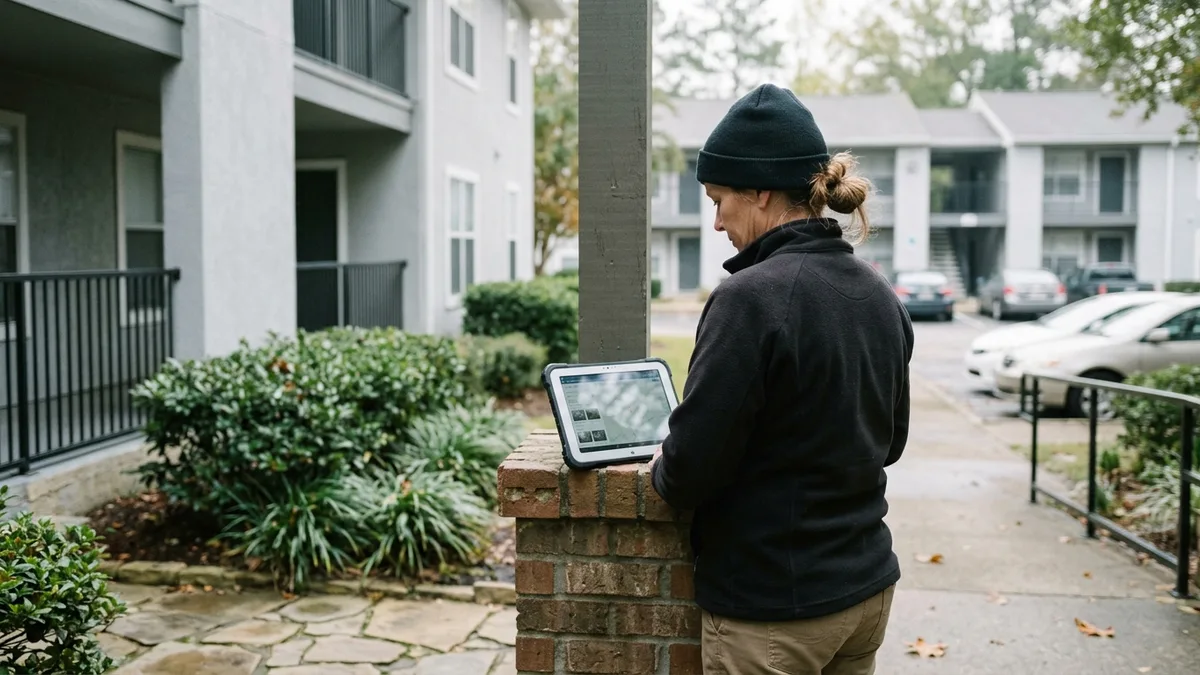
If your trash sits outside your door past the scheduled collection window, take a timestamped photo and report it to your leasing office the same night or the next morning. Providers using photo verification, like the nightly documentation model we run at Trash Day Made Easy, make this dispute process far simpler because there's a service record on both sides rather than a resident's word against a vendor's route log.
Common service failure scenarios worth knowing about before they happen:
- Trash left out past midnight with no collection, which should be reported immediately rather than left for the next scheduled night.
- Bags exceeding the standard 13-gallon size limit or containing prohibited items like furniture or construction debris, which many providers will not collect without a separate bulk-item request.
- Holiday schedule changes that shift or skip a normal collection night, which properties should communicate in advance through the resident portal.
- Recycling contamination, where non-recyclable items in a marked recycling bag cause the entire bag to be treated as standard waste.
Repeated missed pickups over multiple nights is a pattern worth raising formally with property management, since a property paying a vendor for nightly service is entitled to that service being performed reliably, and residents paying the pass-through fee are entitled to the service actually happening.
Why Do Apartment Owners and HOAs Choose to Offer Valet Trash?
Property owners adopt valet trash primarily to reduce dumpster overflow, curb pest problems around common disposal areas, and improve the overall appearance of the community, all of which tie directly into resident satisfaction and lease renewal decisions. It functions as an amenity, not just a maintenance task.
Industry data on resident retention supports this investment. According to the National Apartment Association, valet trash service has been linked to resident retention increases of up to 5%, a meaningful figure in a Charleston multifamily market where MMG Real Estate Advisors reported 91.7% occupancy in Q1 2026 and where every renewal matters against a construction pipeline that added 2,565 units under active development, roughly 3.4% of existing inventory.
Beyond retention, valet trash cuts down on the labor and liability of residents walking bagged trash across dark parking lots or breezeways at night, particularly in larger communities where the central dumpster sits a considerable distance from some units. It also supports better recycling participation when the program includes a dedicated recycling night, since residents are more likely to sort correctly when someone is coming to collect it rather than hauling it themselves.
HOA boards face a related but distinct version of this problem: enforcing bin compliance rather than doorstep collection. A trash can concierge service solves that by moving bins from the back of a home or garage to the curb and returning them afterward, removing the enforcement burden from volunteer board members entirely. Residential homeowners in select Charleston neighborhoods can access a similar service starting from $49 per month, often paired with periodic bin cleaning through our partnership with The Bin Boy, a Charleston-based bin sanitizing service.
Practical Guidance: How to Avoid Getting Blindsided by Duplicate-Looking Trash Fees
The best way to avoid confusion over trash and valet trash charges is to ask specific, itemized questions before signing a lease, rather than assuming a single "trash fee" on the rent quote covers everything. This is the single most common mistake we see residents make: treating trash as one line item when it's usually two or three.
Before you sign anywhere in Charleston, North Charleston, Mount Pleasant, or elsewhere in the metro, ask the leasing office these direct questions:
- Is valet trash mandatory for every unit, or optional?
- What is the exact monthly amount, and is it separate from a general waste-management or hauling fee?
- What nights is collection scheduled, and what is the set-out window?
- Is there a separate charge for recycling, or is it included?
- What happens if a pickup is missed, and is there a credit process?
Common mistakes residents make include assuming a low quoted rent already includes all utility and amenity fees, skimming past the fee addendum instead of reading it line by line, and waiting until a dispute arises to actually locate their lease documents. Get organized before there's a problem, not after.
For property managers and portfolio operators reading this from the other side of the transaction, clear disclosure protects you as much as it protects residents. A well-documented valet-trash program, with a written policy, a photo-verified service record, and a clearly disclosed fee structure, generates far fewer disputes than a program residents only learn about when they see a new line on their statement. If you're building or reviewing that documentation for a Charleston or Atlanta portfolio, our breakdown of how much valet trash companies charge apartments covers the vendor side of this pricing conversation in more detail.
Frequently Asked Questions
How much do valet trash companies charge apartments?
Valet trash vendors typically charge properties $8 to $15 per unit per month for standard nightly or near-nightly collection, according to industry pricing data. Properties then bill residents separately, commonly in the $25 to $35 per month range, to cover the vendor cost plus administrative overhead.
How much is valet trash service for residents?
Residents commonly pay between $25 and $35 per month for mandatory valet trash service, though some properties charge as little as $22 and others charge more depending on market and service frequency. The exact amount should always be disclosed in your lease or a signed fee addendum before you move in.
What is valet trash?
Valet trash is a doorstep collection service where a scheduled crew picks up sealed trash bags left outside a resident's unit and carries them to the property's central dumpster or compactor. It typically runs five nights per week, often Sunday through Thursday, with collection happening in the evening hours.
What is valet trash service and how is it different from standard trash pickup?
Valet trash service handles the doorstep-to-dumpster portion of waste removal, while standard trash service covers hauling the full dumpster or compactor to a landfill or transfer station. They are two separate operational functions, which is why many properties bill them as two separate fees rather than one combined charge.
Can I opt out of valet trash?
In most communities, no, because valet trash is typically structured as a mandatory amenity fee applied to every unit, similar to a required parking or amenity charge. Your best opportunity to avoid the fee is asking about it before signing a lease, since removing it after signing is rarely possible until renewal.
How do I get valet trash contracts if I manage a property?
Property managers looking to add valet trash typically request a quote directly from a vendor serving their market, providing unit count, building layout, and desired collection frequency. Trash Day Made Easy provides quotes Monday through Friday for multifamily communities, build-to-rent developments, and HOAs across Charleston and Atlanta, scaling from 10 units to more than 1,000.
Can my landlord raise my valet trash fee in the middle of my lease?
Generally, if your lease specifies a fixed valet-trash amount, that fee can typically only be increased at renewal, not mid-lease, unless your lease specifically authorizes adjustments. If your lease never mentioned the fee at all, a landlord generally cannot add it without your written agreement, though exact rules vary by state and locality, so check current guidance for your jurisdiction.
What should I do if I think I'm being double charged for trash?
Pull your lease, any fee addendum, and your current billing statement, and compare the exact wording and amount of each trash-related charge across all three documents. If a charge doesn't match anything you were shown before signing, send your property manager a written request asking them to itemize what each fee covers.
Conclusion: Two Fees, Two Jobs
A standard trash charge and a valet trash fee showing up on the same statement is not a billing error in most cases; it reflects two distinct services, property-wide hauling versus doorstep collection labor, that happen to both fall under the word "trash." As of 2026, this dual-fee structure remains standard across Charleston-area multifamily communities, and understanding the difference is the fastest way to stop feeling like you're being charged twice for one thing.
If your lease clearly discloses both charges, they're almost certainly legitimate. If one appeared without disclosure or changed mid-lease, that's worth a direct, written conversation with your property manager, and potentially a call to a local tenant-rights resource if it isn't resolved. Either way, the reconciliation process outlined above, pulling your lease, addendum, statement, and policy documents side by side, will get you a clear answer in less time than it takes to stay confused.
Waste management in a multifamily or HOA community rarely breaks down because of one bad decision; it breaks down when there's no consistent, documented system behind it. A nightly, photo-verified valet trash program removes the guesswork for both residents and property managers, because every collection is recorded and every fee is tied to a service that actually happened. Trash Day Made Easy provides exactly that kind of program for multifamily communities, build-to-rent developments, HOAs, short-term rental properties, and residential homeowners across Charleston, SC and Atlanta, GA. Property managers can request a service quote Monday through Friday, and residential homeowners in select Charleston neighborhoods can ask about service starting from $49 per month.
If you're a Charleston or North Charleston property manager trying to clean up resident confusion over duplicate-looking trash line items, a documented, photo-verified valet trash program is the fastest way to make every charge defensible. Request a service quote from Trash Day Made Easy and see how nightly, verified collection changes the conversation with residents.
Content powered by inkSTR.co