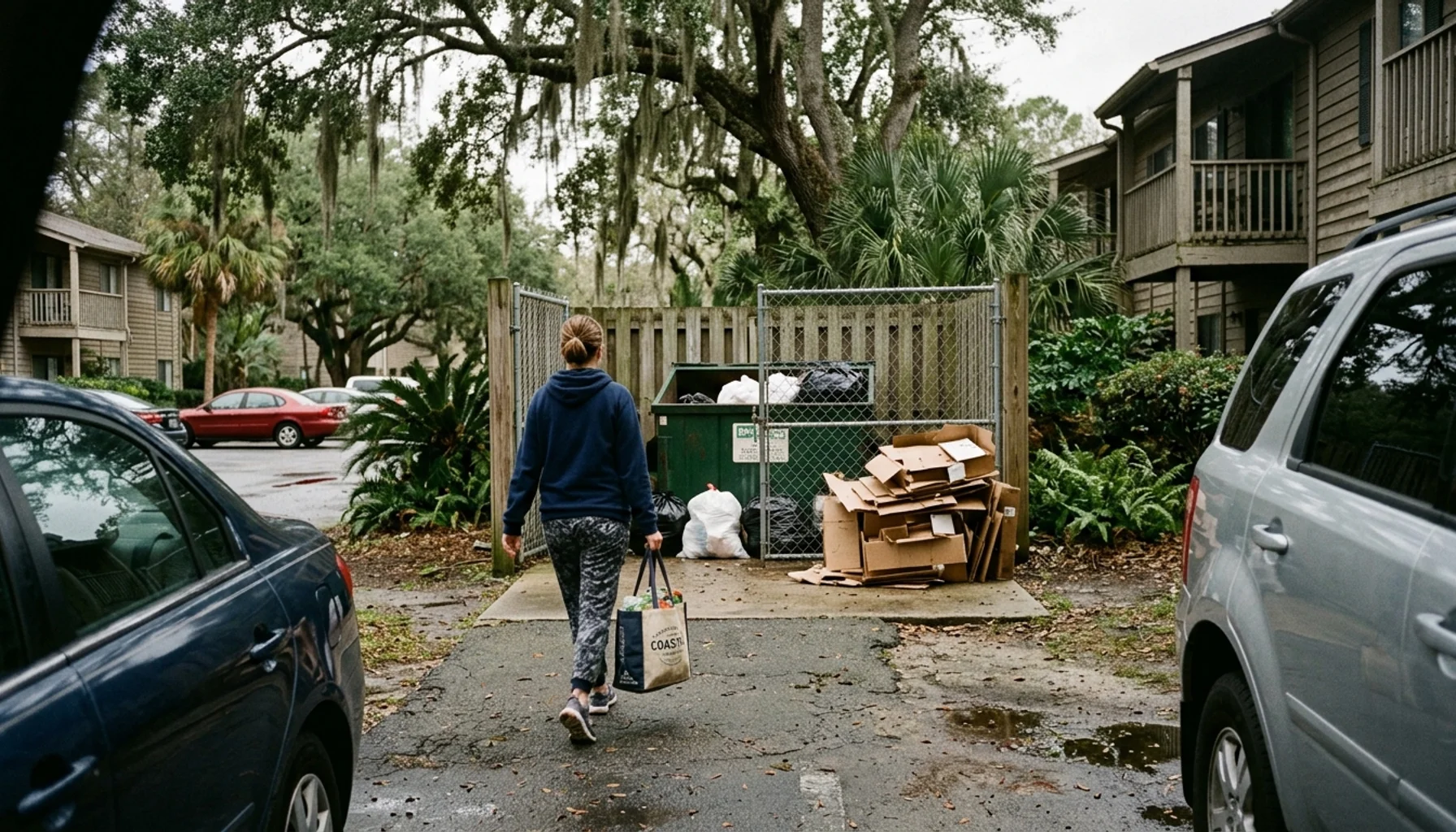
Overflowing dumpsters hurt property appeal and lease renewals because they signal neglect. Residents read overflow, odor, and litter as proof that management is not paying attention, so they question the rent they pay and the quality of the community. That doubt often surfaces at renewal time.
Key Takeaways
- Overflowing dumpsters rarely appear on a nonrenewal form, but they shape how residents judge management quality and rent value.
- According to a multifamily industry report, 75% of residents consider amenities a key factor when deciding to rent or renew a lease; clean shared spaces are part of that picture.
- Recurring overflow does more damage than a one-time incident, because residents and prospects see the same pile week after week.
- Common causes include undersized containers, insufficient pickup frequency, bulk items from move-outs, and resident habits during holidays and weekends.
- Nightly, photo-verified valet trash service removes bags from doorsteps and keeps volume moving, which protects curb appeal and gives managers documentation.
- You can measure the problem by tracking overflow photos, complaints, cleanup labor, reviews, and renewal outcomes in one simple log.
It is 9 AM on the Monday after a holiday weekend. A mattress props the dumpster lid open, bags are stacked against the fence, and a resident has just emailed about the smell. If you manage a community near the Rivers Avenue corridor or on Daniel Island, you have likely lived some version of that morning.
At our company, we service multifamily communities and rental portfolios across Charleston and North Charleston, and the pattern is consistent: overflow starts as an operations problem and ends as a leasing problem. This guide explains the causes, the real costs, and how to fix it in 2026.
Most vendor articles on this topic assert the link between trash and renewals without showing how to test it. You will get that here, including a practical way to measure what overflow costs your own property.
How Does an Overflowing Dumpster Damage Property Appeal?
Property appeal is the first impression a community makes on prospects, visitors, and residents, shaped by landscaping, building condition, and cleanliness. An overflowing dumpster damages it because the dumpster enclosure is often visible from the entrance, the leasing office, or the walk to a parking space, so the neglect is impossible to miss.
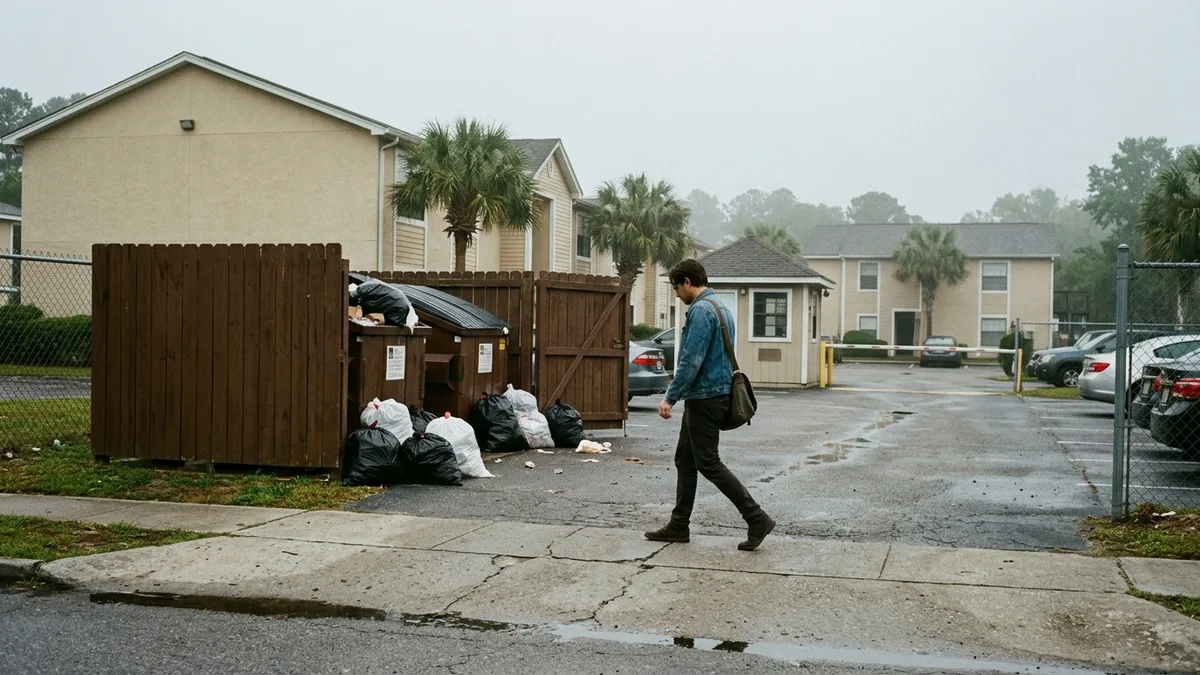
Visibility, odor, and litter drive the damage. A pile of bags outside the enclosure is visible from the road. Odor reaches nearby units and breezeways. Loose litter drifts across parking areas and landscaping, and it makes the rest of the property look less cared for.
Prospects tour in a short window. They do not know the pile is a holiday anomaly; they see what is in front of them. Many will cross the property off the list without ever telling the leasing team why.
And there is a compounding effect. Online reviews that mention trash or smell get read by the next wave of prospects. A single bad Monday can echo for months in search results.
What Causes Apartment Dumpster Areas to Overflow?
Apartment dumpster overflow is the condition where waste volume exceeds container capacity or pickup frequency, leaving bags and debris outside the enclosure. It usually traces to four causes: undersized containers, too few pickups, bulk items filling containers, and predictable demand spikes that the waste plan never accounted for.
Container Size and Pickup Frequency
One provider estimates that a 6-yard dumpster serviced twice weekly suits roughly 40 to 60 units, and that service beyond that range risks overflow. Treat that as a provider's operational estimate, not a universal standard. Occupancy, household size, and recycling habits all change the math.
Bulk Items and Recycling Contamination
Furniture, mattresses, and appliances consume container volume quickly. One mattress can hold a lid open and make the container effectively full. Recycling contamination adds another layer, since residents who toss bulky cardboard into trash containers eat capacity that was never planned for.
Predictable Spikes
Move-out season, holidays, and weekends are predictable overflow triggers. If you only discover them after the pile appears, you are managing in reverse. Reassessing your waste plan quarterly is sensible because occupancy and resident habits shift over time.
Do Overflowing Dumpsters Actually Affect Lease Renewals?
Yes, but indirectly. Overflowing dumpsters affect lease renewals by lowering residents' confidence in management and their sense of value for rent. Residents rarely cite trash as the formal reason they leave; they cite rent, maintenance, or "just time to move," while the visible decline in common areas quietly tips the decision.
The National Multifamily Housing Council (NMHC) is one of the industry bodies whose research is cited for the finding that 75% of residents treat amenities as a key factor when they rent or renew. Clean shared spaces fall within that expectation. We cannot point to independent research that quantifies exactly how much overflow moves renewal rates, and you should be skeptical of anyone who claims a precise figure.
What you can say with confidence is that visible neglect makes rent increases harder to justify. A resident facing a renewal notice with a higher number will compare that number to what they see every time they take out the trash.
Retention has also become the primary performance metric in multifamily, according to industry commentary. That shifts the conversation: a vacancy you could have avoided costs cleaning, repairs, marketing, and lost occupancy days. In the Charleston-North Charleston market, HUD's profile put the apartment vacancy rate at 9.2% in Q1 2023, which means residents have options and prospects have leverage.
How Long Does Overflow Have to Last Before It Hurts?
Recurring overflow is far more damaging than a one-time incident because residents judge patterns, not events. A single holiday spike that gets cleared within hours is forgivable. A pile that returns every Monday teaches residents that management has accepted it as normal.
Duration is one variable; location and visibility are others. In our experience, three factors decide how a resident or prospect reacts:
- Duration: hours, days, or a standing condition.
- Location: an enclosure tucked behind a building versus one beside the main entrance or leasing office.
- Sensory impact: odor and pests change a cosmetic issue into a livability complaint.
Rodents, insects, and stray animals are the sanitation risks tied to trash piles outside full containers. Piles can also block walkways for residents and maintenance staff. Once pests enter the story, complaints escalate from "unsightly" to "unsafe," and that is when renewal conversations get difficult.
What Health and Safety Risks Come From Overflowing Dumpsters?
Overflowing dumpsters create health and safety risks by attracting rodents and insects, producing odors, and blocking walkways. Open bags also release liquids and litter into parking areas, which adds slip hazards and cleanup work for maintenance teams.
In the Charleston area, heat and humidity speed up decomposition, so a pile that would sit quietly in a cooler climate turns into an odor complaint quickly. That is one reason Lowcountry properties feel overflow sooner than the same setup would elsewhere.
Do not treat these as hypothetical. Staff workload goes up when a team has to clear piles, pressure wash pads, and respond to complaints. That labor comes out of an operating budget that was not planned for it.
Is It Illegal to Throw Garbage in a Private Dumpster?
Dumping in a dumpster you do not have permission to use can be treated as unauthorized dumping or trespass, and rules vary by municipality and by lease. Check the current rules with the City of North Charleston or City of Charleston and with your own lease language before you enforce anything.
For property managers, the practical issue is outside dumping. Nonresidents who drop furniture or construction debris into your container steal capacity you pay for. Lockable enclosures, signage, and camera coverage help, and so does a pickup schedule that does not leave a full container sitting for days.
What Happens If You Overfill a Dumpster?
Overfilling a dumpster means loading waste above the container's rim or preventing the lid from closing. Haulers can refuse to service an overfilled container, charge additional fees, or leave material behind, which turns a capacity problem into a recurring overflow problem.
Terms vary by hauler and contract, so read yours for overage and contamination language. Overfilled containers also create a liability issue when lids cannot close and debris spills into shared areas.
The fix is rarely a bigger container alone. You need right-sized containers, correct pickup frequency, scheduled bulk-item removal, and a way to keep waste from reaching the enclosure all at once.
How Can Apartments Prevent Dumpster Overflow During Move-Outs?
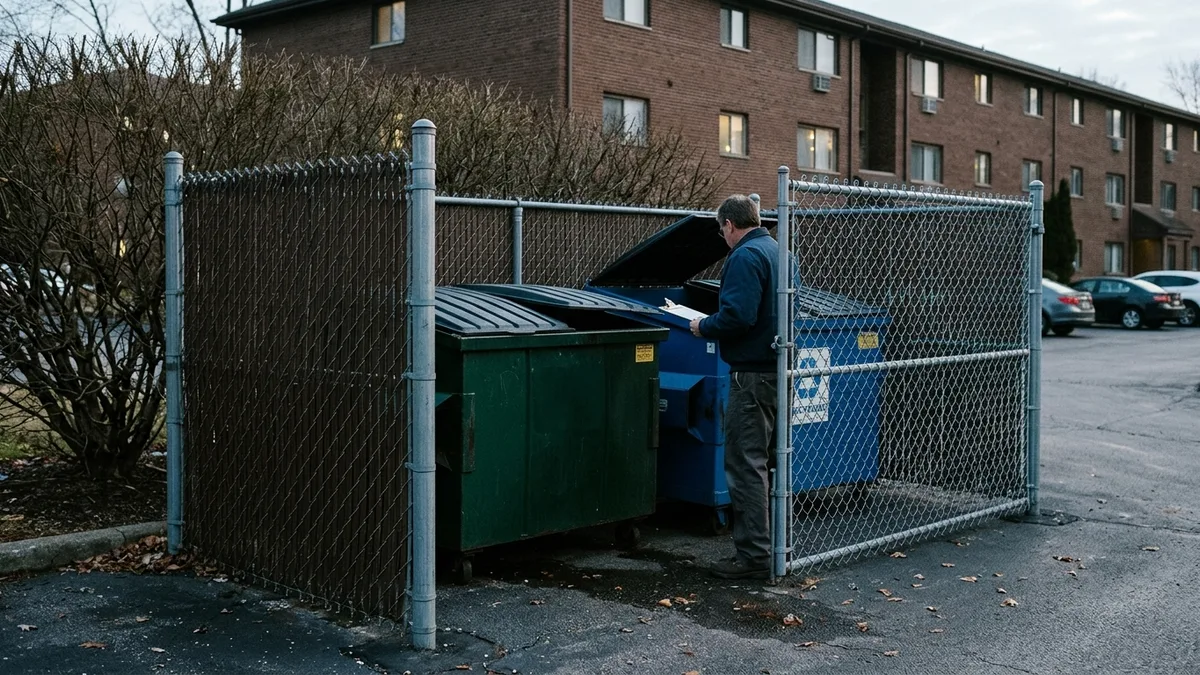
Preventing move-out overflow means scheduling bulk-item removal as a fixed step in the make-ready cycle rather than reacting after debris appears. The most common mistake is treating bulk items as an afterthought on move-out day, when the dumpster is already full and the new resident arrives at noon.
- Map your peak periods. Move-out season, holidays, and weekends are predictable; plan capacity around them.
- Schedule bulk pickups in advance. Monthly or on-demand bulky-item pickups keep mattresses and furniture out of standard containers.
- Adjust pickup days. Increase collection frequency or shift service days during high-volume weeks.
- Communicate early. Lease addenda and move-out checklists should explain where bulk items go and what fees apply.
- Inspect enclosures and walkways routinely. Catch problems before residents do.
- Add cleaning support. Pressure washing, chute cleaning, and odor treatments keep the area from feeling neglected even when it is full.
Every hour a unit sits with leftover furniture or debris is an hour of lost rental income. Bulk item removal and turnover trash handling from some providers integrates into make-ready cycles, clearing abandoned items and oversize waste so the unit is ready for the next resident on schedule.
How Does Nightly Valet Trash Service Stop Overflow at the Source?
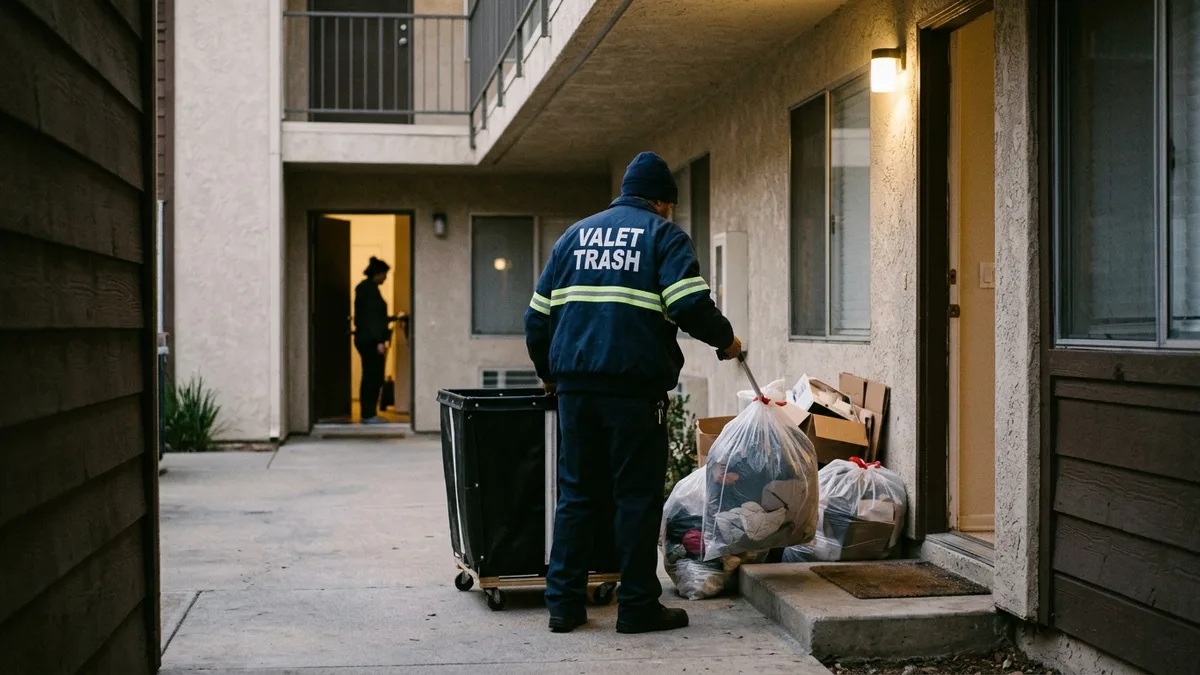
Valet trash service is a doorstep collection amenity in which a crew picks up residents' bagged trash on scheduled nights and carries it to the dumpster. It stops overflow at the source because waste moves on a predictable schedule instead of accumulating in hallways or beside the enclosure.
A nightly scheduled valet trash service eliminates the inconsistency problem at its origin. Every collection visit is photo-verified at the door, so you have documented confirmation that service was completed without following up or issuing reminders. For apartment communities near the Rivers Avenue corridor, where high unit volume makes operational efficiency a direct NOI issue, that documentation matters.
Compared with relying on residents to walk bags to a dumpster, doorstep service changes behavior. Residents have no reason to leave bags beside the enclosure or in breezeways, and your team does not field the resulting complaints.
One caution: valet service does not fix an undersized dumpster contract by itself. Pair it with a capacity audit, so the enclosure does not become the next bottleneck.
What Does Valet Trash Cost, and Does It Pay for Itself?
Valet trash cost depends on unit count, service frequency, and property layout, so multifamily and portfolio properties are typically quoted individually. Residential service in select Charleston neighborhoods starts from $49 per month, and you can request a quote Monday through Friday.
Many communities pass the cost to residents as an amenity fee. Run the math on your own rent roll: a $10 per unit monthly fee on a 200-unit property produces $24,000 a year ($10 x 200 x 12), before service costs. Whether that covers your program depends on your quote, your occupancy, and what your market will bear, so test it against your own numbers rather than another property's results.
For pricing context across the industry, compare quotes from several valet trash companies. And if you operate near the Charleston peninsula or in North Charleston, our page on multifamily waste service outlines how the program is structured.
How Can You Measure What Overflow Costs Your Property?
Measuring overflow cost means tracking five data points in one log: overflow observations, resident complaints, cleanup labor, online review mentions, and renewal outcomes. Most competing guidance asserts the link between trash and retention without offering this framework, and it is the only way to know your own number.
| Metric | How to Capture It | What It Tells You |
|---|---|---|
| Overflow observations | Photograph the enclosure on pickup days and categorize each photo as none, minor, or major | Frequency and severity of the problem |
| Resident complaints | Tag work orders and emails that mention trash, odor, or pests | How visible the issue is to residents |
| Cleanup labor | Log staff hours spent clearing piles and pressure washing | Direct operating cost |
| Online reviews | Count review mentions of trash, smell, or pests each quarter | Reputation exposure with prospects |
| Renewal outcomes | Compare renewal rates for buildings nearest the enclosure against the rest of the property | Whether overflow correlates with nonrenewal |
The last row is the one worth your attention. Buildings closest to a recurring overflow point often show different renewal behavior than buildings farther away, and that comparison is more persuasive to an owner than any national claim. Review the log quarterly, in line with reassessing your waste plan.
It also helps to log pickup-day photos for your hauler, since photo records support conversations about missed or incomplete service. Photo verification at the unit level adds the same discipline on the doorstep side.
How Do Charleston Submarkets Experience Overflow Differently?
Charleston-area submarkets face different overflow pressures because their property types and turnover patterns differ. Apartment communities near the Rivers Avenue corridor carry high unit volume, build-to-rent communities near Daniel Island face investor scrutiny of landscaping and amenities, and short-term rentals near the Charleston Historic District see guest turnover that can strain trash capacity between stays. These are patterns we see in our own routes, not measured overflow rates for each submarket, since no public dataset tracks dumpster overflow by neighborhood.
North Charleston had 129,245 residents as of the U.S. Census Bureau's July 1, 2026 estimate, and its rental market competes with the wider region. Charleston also drew 7.91 million overnight visitors in 2026, according to the College of Charleston Office of Tourism Analysis, which keeps short-term rental turnover high on the peninsula and nearby islands.
A once-a-week municipal schedule was never designed to solve these patterns. For build-to-rent operators, the build-to-rent waste program approach scales as the portfolio grows from 10 units to well beyond that. If you run short-term rentals, our page for STR operators covers turnover trash and on-demand support.
To get hard numbers for your own submarket, start the log above at one property and compare it against a second. Your photos and work orders will tell you more than any regional average.
Conclusion: Why Do Overflowing Dumpsters Hurt Lease Renewals?
Overflowing dumpsters hurt property appeal and lease renewals because residents and prospects read them as management neglect, and that perception colors every renewal conversation. The effect is indirect and hard to quantify precisely, but recurring overflow, odor, and pests clearly erode confidence in rent value.
Waste problems in a multifamily community rarely come from a single bad decision; they come from having no system that runs without constant manager attention. Right-sized containers, planned bulk-item removal, quarterly plan reviews, and nightly photo-verified valet trash give you that system. Track the five metrics above and you will know what overflow costs you in 2026 and beyond.
If you want to take trash coordination off your plate, request a service quote at our website, available Monday through Friday. We serve multifamily communities, build-to-rent developments, HOAs, and rental portfolios across Charleston, SC and Atlanta, GA, from our North Charleston headquarters at 4900 O'Hear Avenue.
Frequently Asked Questions
Do dumpsters damage driveways?
Heavy dumpsters and the trucks that service them can crack, stain, or scratch asphalt and concrete, especially on thin or older surfaces. Plywood or boards under the container reduce point loads. For apartment properties, a reinforced pad at the enclosure prevents most of the damage.
Is it illegal to throw garbage in a private dumpster?
It can be, depending on local rules and the property's policies, because unauthorized dumping may be treated as trespass or illegal dumping. Check current requirements with the City of North Charleston or City of Charleston. Signage and lockable enclosures help deter outside dumping.
What happens if you overfill a dumpster?
A hauler may refuse service, charge extra fees, or leave overfilled material behind, depending on your contract. The practical result is bags spilling outside the enclosure. Review your agreement for overage language and fix capacity or frequency before it becomes recurring.
What is the best valet trash service for apartments in Charleston?
Some providers offer nightly, photo-verified valet trash service for multifamily communities across Charleston and Atlanta, scalable from 10 to more than 1,000 units. When comparing providers, look for local accountability, documented service at every door, and bulk-item support for turnovers.
How does curb appeal affect apartment lease renewals?
Curb appeal shapes how residents judge management quality and rent value. A clean property supports renewal conversations, while visible neglect makes rent increases harder to justify. Industry research cited by NMHC says 75% of residents consider amenities a key factor in renewing.
What causes apartment dumpster areas to overflow?
The main causes are undersized containers, too few pickups, bulk items filling space, and predictable surges during move-outs, holidays, and weekends. Recycling contamination also eats capacity. A quarterly capacity review catches most of these before they become visible.
Does valet trash service include bulk item removal?
Some providers offer bulk item removal, move-in and move-out support, and turnover trash handling alongside nightly valet service. These integrate into make-ready cycles so furniture and debris do not sit in breezeways or fill the dumpster.
How much does valet trash cost?
Multifamily and portfolio pricing is quote-based and depends on unit count and service needs. Residential service in select Charleston neighborhoods starts from $49 per month. Request a quote at trashdaymadeeasy.com, Monday through Friday.
Content powered by inkSTR.co