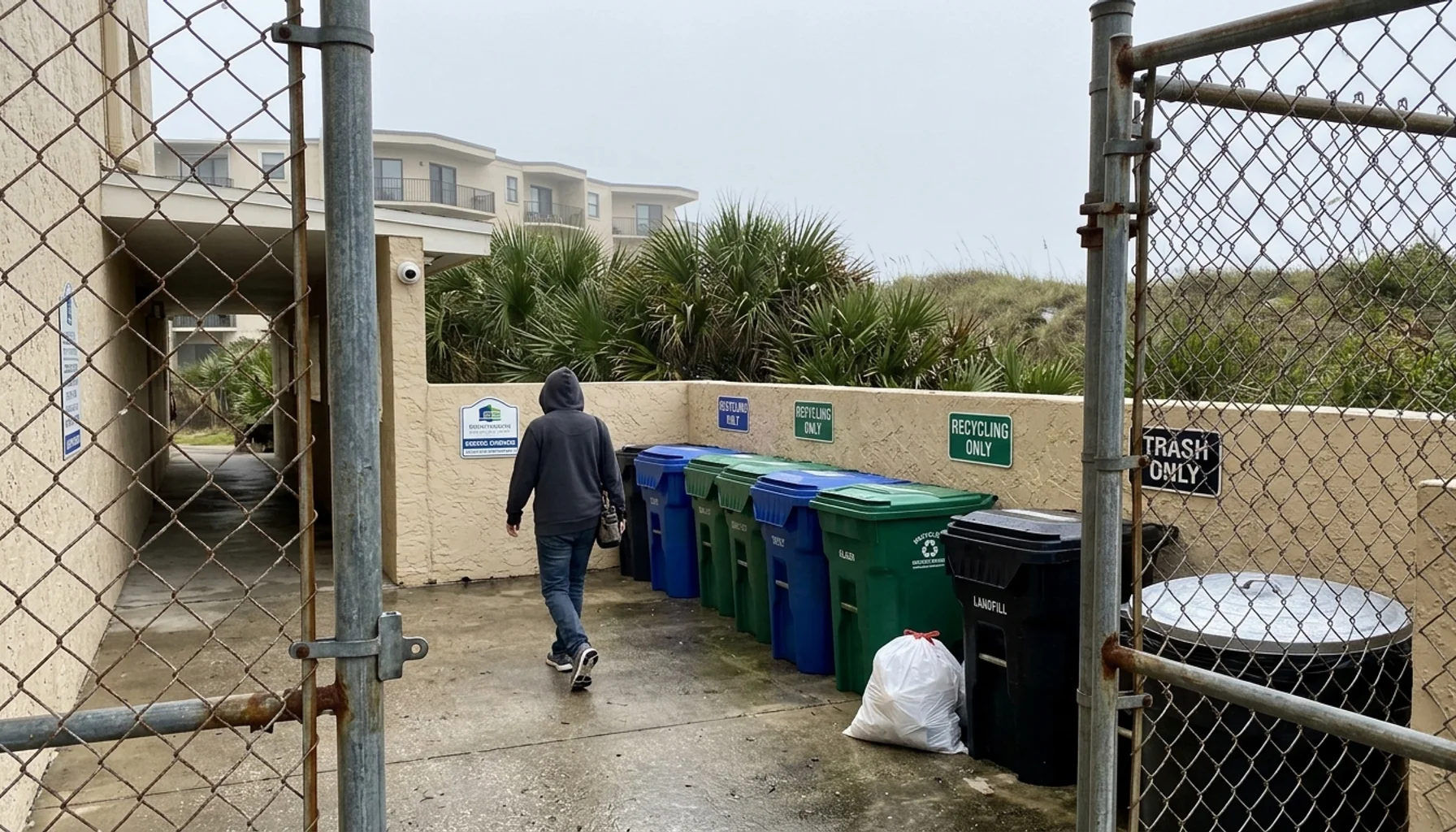
Sustainable waste management matters for multifamily communities because it directly affects operating costs and regulatory compliance, two line items that show up on every owner's balance sheet. A structured program that separates trash, recycling, and organics reduces hauling costs and keeps a property in step with local diversion rules. It is an operational lever, not an environmental afterthought.
Key Takeaways
- Roughly 15.9 million U.S. housing units sit in buildings with five or more units, according to Census-based housing data cited by multifamily waste toolkits, meaning waste system design decisions at scale affect a large share of renters.
- Single-family households divert more than 50% of waste from landfills in some studies, while multifamily recovery often lags well behind that figure, a gap driven mostly by inconvenient bin access.
- The North America Solid Waste Management Market was valued at $76.28 billion in 2026 and is projected to reach $90.86 billion by 2031, according to Mordor Intelligence, with curbside pickup representing 51.85% of market share in 2026.
- Most Americans say recycling is a valuable service, yet many rental communities still lack functional onsite recycling access.
- Industry research cited by multifamily operators shows 75% of residents consider amenities, including cleanliness and waste systems, a key factor in deciding whether to rent or renew a lease.
- Local rules increasingly require action: Austin, for example, mandated composting access for multifamily properties starting October 1, 2026, a pattern other municipalities are expected to follow through 2026 and beyond.
Property managers across the Charleston, SC metro deal with a version of this problem daily: dumpsters that fill faster than they should, recycling bins nobody uses correctly, and residents who assume someone else is handling it. In 2026, that assumption is getting more expensive to hold.
At Trash Day Made Easy, we service multifamily communities, build-to-rent developments, and HOA properties across Charleston and Atlanta. Communities that treat waste as an infrastructure problem, rather than a chore residents self-manage, end up with lower hauling costs and fewer resident complaints. This guide walks through why sustainable waste management matters for multifamily properties and what the current research actually shows about diversion rates and cost impact.
You will find comparison data on collection models, a breakdown of local compliance trends, and the operational gaps most industry content skips entirely, including how to size bin capacity and what resident communication actually needs to look like to work.
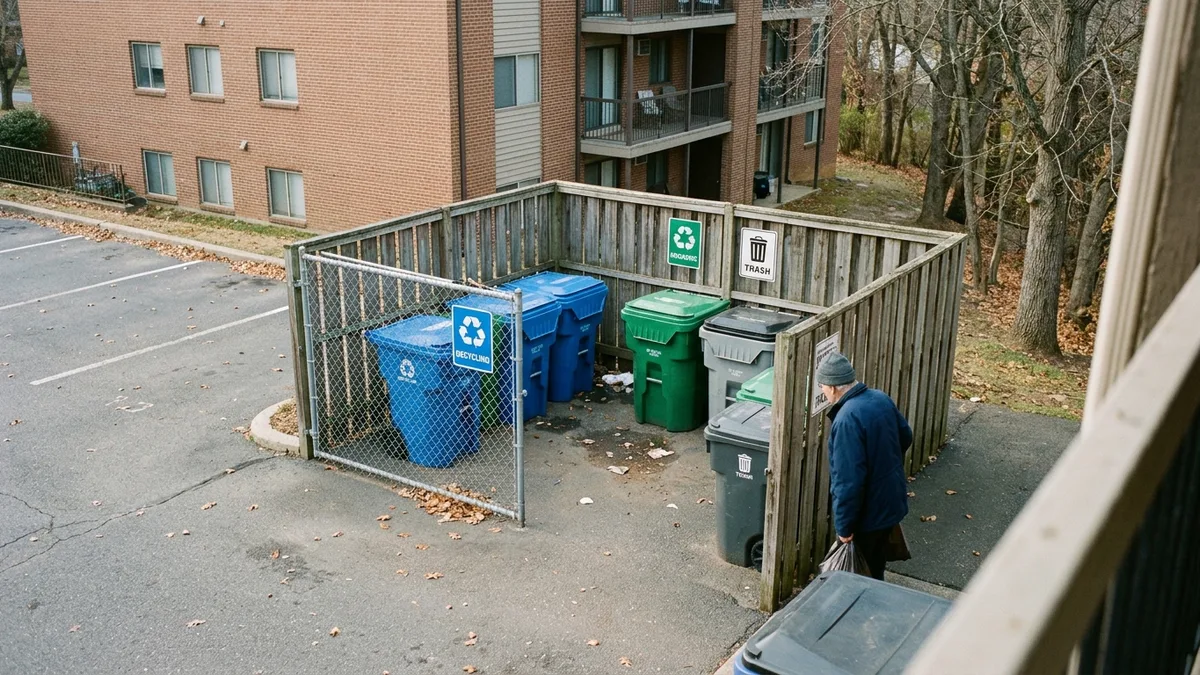
Why Is Ecological Solid Waste Management Important for Both the Environment and Society?
Ecological solid waste management is important because landfilled organic material generates methane, a greenhouse gas roughly 25 times more potent at trapping heat than carbon dioxide, according to industry sustainability research. Multifamily properties that route food waste and recyclables away from the landfill stream reduce their direct contribution to that methane output.
Poorly managed waste also creates immediate societal costs: pest infestations and degraded curb appeal that spreads across an entire community, not just one unit. As of 2026, landfills remain a significant source of human-related methane emissions in the United States, which is why organics diversion has become a policy target in multiple states and municipalities.
For a property manager near the airport corridor in North Charleston, the calculation is practical, not abstract. A community with functioning recycling and composting infrastructure sends less mass to the landfill, which can reduce hauling frequency and hauling costs. Fewer overflow events also mean fewer resident complaints during the exact renewal-decision window that matters most for occupancy.
What Are the 7 R's of Waste Management?
The 7 R's of waste management refer to a hierarchy of waste-reduction actions, typically listed as Rethink, Refuse, Reduce, Reuse, Repurpose, Recycle, and Rot (composting), ordered from most to least preferred. The framework prioritizes preventing waste before it exists over managing it after the fact.
For multifamily communities, most of the practical work happens at the Recycle and Rot stages, since property managers have limited control over what residents bring into their units in the first place. A well-run recycling program handles paper, cardboard, metal, glass, and hard plastics through single-stream collection, while a composting or organics program diverts food scraps and yard waste.
Where multifamily communities can influence the earlier R's is through resident education. Signage near mailrooms and move-in packets that explain what belongs in each bin nudges residents toward Reduce and Reuse behaviors, like donating usable furniture during move-out instead of leaving it curbside. Communities near James Island, SC and Sullivan's Island, SC, where seasonal turnover is common, benefit especially from this kind of proactive framing since transient residents rarely learn local waste norms on their own.
Why Is Proper Waste Management Important for the Environment?
Proper waste management is important for the environment because it reduces the volume of material sent to landfills and lowers methane emissions. For multifamily properties specifically, the environmental case connects directly to a numbers problem: aggregate diversion rates in multi-unit buildings consistently trail single-family homes.
City-level case studies have found single-family waste diversion rates reaching well above 60%, while multi-residential diversion rates in the same cities can sit closer to 25-30%, pulling the citywide residential average down significantly. That gap is not primarily about resident willingness. It comes from infrastructure design: bin accessibility, chute configuration, and how far a resident has to walk to sort waste correctly.
When onsite recycling access is missing or hard to reach, participation collapses even among residents who say they value recycling. Properties that invest in accessible, well-labeled collection points, rather than a single distant dumpster, see materially better diversion outcomes. This is one of the clearest opportunities in the industry: infrastructure investment drives most of the improvement, not resident behavior change alone.
How Do You Calculate the Right Bin Capacity for a Multifamily Property?
Bin capacity for a multifamily property should be calculated per unit, per week, using a baseline that scales with occupancy rather than a flat dumpster size chosen at construction and never revisited. Municipal codes increasingly spell this out directly. Austin's multifamily requirements, for example, mandate equal capacity between recycling and landfill trash, or 24 gallons of recycling capacity per unit per week, plus one gallon of composting capacity per unit with pickup at least once weekly.
Most communities without a mandated formula default to whatever capacity was installed at construction, which rarely accounts for occupancy growth or seasonal turnover spikes. A property near the Rivers Avenue corridor running near full occupancy in 2026 with a dumpster sized for a 2015 unit count is very likely under-capacitated, leading to overflow and higher per-pickup hauling fees when a hauler has to make emergency extra runs.
The practical fix: audit actual fill rates over a two-week period, not assumptions. Track how often each dumpster or recycling enclosure reaches capacity before scheduled pickup. If landfill bins fill before every collection day but recycling bins sit half-empty, that signals a participation problem, not a capacity problem, and the fix is resident education rather than a bigger dumpster. Austin also requires that outdoor recycling and composting containers sit within 25 feet of landfill dumpsters, a proximity rule worth adopting even where not legally mandated, since distance is the single biggest predictor of low recycling participation.
| Property Size | Typical Waste Stream Design | Common Capacity Gap |
|---|---|---|
| Low-rise (under 50 units) | Shared dumpster and recycling enclosure, curbside or valet collection | Recycling often undersized relative to landfill trash capacity |
| Mid-rise (50-200 units) | Multiple enclosures or chute systems by building section | Chute contamination from mixed materials reduces effective recycling volume |
| High-rise (200+ units) | Centralized compactors with separate recycling collection points | Composting/organics infrastructure frequently absent entirely |
How Does Waste System Design Differ Between Low-Rise and High-Rise Properties?
Waste system design differs between low-rise and high-rise multifamily properties primarily in collection method: low-rise communities typically rely on shared curbside dumpsters or doorstep valet pickup, while high-rise buildings depend on chute systems and centralized compactors that make source separation structurally harder. This distinction matters because the solution that fixes one property type often fails on the other.
In a low-rise or build-to-rent community, doorstep or curbside collection puts the decision point right at the resident's door, which is exactly where a nightly valet trash service works well. Residents place waste at a fixed point; a crew collects it on a set schedule. This is the model Trash Day Made Easy runs across build-to-rent and HOA communities in the Charleston metro, and it sidesteps the chute-contamination problem entirely because there is no shared chute to contaminate.
High-rise properties face a harder structural problem. A single trash chute makes it nearly impossible to keep recyclables separate unless the building also installs a dedicated recycling chute or requires residents to walk recyclables to a separate room, a step most residents skip. That is precisely why high-rise diversion rates tend to underperform low-rise and single-family rates so consistently. Fixing this typically requires either a second chute system, which is a capital project, or a hybrid model where valet collection handles landfill trash from each floor while a centralized, well-signed recycling room handles the rest.
What Does a Sustainable Waste Program Actually Do for Operating Costs?
A sustainable waste program reduces operating costs primarily by lowering hauling frequency and avoiding overflow-related emergency pickups, both billed separately by most municipal and private haulers. When a property successfully diverts recyclable and organic material out of the landfill stream, the remaining trash volume shrinks, which can justify a smaller dumpster, fewer weekly pickups, or both.
The U.S. Waste Management Market is projected to grow from an estimated $123.43 billion in 2026 to $162.53 billion by 2034, according to market research, reflecting rising disposal costs as landfill capacity tightens and hauling fees climb. For property managers, that trend line means the cost of doing nothing is not flat. It rises every year that a property fails to improve its diversion rate.
There is also a resident-retention dimension to the cost equation that gets underweighted in most industry content. Industry data shows that 75% of residents weigh amenities, cleanliness among them, when deciding whether to renew a lease. A community with a functioning waste program spends less on turnover-related marketing and vacancy loss because fewer residents leave over avoidable complaints like overflowing dumpsters or pest activity tied to poor waste handling.
What Should Resident Communication Look Like for a Waste Program to Actually Work?
Effective resident communication for a multifamily waste program means giving residents specific, repeated, low-friction instructions at the exact moments they interact with waste, not a one-time email at move-in that gets deleted unread. Signage at the point of disposal and consistent bin labeling outperform generic reminders sent months apart.
Most competing guides on this topic stop at "provide signage and education" without saying what that actually looks like operationally. Effective signage names the exact materials accepted, not vague categories: "cardboard, paper, glass bottles, aluminum cans" performs better than "recyclables only," because residents guess wrong when categories are ambiguous. Color-coded lids, consistent across every bin on the property, reduce cross-contamination more than text-only signs. Timing matters as much as wording. New resident move-in is the single highest-leverage communication moment, since habits form in the first two weeks of occupancy. A property that sends a waste-sorting guide inside the welcome packet, rather than as a separate follow-up email, sees far higher initial compliance. For communities with high turnover, like short-term rental properties near the Charleston Historic District or seasonal rentals on Isle of Palms, this move-in moment repeats constantly, which is exactly why on-demand turnover trash removal integrated into the make-ready cycle matters more than a one-time education push ever could.
How Does a Structured Waste Program Reduce Resident Complaints and Support Lease Renewal?
A structured waste program reduces resident complaints by removing the two most common triggers: overflowing dumpsters and inconsistent collection schedules that leave trash visible in hallways or breezeways. When collection happens on a predictable nightly or scheduled basis, the visual and odor cues that drive complaint calls simply do not accumulate.
Overflowing dumpsters near a property's main entrance or leasing office create a first impression problem that compounds at renewal time. A prospective resident touring a Rivers Avenue corridor apartment community who sees an overflowing enclosure forms an immediate, lasting impression regardless of unit interior quality. Current residents notice the same thing every time they take out their trash, and repeated small frustrations add up over a twelve-month lease term.
Photo-verified nightly valet trash service changes the accountability dynamic for property managers specifically. Instead of relying on a resident complaint to learn that a pickup was missed, a property manager receives documentation confirming service was completed at each door, every night, without needing to follow up or issue reminders. That shift from reactive complaint-handling to proactive documentation is, based on what we see across our own portfolio at Trash Day Made Easy, one of the most underrated levers for improving resident satisfaction scores across a multifamily community.
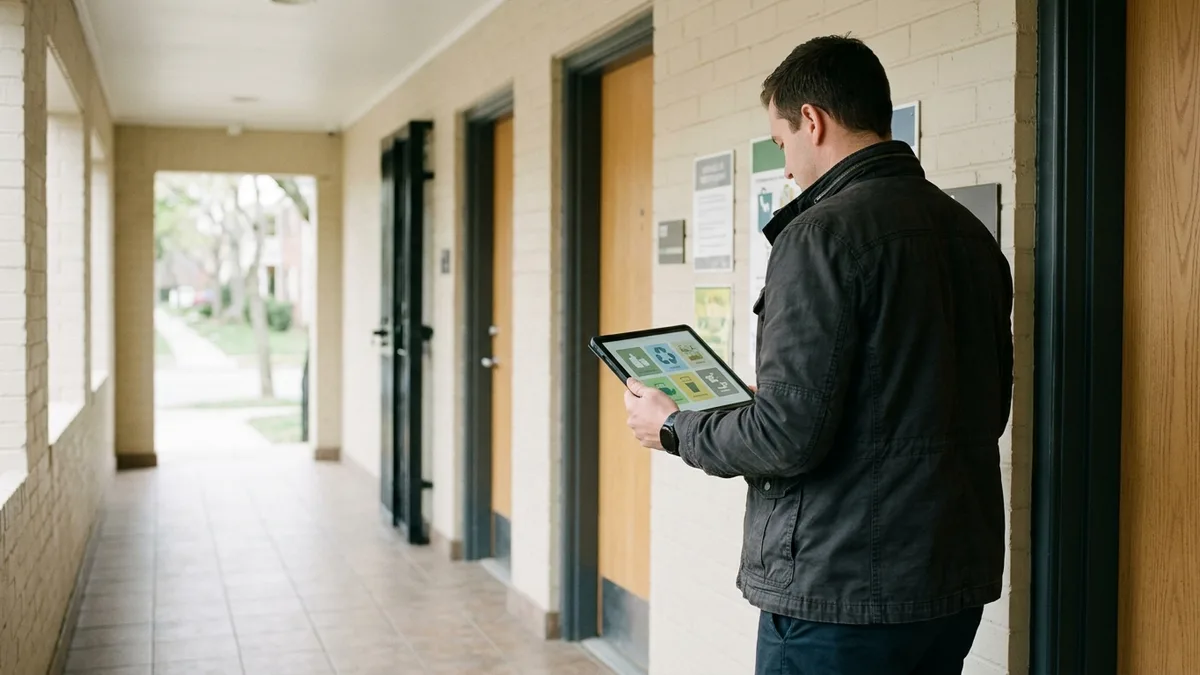
How Do Local Compliance Rules Affect Multifamily Waste Programs in 2026?
Local compliance rules increasingly require multifamily properties to provide recycling and, in some jurisdictions, composting access as a baseline condition of operation, not an optional amenity. Requirements vary significantly by city and state, so you need to verify current rules with your local waste authority rather than assume a blanket national standard applies.
South Carolina's solid waste management activity is tracked and reported at the state level, with the most recent annual reporting period covering fiscal year 2023, running from July 1, 2022 through June 30, 2023. If you operate in Charleston, North Charleston, Mount Pleasant, or Summerville, check current requirements directly with the relevant county or municipal solid waste authority, since specific capacity and composting mandates differ from what other states, like Texas or California, have adopted.
Outside South Carolina, examples of how far compliance has moved illustrate the trend. Austin requires multifamily properties with five or more units to provide convenient recycling access covering paper, cardboard, metal, glass, and hard plastics, with composting access mandatory since October 1, 2026. Separately, California's SB 1383 organics law targets a 75% reduction in organic waste disposal, a policy direction other states have referenced when drafting their own rules. Treat regulatory tightening as a "when," not "if," planning assumption for the next several years, and build recycling and organics infrastructure now rather than reacting after a mandate arrives with a short compliance window.
What Is the Difference Between a Pickup Service and a Full Waste Operations Program?
A pickup service refers to a single, isolated waste collection transaction, while a full waste operations program refers to an integrated system combining scheduled collection, bulk item removal, recycling infrastructure, and documented service verification across an entire property or portfolio. The distinction matters most for portfolio operators managing multiple communities where scattered vendor relationships create accountability gaps. Here's how that plays out in practice: one vendor handles bulk item pickup, city service handles curbside bins, and the property manager becomes the coordination point between the two, plus the resident, plus turnover timing. Every handoff is a place where something falls through. A managed waste operations approach, by contrast, consolidates nightly collection, on-demand bulk removal, and turnover trash handling under a single point of contact with consistent service standards, whether the portfolio has 10 units or more than 1,000. This is the model Trash Day Made Easy was built around: doorstep-to-dumpster valet trash collection, backdoor-to-curbside bin management, and on-demand bulk item removal operating as one system rather than three separate vendor relationships. If you're a build-to-rent developer near Daniel Island managing frequent resident transitions, or a scattered-site portfolio owner coordinating waste across a dozen non-contiguous addresses, that consolidation removes the exact coordination burden that causes services to slip through the cracks.
What Practical Steps Should Property Managers Take First?
Start a sustainable waste program by auditing current fill rates and diversion performance before making any equipment or vendor changes, since most properties overspend on capacity they do not need while underinvesting in the recycling infrastructure that would actually reduce costs. The following sequence reflects what we recommend to clients across Charleston and Atlanta:
- Audit dumpster and recycling bin fill levels over a two-week period to identify whether the problem is capacity, participation, or collection frequency.
- Compare current per-unit recycling capacity against occupancy; many properties still size bins for an outdated unit count.
- Install consistent, material-specific signage at every collection point, not just a single sign near the leasing office.
- Build waste-sorting instructions into the move-in packet rather than a standalone follow-up communication.
- Evaluate whether a doorstep valet model or a centralized enclosure model better fits the property's physical layout, low-rise versus high-rise being the key variable.
- Confirm current local recycling and composting requirements with the relevant municipal or county solid waste authority before assuming existing infrastructure is compliant.
- Consolidate vendors where possible so bulk item removal, nightly collection, and turnover trash handling operate under one accountable relationship instead of three.
Avoid treating signage as a one-time install rather than something that needs refreshing as materials and rules change. Resident non-participation is often a distance or clarity problem rather than a behavior problem. Delaying compliance upgrades until a violation notice forces the issue costs more than acting early.
Frequently Asked Questions
How much does trash cost per month in an apartment?
Trash costs for apartment residents vary widely depending on whether waste removal is bundled into rent, billed as a flat utility fee, or provided through a private valet service. Property managers typically negotiate hauling costs at the portfolio level rather than per unit, so residents rarely see a standalone line-item cost. For a specific quote on a private valet trash or waste operations program, request pricing directly from a local provider like Trash Day Made Easy.
How many nights a week does valet trash service typically run?
Most multifamily valet trash programs run on a nightly schedule, five to seven nights a week, though the exact frequency depends on the property's contract and local ordinances governing collection days. Nightly scheduling is generally preferred because it prevents trash from sitting outside resident doors overnight for multiple days, which reduces pest activity and odor complaints.
When does trash and recycling come in my area?
Trash and recycling collection days depend entirely on the municipality and the specific waste hauler contracted for a property, so confirm the exact schedule with your local city or county solid waste department. In the Charleston metro, this includes checking directly with the relevant municipal authority for North Charleston, Charleston, Mount Pleasant, or the applicable jurisdiction.
How much does valet trash cost for a multifamily community?
Valet trash pricing for multifamily communities is typically quoted per unit per month and varies based on portfolio size, collection frequency, and whether bulk item removal is included. Because pricing depends on these property-specific factors, request a direct quote; Trash Day Made Easy provides quotes Monday through Friday for multifamily, build-to-rent, and HOA properties across Charleston and Atlanta.
What day does the trash come in my area?
Collection day depends on the specific municipality and the property's assigned service route, which can differ even between neighborhoods in the same city. Confirm the current schedule with your local municipal solid waste authority, since routes and days can change with city-wide service adjustments.
What time does trash pickup come in my area?
Pickup times vary by hauler route and are generally not published as an exact hour, since routes shift based on traffic and volume. For multifamily properties using a private valet trash service, collection is typically scheduled during evening or nighttime hours specifically so bins and bagged waste are removed before residents wake up, avoiding daytime overflow visibility.
Why do multifamily properties have lower recycling participation than single-family homes?
Multifamily properties tend to have lower recycling participation primarily because of physical distance and inconvenience, not lack of resident interest. Most Americans consider recycling valuable, yet participation drops sharply when bins are far from a resident's door or when chute systems make separation difficult, a pattern documented in city-level studies comparing single-family and multi-residential diversion rates.
Does sustainable waste management actually lower a property's operating expenses?
Yes, sustainable waste management can lower operating expenses by reducing landfill hauling volume and frequency, the primary cost drivers in most waste contracts. Properties that successfully divert recyclable and organic material often qualify for smaller dumpster sizes or fewer weekly pickups, directly reducing the hauling line item on a property's operating budget over time.
Conclusion: Building a Waste Program That Pays for Itself
Sustainable waste management matters for multifamily communities because the alternative costs more every year as hauling fees rise and local composting and recycling mandates expand: unmanaged overflow, low diversion rates, and reactive complaint handling. The data is consistent across markets: multi-residential diversion trails single-family diversion almost everywhere it has been measured, and that gap represents both an environmental liability and an avoidable operating expense. Properties that redesign collection around resident behavior see the improvement show up in fewer complaints and steadier lease renewals, whether that means doorstep valet pickup for low-rise and build-to-rent communities or better-signed centralized recycling rooms for high-rise buildings. Consolidating nightly collection, bulk removal, and turnover trash handling under one accountable relationship removes the coordination gaps that let waste problems compound in the first place.
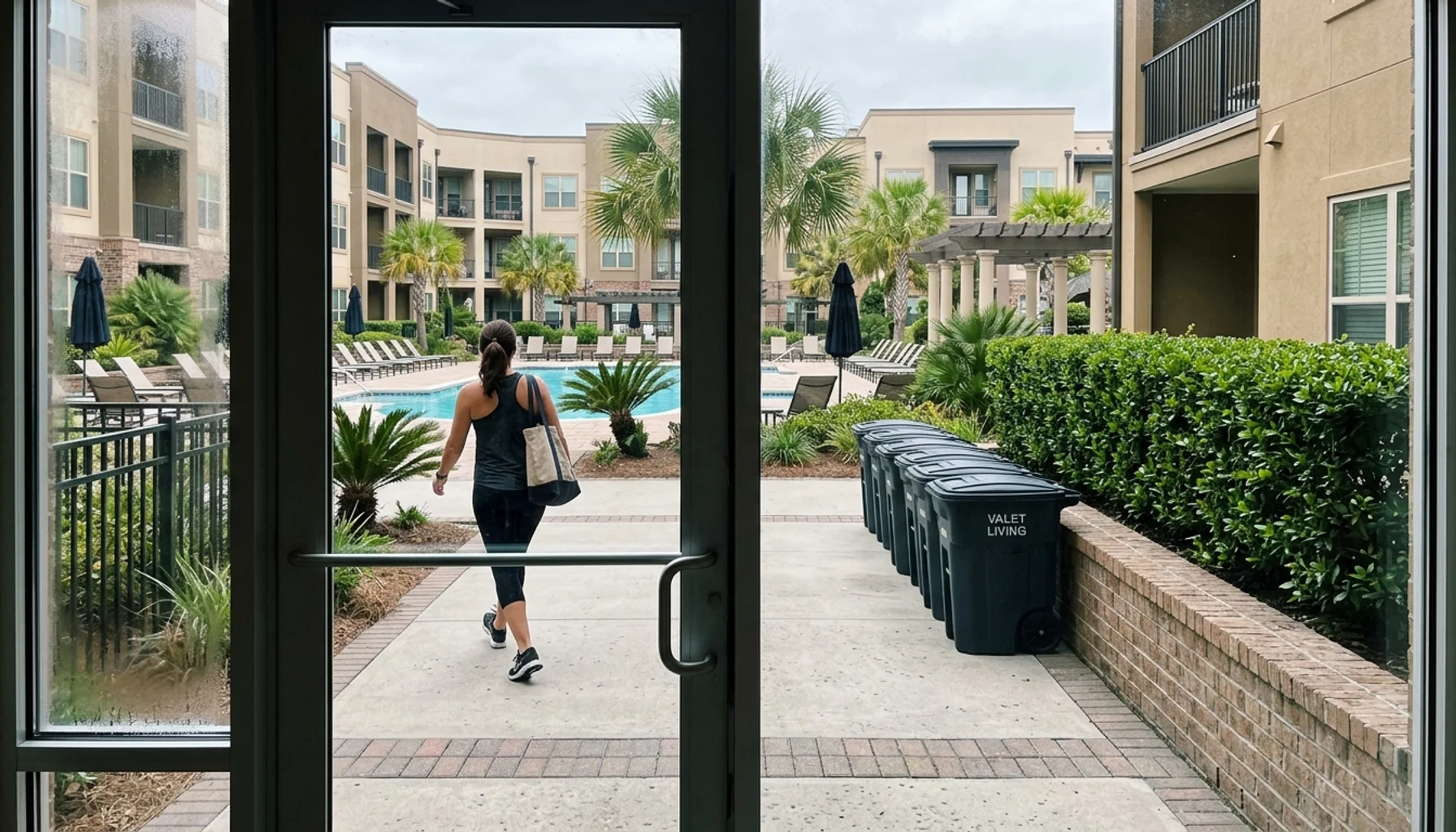
If your property is dealing with overflow issues, inconsistent pickup, or a recycling program residents simply do not use, Trash Day Made Easy provides nightly, photo-verified valet trash service and full waste operations programs for multifamily communities, build-to-rent developments, and HOA properties across Charleston, SC and Atlanta, GA. Request a service quote at trashdaymadeeasy.com, available Monday through Friday, and see what a consolidated, accountable waste program looks like on your property.
Content powered by inkSTR.co