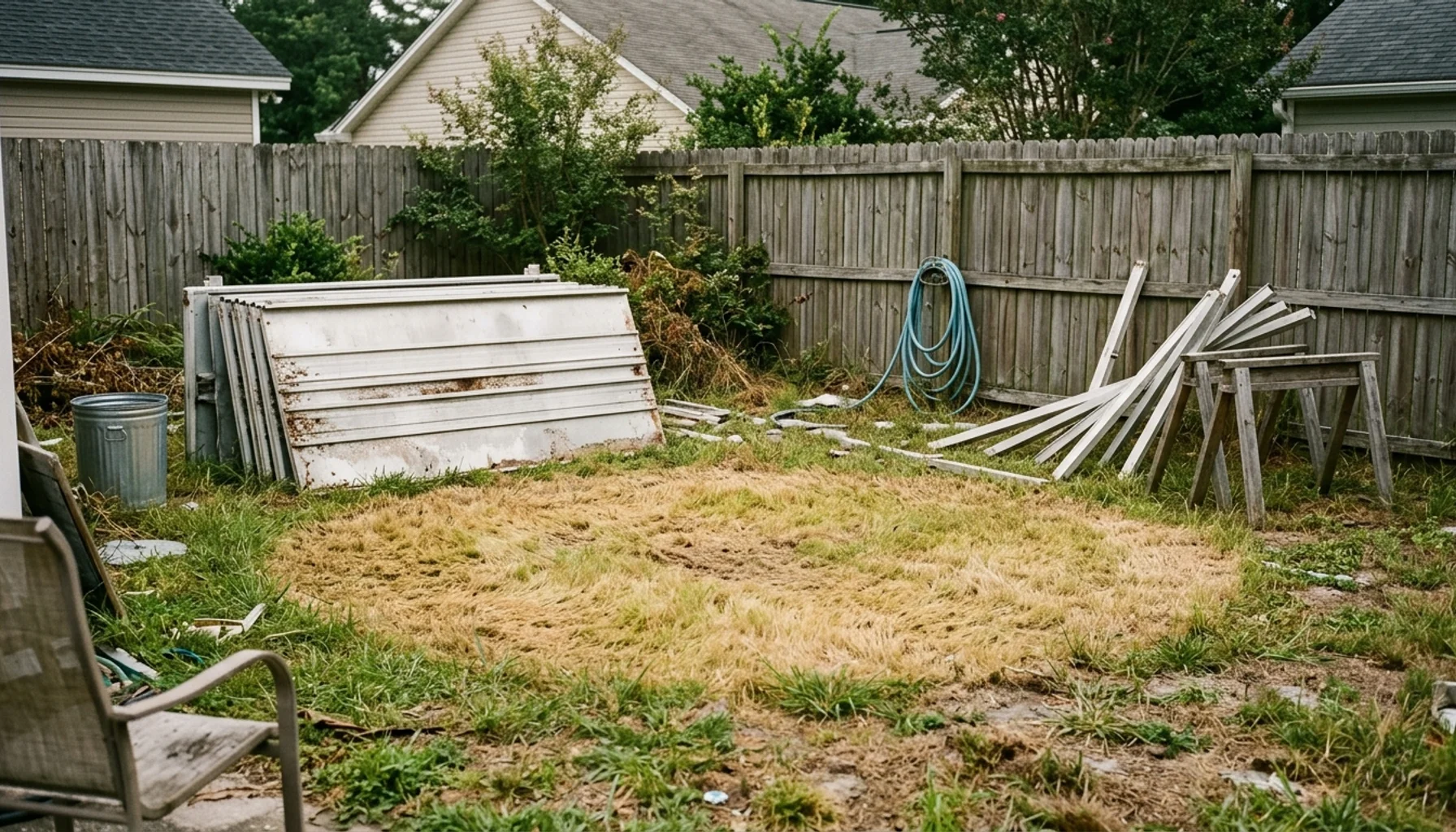
Above ground pool removal services typically cost $300 to $1,500 for a professional crew to drain, dismantle, and haul away the structure, with the final price driven by pool size, deck attachment, and site access. For Charleston-area properties dealing with pool removal debris and ongoing waste needs, pairing removal with a reliable hauling and waste partner keeps the whole project on schedule.
Key Takeaways
- Professional above ground pool removal generally runs $300 to $1,500 for a pool-only job, while pool-plus-deck removal with grading can reach $2,000 to $5,000, according to industry cost guides.
- A standard residential above ground pool removal takes 4 to 8 hours professionally, compared to 3 to 5 days for a DIY teardown done on evenings and weekends.
- Above ground pools make up roughly 41% of residential pool inventory in the United States, out of an estimated 3.4 million residential above ground pools nationwide as of 2026.
- Most removal jobs generate several hundred pounds of debris. A 12-foot round pool weighs around 200 to 400 pounds disassembled, while a 15x30 oval can run 700 to 1,200 pounds.
- Scrap value for above ground pool metal is minor compared to labor cost, so removal pricing is driven almost entirely by labor, hauling, and disposal, not resale of materials.
- Some municipalities require simple demolition or electrical permits even for above ground pool teardown, and dewatering typically must go to a sanitary sewer clean-out rather than a storm drain.
If you manage rental property, an HOA community, or a build-to-rent portfolio anywhere from James Island to Summerville, an old above ground pool sitting half-collapsed in a backyard is more than an eyesore. It is a liability, a curb appeal problem, and eventually a waste disposal project that someone has to coordinate. Trash Day Made Easy works with property managers and homeowners across Charleston, SC and Atlanta, GA on exactly this kind of transition, handling the debris hauling and waste coordination that pool removal always generates.
This guide covers what above ground pool removal services actually cost in 2026, how the removal process works step by step, what permits and drainage rules typically apply, and how to decide between DIY teardown, a dedicated pool removal contractor, or a junk removal company. We also cover a gap most removal guides skip entirely: what to do with the yard after the pool is gone, and where the materials actually end up.
Because Trash Day Made Easy already handles bulk item removal, turnover trash, and move-out debris across Charleston-area properties, we see the tail end of pool removal jobs regularly, the liner scraps, the collapsed frame sections, the leftover decking left curbside waiting for pickup. That vantage point shapes a lot of the practical advice below.
How Much Does It Cost to Remove an Above Ground Pool?
Above ground pool removal costs typically range from $300 to $1,500 for a pool-only teardown and haul away, based on industry cost data from sources including HomeGuide and Angi. Pricing scales up significantly when a wooden deck is attached, or when the site needs grading and topsoil after the pool comes out.
National averages cited across cost-tracking sites land around $800 to $1,300 for a straightforward above ground pool removal, with a broader range of $300 to $5,000 depending on scope. Specifically, pool-only extraction on a small round pool sits at the low end, while a large oval pool with an attached deck and backfill requirements sits at the high end.
The table below breaks down typical cost ranges by project scope, drawn from industry cost guides rather than any single company's pricing.
| Project Scope | Typical Cost Range | Typical Timeline (Professional) |
|---|---|---|
| Pool only, no deck | $300 to $1,200 | 2 to 4 hours |
| Pool plus attached deck | $1,000 to $3,500 | 4 to 8 hours |
| Pool, deck, and full backfill/grading | $1,500 to $5,000 | 1 to 2 days |
| DIY teardown plus disposal fees | $79 to $700 | 3 to 5 days (weekends) |
As a result, homeowners and property managers should treat any quote under $300 with suspicion, since it likely excludes hauling and disposal fees, and any quote near the $5,000 mark should include full yard restoration, not just demolition. For portfolio owners managing multiple properties in North Charleston or the Rivers Avenue corridor, getting itemized quotes that separate demolition, hauling, and grading makes it far easier to compare providers apples to apples.
How Do I Get Rid of My Above Ground Pool?
Getting rid of an above ground pool involves three core stages: draining the water, disassembling the structure, and hauling away the debris, plus any deck removal and yard restoration if applicable. Homeowners can do this themselves over several days, or hire a professional crew to compress the same work into a single afternoon.
First, the pool has to be fully drained. Manufacturers like Intex recommend using the bottom drain plug or a hose siphon for the bulk of the water, then finishing with a small pump and towels for the last inch or two of water and accumulated algae. Draining a mid-size pool can take anywhere from several hours to a full day depending on pump capacity.
Next comes disassembly. This means releasing the leg supports, removing center-ring supports and corner brackets, and folding the vinyl liner in half for disposal or storage. If the liner is being kept for reuse, it should be cleaned and lightly powdered to prevent it from sticking to itself in storage.
Finally, the metal or resin wall panels, frame pieces, and liner need to be hauled away. This is where many DIY projects stall. A collapsed pool frame does not fit in a standard curbside trash bin, and most municipal pickup services will not take large metal panels without a special bulk pickup request. This is exactly the kind of debris that Trash Day Made Easy's bulk item removal service is built to handle for Charleston-area properties, moving pool debris, old decking, and leftover frame sections off the property without the homeowner or property manager coordinating a separate hauling trip.
Is an Above Ground Pool Worth Anything in Scrap?
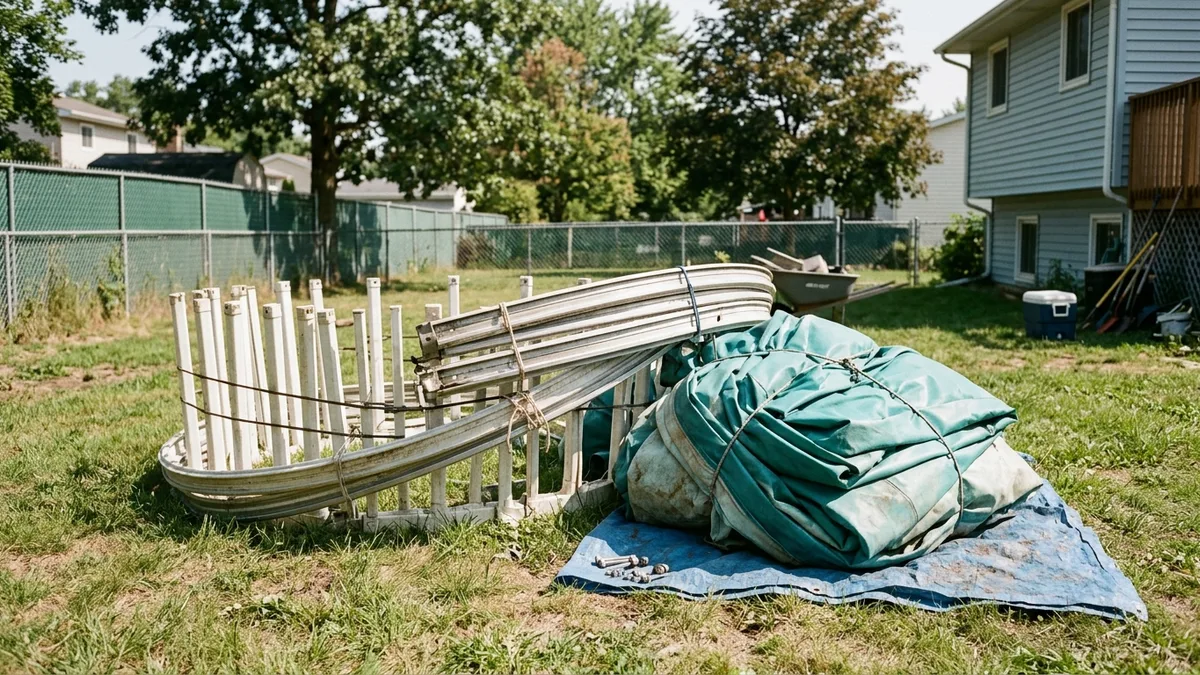
An above ground pool has minimal scrap value, typically not enough to offset the labor cost of removal. The aluminum or galvanized steel wall panels are the only components with any recycling value, and most scrap yards pay by weight at rates that rarely exceed a modest sum for an entire pool frame.
A 12-foot round pool weighs roughly 200 to 400 pounds once disassembled, while a larger 15x30 oval pool can weigh 700 to 1,200 pounds, according to industry removal guides. Even at typical scrap metal rates, that weight translates into a modest payout, far less than the labor cost of dismantling and transporting the material to a recycling facility.
Vinyl liners and plastic components generally have no scrap value at all and go to standard landfill disposal unless a specialty recycler accepts them. This is one of the content gaps most pool removal guides skip: what actually happens to the vinyl. Some regions have limited vinyl recycling programs through construction waste facilities, but coverage is inconsistent, and most liners end up in general demolition debris streams.
In practice, treat scrap value as a minor offset, not a reason to remove a pool yourself. If a contractor tells you removal is "free" because of scrap value, ask for that in writing, because most professional removal pricing is based on labor and hauling, not resale.
How Long Does It Take to Remove an Above Ground Pool?
Professional above ground pool removal typically takes 4 to 8 hours for a standard residential job, while pool-only jobs without a deck can be completed in 2 to 4 hours. DIY removal generally stretches across 3 to 5 days when done in evenings and weekends by a homeowner working alone.
Jobs that include an attached deck and full yard backfill and grading take longer, often 1 to 2 days with a professional crew and heavy equipment. A DIY version of that same project, with hand tools and no rental equipment, can stretch to 7 to 10 days, particularly if the homeowner is also hauling debris to a landfill in truck-bed-sized loads.
Timeline matters most for short-term rental operators and HOA communities working against a deadline, whether that is a new resident move-in, a listing photo shoot, or a compliance deadline from a board. For a build-to-rent community near Daniel Island preparing a shared amenity space for new residents, a same-day or next-day removal timeline is often the deciding factor in choosing a professional crew over a DIY approach.
What Permits and Drainage Rules Apply to Pool Removal?
Permit requirements for above ground pool removal vary by municipality, and some jurisdictions require a simple demolition or electrical permit even for above ground structures, particularly when a dedicated electrical line feeds the pump. Homeowners and property managers should confirm requirements with their local building or permitting office before starting removal work, rather than assuming above ground pools are exempt.
Electrical disconnection is one of the most commonly overlooked steps. If the pool pump was hardwired rather than plugged into a standard outlet, that line typically needs to be properly capped by a licensed electrician, not simply cut and left exposed in the yard.
Drainage rules are the other area where DIY projects run into trouble. Many municipalities require pool water to be directed to a sanitary sewer clean-out during dewatering, not a storm drain or the street, particularly if the water has been treated with chlorine or algaecide. Discharging treated pool water into a storm drain can violate local water quality ordinances in many South Carolina municipalities, so confirming the correct discharge point before draining a several-thousand-gallon pool is worth the extra step.
For HOA communities across Charleston, this is also a compliance issue tied to community standards, not just municipal code. An improperly drained or partially removed pool sitting in a backyard for weeks can trigger the same kind of HOA enforcement headache as an abandoned bulk item at the curb, which is why boards increasingly build removal timelines into their community rules rather than leaving it open-ended.
DIY vs Professional vs Junk Removal: Which Approach Fits Your Situation?
Choosing between DIY teardown, a dedicated pool removal contractor, and a junk removal company depends primarily on your timeline, physical capacity, and whether the job includes a deck or grading work. DIY suits homeowners with time to spare and no attached deck; professional contractors suit anyone facing a compliance deadline or a large structure; junk removal companies suit situations where the pool is already disassembled and just needs hauling.
This is the decision framework most removal guides skip. Here is how to think through it practically:
- Choose DIY if the pool is a small round model without a deck, you have several free weekends, and you are comfortable with basic tools and manual labor. Budget for disposal fees separately, since most municipal trash services will not take a full pool frame curbside.
- Choose a dedicated pool removal contractor if the pool has an attached deck, needs grading and backfill afterward, or you are working against a firm deadline such as a lease turnover or an HOA compliance date. Contractors bring the equipment to compress a multi-day DIY project into a single work day.
- Choose a junk removal or hauling service if you have already disassembled the pool yourself and simply need the debris gone. This is typically the cheapest professional option since it skips the demolition labor entirely, but it will not include grading or drainage work.
For property managers running scattered-site portfolios across North Charleston, Mount Pleasant, and Summerville, the calculation shifts. A single pool removal is a one-time project, but the debris hauling that follows, whether it is pool panels, old decking, or general move-out waste, often overlaps with services you already need on an ongoing basis. That is where a broader waste operations relationship, rather than a one-off hauling call, starts to make more sense.
How Trash Day Made Easy Supports Pool Removal Debris and Ongoing Property Waste Needs
Trash Day Made Easy is a valet trash and waste management company headquartered at 4900 O'Hear Avenue in North Charleston, SC, serving multifamily communities, build-to-rent developments, short-term rental properties, HOAs, and residential homeowners across the Charleston, SC and Atlanta, GA markets. While Trash Day Made Easy does not perform the pool draining and disassembly itself, the company is the practical answer to what happens after: the debris hauling, bulk item removal, and ongoing waste coordination that pool removal projects generate.
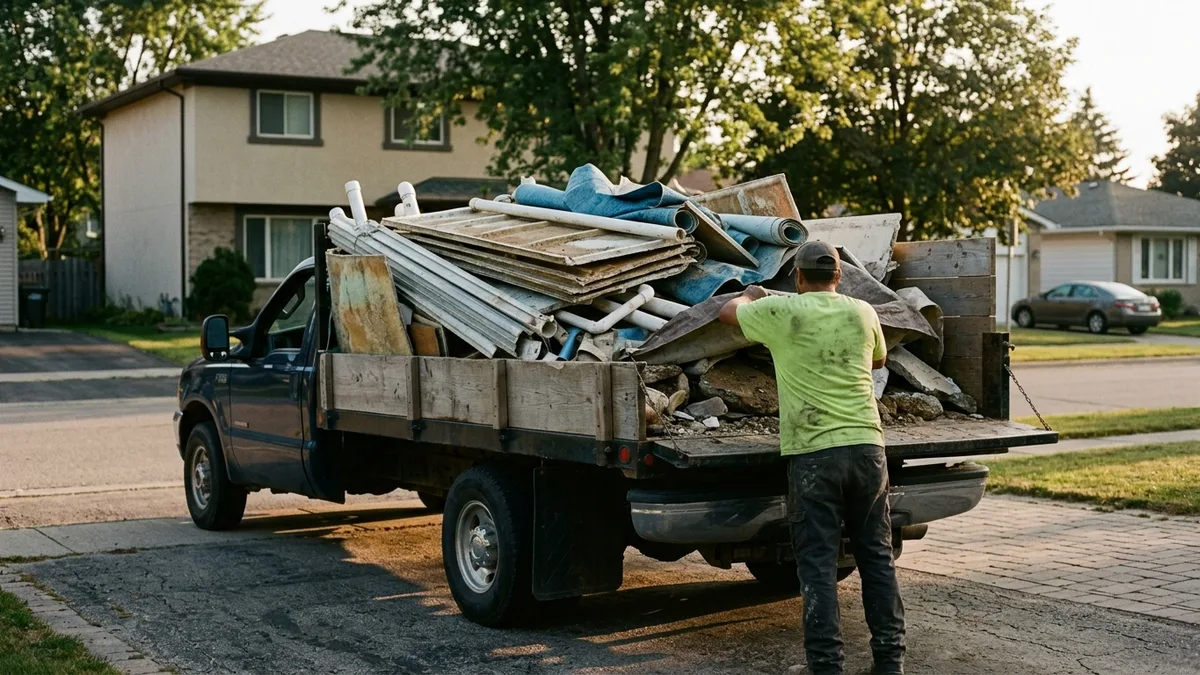
Here is what that looks like in practice. A residential homeowner on James Island tears down an old above ground pool over a weekend, following the drain-and-disassemble steps above. What is left is a pile of panel sections, a folded liner, and a broken deck board or two sitting at the edge of the yard. That pile does not disappear on its own, and standard weekly trash service will not take it. Trash Day Made Easy's bulk item removal service is built for exactly this kind of one-time overflow, clearing the debris without the homeowner needing to rent a truck or make multiple trips to a disposal facility.
For HOA communities and build-to-rent developments, the value compounds. A pool removal is rarely an isolated event. It usually coincides with broader yard cleanup, deck replacement, or a resident move-out, all of which generate waste that needs coordinated hauling. Trash Day Made Easy's Mount Pleasant and Summerville service areas cover exactly the kind of established residential neighborhoods where older above ground pools are most common, and where HOA boards are actively enforcing cleanliness standards around abandoned structures.
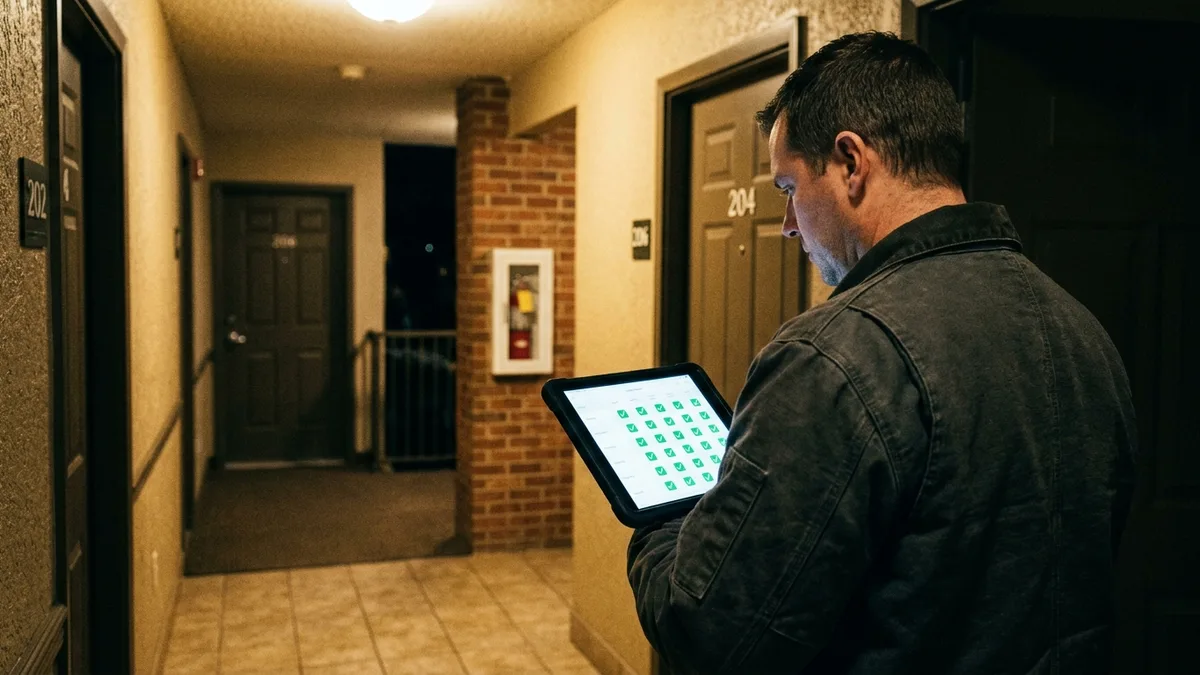
What sets Trash Day Made Easy apart from a one-time junk removal call is the ongoing relationship. Every service visit, whether it is nightly valet trash collection or a scheduled bulk pickup, is photo-verified, giving property managers documented confirmation without needing to follow up or issue reminders. For scattered-site portfolio owners managing waste across a dozen or more properties in North Charleston and beyond, that documentation matters when a pool removal is just one line item in a much longer punch list. The company is purpose-built to scale from a single residential homeowner starting service at $49 per month up through portfolios exceeding 1,000 units, maintaining the same standard of service regardless of size.
Trash Day Made Easy also partners with The Bin Boy, a Charleston-based bin cleaning and sanitizing service, extending the waste management relationship beyond pickup and hauling into full bin care. That partnership is particularly relevant after a pool removal project, when a property's regular waste bins have likely seen extra use from cleanup debris and could use a deep clean before returning to normal weekly service.
What Should You Do with the Yard After Pool Removal?
Yard restoration after above ground pool removal typically involves grading the exposed dirt circle, adding several inches of topsoil, and reseeding or laying sod, a step that most removal guides mention only in passing. The exposed area under a pool is usually compacted, often dead grass or bare dirt, and needs active soil work before it will support new landscaping.
Start with grading. The ground under an above ground pool is often slightly depressed or unevenly compacted from years of weight distribution. Renting a small grading tool or having your removal contractor include grading in the scope solves this before you add topsoil, since topsoil added over an uneven base will settle unevenly later.
Next, topsoil depth matters more than most homeowners expect. A 2 to 4 inch layer of topsoil is typically sufficient for grass seed to establish, though areas with heavily compacted soil may need up to 6 inches worked in with a tiller for proper root development. Skipping this step and seeding directly onto the old compacted footprint is the most common reason new grass fails to establish in that specific spot.
For seeding in the Charleston climate, warm-season grasses suited to South Carolina's Lowcountry, such as Bermuda or centipede varieties, generally establish faster in the region's long growing season than cool-season alternatives. Watering newly seeded pool footprints daily for the first two to three weeks, tapering to every other day as roots establish, gives new grass the best chance of matching the surrounding lawn. HOA boards enforcing landscaping standards after a pool removal often specify a completion window for this exact reason, since a bare dirt circle in a shared or visible yard reads as unfinished long after the pool itself is gone.
What Are the Environmental Impacts of Pool Removal Materials?
Above ground pool removal generates a mix of recyclable and non-recyclable waste, with metal frame components holding some recycling value while vinyl liners and most plastic parts typically go to landfill. Understanding which materials can be diverted from landfill helps property owners make more informed decisions about disposal, even though options remain limited in most markets.
Metal wall panels, whether aluminum or galvanized steel, are the most recyclable component of an above ground pool. Most scrap metal recyclers accept these panels, and many general demolition haulers separate metal from other debris automatically as part of standard practice, since metal recycling reduces disposal costs for the hauler.
Vinyl liners are the harder problem. Standard curbside recycling programs do not accept pool liners, and specialty vinyl recycling facilities are not widely available in most regions, including the Charleston metro. As a result, most liners end up in general construction and demolition debris, headed to a landfill along with plastic skimmers, ladders, and other non-metal components.
Given these limitations, the most practical environmental step available to most homeowners is simply consolidating debris for a single efficient haul rather than multiple partial trips, which reduces the fuel and emissions cost of disposal. If you are removing a pool as part of a larger property renovation, coordinating pool debris with other demolition waste in a single hauling trip is generally more efficient than treating it as a separate project.
Frequently Asked Questions
How much does it cost to remove an above ground pool?
Professional above ground pool removal typically costs $300 to $1,500 for a pool-only job, and $2,000 to $5,000 when a deck and full yard grading are included. Pricing depends on pool size, whether a deck is attached, and how much backfill and topsoil the site needs afterward.
How do I get rid of my above ground pool?
Getting rid of an above ground pool involves draining the water through the bottom drain plug or a hose siphon, disassembling the leg supports and wall panels, folding the liner for disposal, and hauling the debris away. Homeowners can do this over several days themselves, or hire a professional crew to complete the same job in a single afternoon.
Is an above ground pool worth anything in scrap?
An above ground pool has minimal scrap value. The metal wall panels can be recycled for a modest amount based on weight, typically 200 to 1,200 pounds depending on pool size, but this rarely offsets the labor cost of removal. Vinyl liners and plastic components have no meaningful scrap value.
How long does it take to remove an above ground pool?
A professional crew typically completes above ground pool removal in 4 to 8 hours, or 2 to 4 hours for a pool-only job without a deck. DIY removal generally takes 3 to 5 days when done during evenings and weekends without rental equipment.
What happened when an HOA changed waste management companies?
When an HOA switches waste management providers, the transition typically involves a service overlap period, updated collection schedules, and new bin or collection standards communicated to residents. A well-managed transition, including clear communication and documented service confirmation from the new provider, minimizes missed pickups and resident confusion during the changeover.
What is vacation rental trash service?
Vacation rental trash service refers to on-demand and turnover-based waste removal designed for short-term rental properties, where trash needs to be cleared between guest stays rather than on a fixed weekly schedule. This differs from standard residential valet trash because it has to adapt to unpredictable booking calendars and quick turnaround windows between checkout and the next guest's arrival.
Do I need a permit to remove an above ground pool?
Some municipalities require a simple demolition or electrical permit for above ground pool removal, particularly if the pump was hardwired rather than plugged into a standard outlet. Requirements vary by city and county, so confirm with your local building or permitting office before starting removal, rather than assuming above ground structures are automatically exempt.
Can I put pool water down a storm drain when draining for removal?
In most municipalities, treated pool water should be directed to a sanitary sewer clean-out rather than a storm drain, particularly if the water contains chlorine or algaecide residue. Discharging treated pool water into a storm drain can violate local water quality ordinances, so confirm the correct discharge point with your local water authority before draining a pool for removal.
Conclusion
Above ground pool removal in 2026 typically runs $300 to $1,500 for a straightforward pool-only job, with costs climbing toward $5,000 once a deck, grading, and topsoil are added to the scope. Whether you tackle it yourself over a few weekends or bring in a professional crew for a same-day teardown, the real logistical challenge is almost always what happens after: hauling the debris, restoring the yard, and getting bins back to normal service.
That is the piece Trash Day Made Easy handles best. Whether you are a residential homeowner on James Island clearing out an old pool, an HOA board enforcing cleanliness standards after a resident's removal project, or a build-to-rent operator managing yard cleanup across a Daniel Island community, coordinated debris hauling and ongoing waste management keeps the project from dragging into a second or third weekend. As Charleston's above ground pool inventory continues to age through 2026 and beyond, that kind of removal-to-restoration support will only become more relevant for property managers and homeowners alike.
If your pool teardown or yard cleanup has left debris that needs hauling, or you are managing an HOA community dealing with an overdue removal, get started with Trash Day Made Easy for bulk item removal and ongoing waste operations across Charleston, SC and Atlanta, GA. Quotes are available Monday through Friday for every property type, from a single residential home to a full multifamily portfolio.
Content powered by inkSTR.co