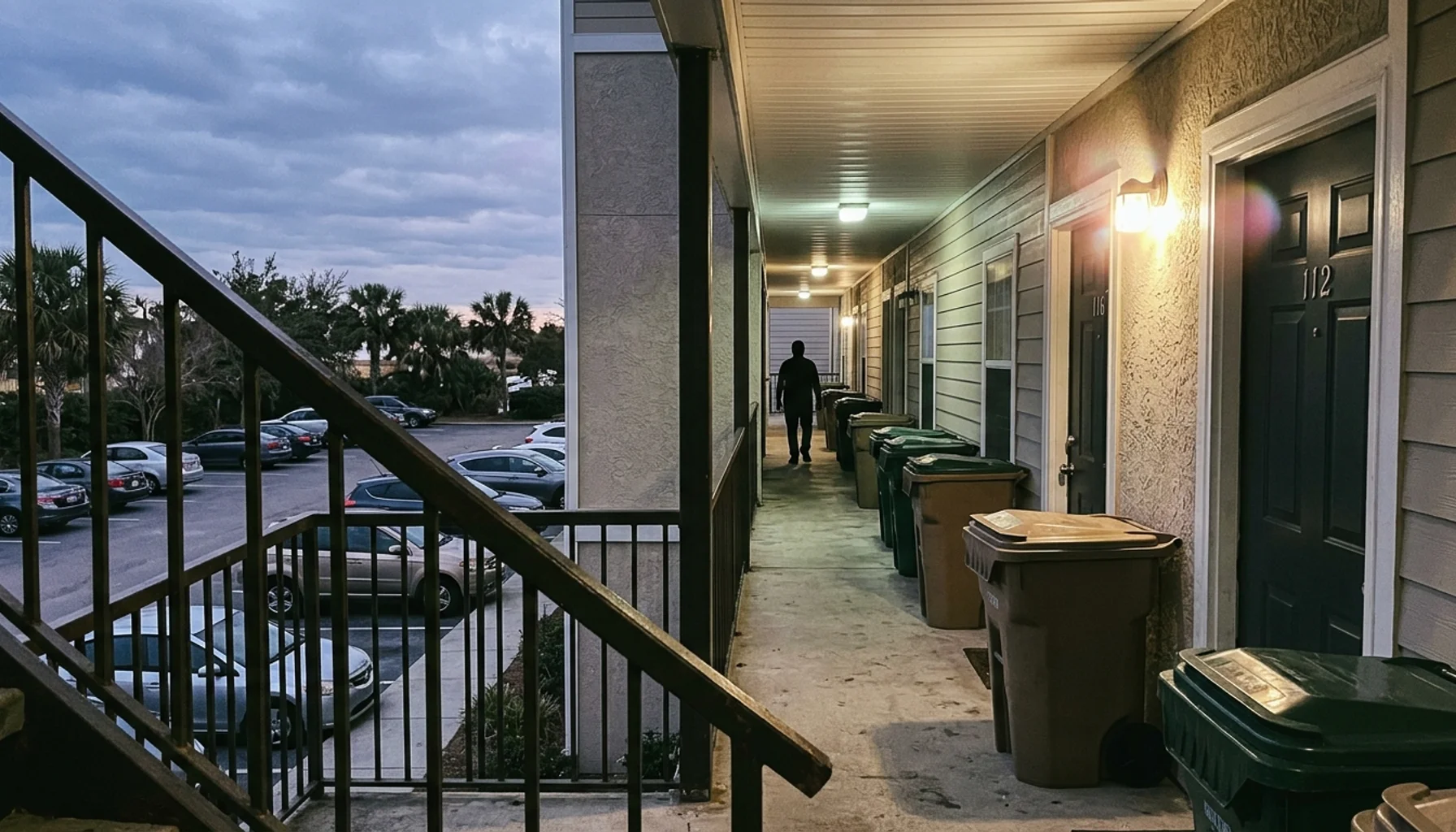
A valet trash company is a service provider that collects household or apartment waste directly from a resident's doorstep, back door, or bin storage area and hauls it to a dumpster or curb on a set nightly or weekly schedule. Property managers hire one to eliminate overflowing dumpsters and resident complaints; homeowners hire one to stop rolling bins to the curb themselves.
Key Takeaways
- Industry pricing data for 2026 puts valet trash costs at roughly $8 to $15 per unit per month for property owners and $25 to $35 per unit for residents who pay directly.
- Most valet trash companies collect Sunday through Thursday between 6 p.m. and 8 p.m., though some now offer nightly or on-demand windows.
- Trash Day Made Easy offers residential valet trash starting from $49 per month in select Charleston, SC neighborhoods, plus photo-verified nightly service for multifamily and build-to-rent portfolios.
- The U.S. valet trash services market is estimated at roughly $3.5 billion in 2026, with only about 15% of the potential market currently served, according to industry pitch-deck analysis.
- A typical property owner using a valet trash company nets roughly $13 to $27 per unit per month in margin, depending on community size, per 2026 pricing guide data.
- Photo-verified service, where every stop is documented with a timestamped image, is becoming the deciding factor property managers use when comparing vendors.
If you manage a multifamily community near the Rivers Avenue corridor in North Charleston, oversee a build-to-rent development on Daniel Island, or just want your bins handled without lifting a finger on James Island, the question is rarely "should I hire a valet trash company." It's "which one, and how do I know they'll actually show up." That's the question this guide answers.
At Trash Day Made Easy, we've fielded this exact question hundreds of times across Charleston metro properties, from 12-unit build-to-rent communities to 400-plus-unit apartment portfolios. The pattern is consistent: property managers don't fail because they picked the wrong price point. They fail because they picked a vendor with no accountability system, and nobody found out until residents started complaining.
This guide covers pricing benchmarks by community size, what a legitimate service agreement should include, how holiday and weather disruptions get handled, and a practical checklist for evaluating any valet trash company, including the one you're currently considering.
How Much Should a Trash Valet Charge?
A trash valet company typically charges property owners between $8 and $15 per unit per month, while residents who pay directly for the amenity are billed $25 to $35 monthly, according to 2026 industry pricing data. Pricing scales with community size: larger communities generally see lower per-unit costs due to route density.
Specifically, for communities of 100 to 149 units, owners commonly pay $15 to $17 per unit monthly while residents pay $30 to $40, producing net margins of roughly $13 to $23 per unit. In the 150 to 299 unit range, owners typically pay $13 to $15 per unit and residents pay $25 to $35, with margins landing around $10 to $22 per unit. For properties above 300 units, owners usually pay $12 to $14 per unit while residents pay $25 to $30, yielding margins near $11 to $18 per unit.
As a result, a 200-unit apartment community in North Charleston might pay a total monthly service fee in the low thousands, a cost most owners fold into operating budgets rather than passing entirely to residents. Residential homeowners outside a multifamily contract face different math. Trash Day Made Easy prices residential valet trash starting from $49 per month in select Charleston neighborhoods, which sits above the per-unit multifamily rate because it covers a standalone household route rather than a shared community stop.
| Community Size | Owner Cost (per unit/month) | Resident Cost (per unit/month) | Typical Net Margin |
|---|---|---|---|
| 100-149 units | $15-$17 | $30-$40 | $13-$23 |
| 150-299 units | $13-$15 | $25-$35 | $10-$22 |
| 300+ units | $12-$14 | $25-$30 | $11-$18 |
| Standalone residential | N/A (homeowner pays directly) | From $49/month | N/A |
How Profitable Is a Trash Valet Business?
A valet trash business is generally profitable because it runs on recurring subscription revenue with relatively low per-stop labor cost once a route is established. Industry deal and loan data reviewed in 2026 shows valet trash companies averaging around $200,000 in annual revenue with profit margins averaging about 48%, figures that reflect why the category has attracted both regional operators and larger national players.
The broader growth story supports that margin structure. The U.S. valet trash services market is estimated at approximately $3.5 billion in 2026, with room to grow past $12 billion if residential adoption expands, since industry estimates suggest only about 15% of the potential market is currently served. For context, the wider U.S. waste collection services industry sits at roughly $83.1 billion in 2026, according to IBISWorld sizing data, meaning private valet operators occupy a small but fast-growing slice of a very large category.
Labor economics matter here too. The U.S. Bureau of Labor Statistics reports the waste management and remediation services sector employed approximately 527,700 workers as of May 2026. Locally, ZipRecruiter salary data from mid-2026 puts average hourly pay for valet-trash-type roles in Charleston, SC around $14.57, with a typical range of $12.60 to $16.63. Wages in North Charleston specifically run close to $14.74 per hour. Those numbers matter for property managers evaluating vendor pricing: a company charging well below market on the owner side is either running thin margins or cutting corners on staffing and verification, neither of which serves a property manager's interest long term.
Why Am I Getting Charged for Trash and Valet Trash?
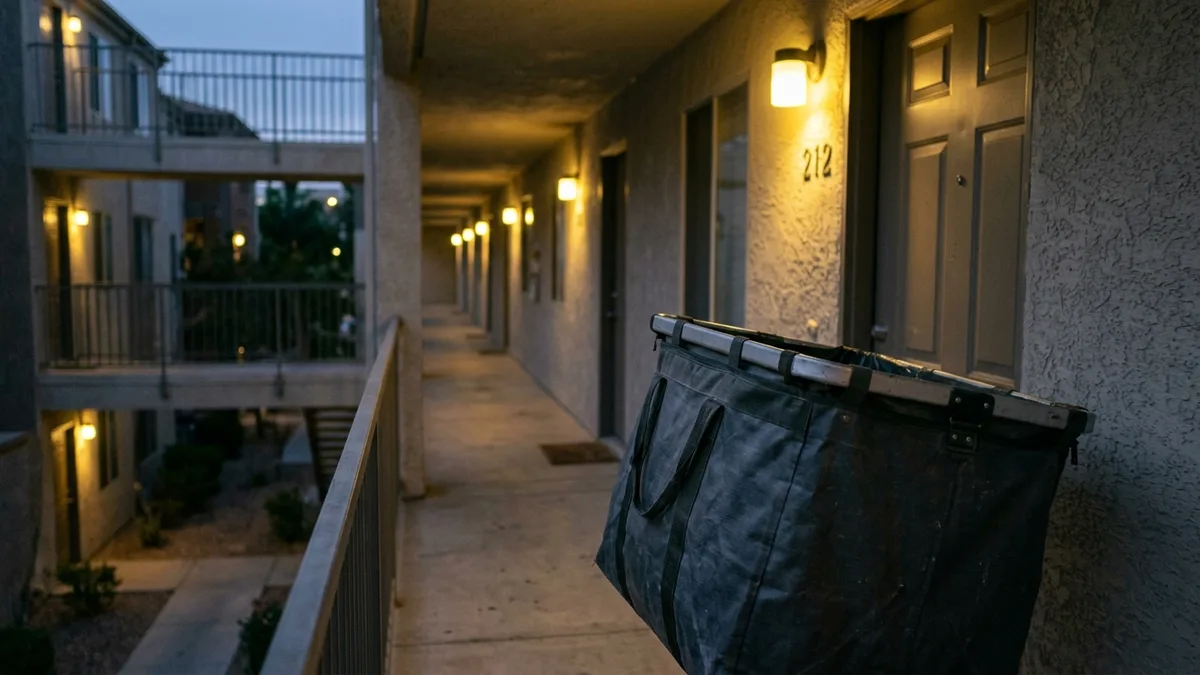
Residents sometimes see two separate line items, a municipal or bulk trash fee and a valet trash charge, because these cover different services. Municipal or standard trash fees typically fund weekly or biweekly curbside dumpster pickup managed by the city or a bulk hauler under contract with the property. Valet trash is a separate, opt-in or building-standard amenity that adds nightly doorstep collection on top of that base service.
In a multifamily lease, the base trash fee usually covers the cost of dumpster service and disposal for the entire property, a cost the property owner negotiates with a hauler independent of any valet provider. The valet trash charge, by contrast, pays for the labor and route management involved in a porter walking each building nightly, collecting bagged waste left outside doors, and depositing it into the community dumpster. Residents who don't want the doorstep convenience but still owe a base trash fee are paying for disposal infrastructure, not the amenity.
For homeowners outside a multifamily lease, the same logic applies differently. City curbside pickup, covered by municipal tax dollars or a separate utility fee, handles the weekly haul from your curb to the landfill. A private trash can concierge service, like the one Trash Day Made Easy offers in select Charleston neighborhoods, is a distinct add-on that manages moving your bin from storage to the curb and back, which municipal pickup never touches. If a bill looks duplicated, check whether one charge is disposal and the other is the labor of getting waste to the truck.
What Does a Valet Trash Company Actually Do Each Night?
A valet trash company's core nightly function is doorstep-to-dumpster collection: a porter walks an assigned route through a community, picks up bagged waste that residents place outside their doors, and deposits it into the property's central dumpster or compactor. Most operators run this route on a fixed schedule aligned with resident expectations.
Specifically, most valet trash providers operate Sunday through Thursday, with collection windows commonly falling between 6 p.m. and 8 p.m., though nightly windows stretching from 7:30 p.m. to midnight are increasingly common as portfolios grow and routes get denser. Residents typically get instructions to place tied bags outside their door between 5 p.m. and 7 p.m. on service nights, and standardized 13-gallon containers are common across the industry for consistency and porter efficiency.
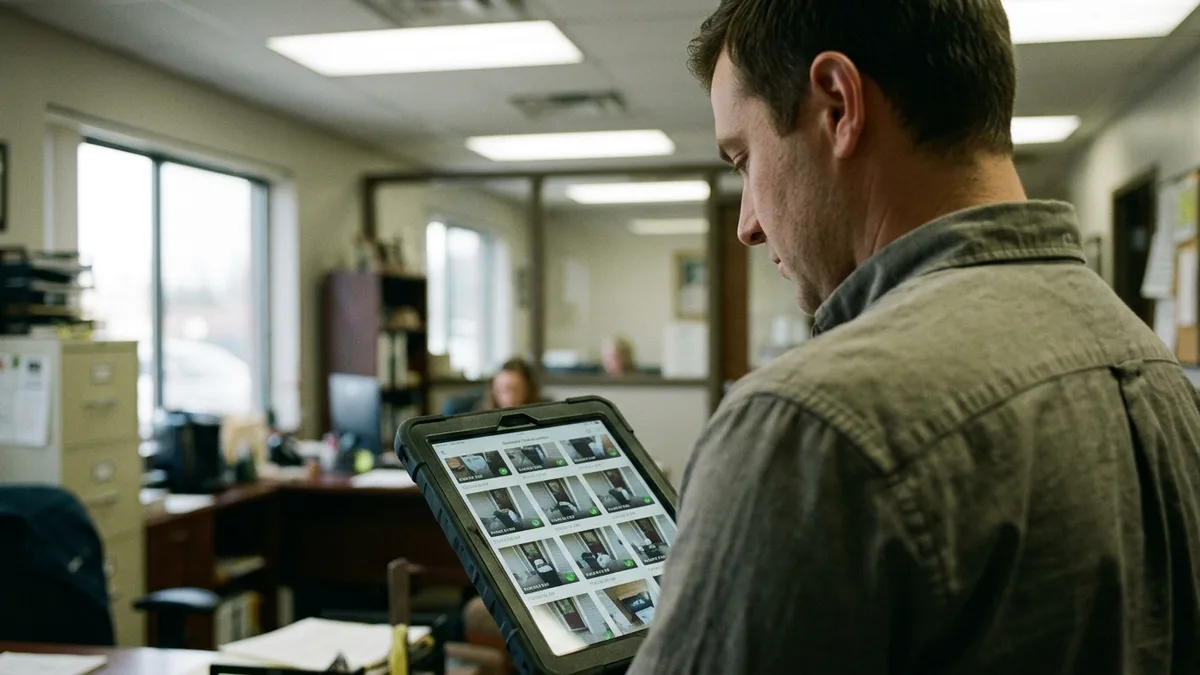
At Trash Day Made Easy, every stop on a route gets photo-verified, meaning the porter captures a timestamped image at each door confirming collection occurred. That documentation gets logged and made available to the property manager without any follow-up call required. This differs meaningfully from a self-reporting model, where a route sheet gets checked off by hand with no visual proof. Property managers overseeing a build-to-rent community or a scattered-site portfolio across North Charleston and the airport corridor rely on that documentation when a resident disputes whether pickup happened.
What Should Be in a Valet Trash Service Contract?
A valet trash service contract should specify service frequency, collection window, container specifications, holiday and weather contingency terms, and the process for reporting missed pickups, since these are the terms competitors most often leave vague. Contract length and termination terms matter just as much as the nightly schedule.
Most valet trash agreements for multifamily properties run on annual terms with automatic renewal clauses, so ask specifically what notice period is required to cancel or renegotiate before a renewal date locks you in for another year. Termination fees, when they exist, are usually tied to early cancellation within the first year, so a property manager switching vendors mid-contract should confirm in writing whether any penalty applies and how it's calculated. If a vendor won't put termination terms in writing before you sign, treat that as a warning sign, not a negotiating tactic.
Holiday and weather handling is where many contracts go silent, which is exactly the kind of coverage gap that leaves property managers guessing. Some providers skip specific holidays such as New Year's Day and Christmas Day entirely with no makeup collection, while others shift the schedule a night earlier or later. Severe weather, including the tropical storm systems that periodically affect the Charleston coast from Sullivan's Island to Isle of Palms, can suspend routes for safety reasons. A solid contract states explicitly how missed nights during weather events get communicated and whether a makeup pickup follows. Trash Day Made Easy builds holiday and weather contingency communication directly into its service agreements so property managers aren't left guessing when a route gets disrupted.
How Do You Compare Valet Trash Vendors Before Signing?
Comparing valet trash vendors requires evaluating five factors beyond price: service documentation method, contract flexibility, scalability across portfolio size, holiday and weather protocols, and responsiveness to on-demand requests like bulk item removal. Price alone is a poor filter since the spread between vendors in a given market is often narrow.
First, ask whether the vendor photo-verifies every stop or relies on driver self-reporting. Second, ask how the vendor handles a scattered-site portfolio, meaning properties that aren't contiguous, since routing efficiency and consistency often break down for vendors that only build routes for single large communities. Third, confirm whether bulk item removal, turnover trash between residents, and move-in or move-out debris handling are included services or a separate line item, since these situations arise constantly in build-to-rent and short-term rental operations. Fourth, ask directly what happens on a holiday or during a named storm. Fifth, request references from properties of a similar unit count in your specific submarket, whether that's Mount Pleasant, Summerville, or Johns Island, since route density and local knowledge affect service quality more than corporate size does.
Here's a practical checklist property managers can use during vendor evaluation:
- Does the vendor provide photo or timestamped proof of service at each stop, not just a route completion summary?
- What is the exact collection window, and does it match your community's resident expectations for noise and timing?
- Is the contract term annual, month-to-month, or multi-year, and what is the cancellation notice period?
- How are holidays handled, and is there a written weather contingency policy?
- Can the vendor scale with your portfolio if you add properties in Daniel Island, James Island, or the Atlanta metro?
- Does the vendor offer bulk item removal and turnover trash handling as part of the core service or an add-on?
- What is the actual per-unit cost compared against the $8 to $15 owner-side benchmark and $25 to $35 resident-side benchmark noted in 2026 pricing data?
If you're managing turnover-heavy properties, our guide to guest turnover trash service covers how that specific workflow should integrate with a make-ready timeline. And if you're weighing valet trash against a bin-to-curb model for a residential HOA, our breakdown of what valet waste actually includes walks through that distinction in more detail.
Why Trash Day Made Easy Is the Valet Trash Company Charleston Property Managers Choose
Trash Day Made Easy is a valet trash and waste management company headquartered at 4900 O'Hear Avenue in North Charleston, SC, purpose-built to serve multifamily communities, build-to-rent developments, short-term rental operators, HOAs, and residential homeowners across Charleston and Atlanta. Every service model, from nightly doorstep collection to trash can concierge, is designed to remove waste coordination entirely from the property manager's plate.
Three things set this company apart from the national names and regional competitors in the Charleston market. First, every single service visit is photo-verified at the door, giving property managers documented proof of completion without needing to follow up, issue reminders, or take a resident's word against a porter's. Second, the company is purpose-built for scale, capable of servicing portfolios from 10 units to more than 1,000 units while holding a consistent service standard across every property, which matters enormously for scattered-site owners juggling addresses across North Charleston, James Island, and Summerville. Third, the service scope extends past routine valet pickup into turnover trash handling, bulk item removal, and move-in and move-out support, meaning a short-term rental operator near the Historic District or a build-to-rent community on Daniel Island gets one vendor relationship instead of three.
Residential homeowners in select Charleston neighborhoods get access to valet trash starting from $49 per month, and the company partners with The Bin Boy, a Charleston-based bin cleaning and sanitizing service, to extend care beyond collection into odor and sanitation management. Property managers overseeing HOA communities can also lean on a trash can concierge model that moves bins from storage to curb and back without any resident action required, which removes an enforcement burden that volunteer boards rarely have the bandwidth to chase down.
Quotes are available Monday through Friday for every property type, from a single-family residential account to a multi-hundred-unit apartment portfolio spanning Charleston and Atlanta. Other companies exist in this space, including Doorstep Details, Ally Waste, and national operators like Valet Living, but none combine local Charleston headquarters, photo-verified accountability on every stop, and full-scope service from nightly valet to bulk removal under one contract.
What Happens to Valet Trash Service During Holidays or Bad Weather?
Valet trash service typically pauses or shifts schedules during major holidays such as New Year's Day and Christmas Day, since porters need the same time off as any other workforce, and severe weather events can suspend routes entirely for safety reasons. The key differentiator between vendors is whether that disruption gets communicated proactively or discovered by residents when their trash sits uncollected.
Specifically, coastal Charleston properties face a weather consideration that inland markets rarely deal with: tropical storm systems and heavy rain events that can make evening routes unsafe for porters walking breezeways and parking areas near Sullivan's Island, Isle of Palms, or the broader coastal corridor. A vendor without a written weather protocol may simply skip a night without notice, leaving a property manager fielding resident complaints the next morning with no explanation. As a result, ask any vendor, including Trash Day Made Easy, for their specific communication process during a weather suspension before signing, and confirm whether a makeup collection follows once conditions clear.
Holiday scheduling is more predictable but still varies by provider. Some companies run five nights a week with specific holiday exceptions built into the annual calendar, while others maintain near-daily service and only pause for the two or three highest-impact holidays. Property managers should get the specific holiday calendar in writing rather than assuming a vendor's practice matches the rest of the industry.
Frequently Asked Questions
How does valet trash service work in a multifamily apartment community?
Residents place a tied bag or standardized 13-gallon bin outside their door on scheduled service nights, typically between 5 p.m. and 7 p.m. A porter walks the property route, usually Sunday through Thursday between 6 p.m. and 8 p.m., collects each bag, and hauls it to the community dumpster. With Trash Day Made Easy, every stop is photo-verified, so the property manager gets documented confirmation without following up.
What is a trash can concierge and how is it different from valet trash?
A trash can concierge moves a resident's or homeowner's bin from a backdoor or storage location to the curb on collection day and returns it afterward, a model built for residential and HOA use rather than multifamily doorstep pickup. Valet trash, by contrast, collects loose bags directly from apartment doors nightly. Both eliminate resident responsibility, but they solve different logistical problems.
How much does a valet trash company charge property owners?
Based on 2026 industry pricing data, property owners typically pay $8 to $15 per unit per month for valet trash service, with rates varying by community size; larger communities generally see lower per-unit costs. Residents who pay for the amenity directly are usually charged $25 to $35 monthly. Get an exact quote by contacting a vendor directly, since portfolio size and service scope affect final pricing.
Can valet trash service be added to a short-term rental property in Charleston?
Yes. On-demand and turnover-specific trash removal is available for short-term rental properties, designed around unpredictable guest checkout schedules rather than a fixed nightly route. This integrates with cleaning and make-ready workflows so a property near the Historic District or Isle of Palms is waste-free before the next guest arrives, without the operator needing to be on-site.
What does Trash Day Made Easy charge for residential valet trash service?
Residential valet trash service through Trash Day Made Easy starts from $49 per month in select Charleston, SC neighborhoods. Multifamily, build-to-rent, and portfolio pricing is quote-based depending on unit count and service scope. Request a quote directly at Trash Day Made Easy, available Monday through Friday.
Can one valet trash company handle a portfolio spread across multiple Charleston neighborhoods?
Yes, provided the vendor is purpose-built for scale. Trash Day Made Easy services portfolios ranging from 10 units to more than 1,000 units while maintaining consistent photo-verified service standards across every address, whether that's a single build-to-rent street on Daniel Island or a scattered-site portfolio spanning North Charleston, Summerville, and Johns Island.
What is the difference between a valet trash company and standard city trash pickup?
City or municipal trash pickup handles weekly or biweekly curbside dumpster collection as part of standard disposal infrastructure, usually funded through a base fee or tax. A valet trash company is a private, opt-in amenity layered on top of that base service, providing nightly doorstep-to-dumpster or backdoor-to-curbside collection so residents never have to manage the bin or dumpster trip themselves.
Is photo-verified service actually necessary, or is it just a marketing feature?
Photo verification solves a real accountability gap rather than functioning as a marketing add-on. Without it, a property manager has no way to confirm a missed pickup versus a resident who forgot to put trash out, and disputes become a matter of one party's word against another's. Timestamped photo documentation at each door removes that ambiguity entirely and gives property managers a defensible record if a resident complaint escalates.
Conclusion: Choosing a Valet Trash Company in 2026
Pricing benchmarks matter, but they shouldn't be the only filter you use to select a valet trash company. As of 2026, the market spread between vendors on the $8 to $15 owner-side range is narrow enough that documentation, contract terms, and scalability across a portfolio decide the outcome more than the per-unit rate does. A vendor that photo-verifies every stop, communicates clearly about holiday and weather disruptions, and can grow with your portfolio from 10 units to 1,000 will save you far more in avoided complaints and turnover than a marginally cheaper contract ever will.
Trash Day Made Easy was built around exactly that standard: nightly, photo-verified valet trash collection and trash can concierge service for multifamily communities, build-to-rent developments, short-term rental properties, HOAs, and residential homeowners across Charleston, SC and Atlanta, GA. Whether you're managing a 400-unit community near the Rivers Avenue corridor or you just want your bins handled on James Island without thinking about it, the same accountable, documented service applies.
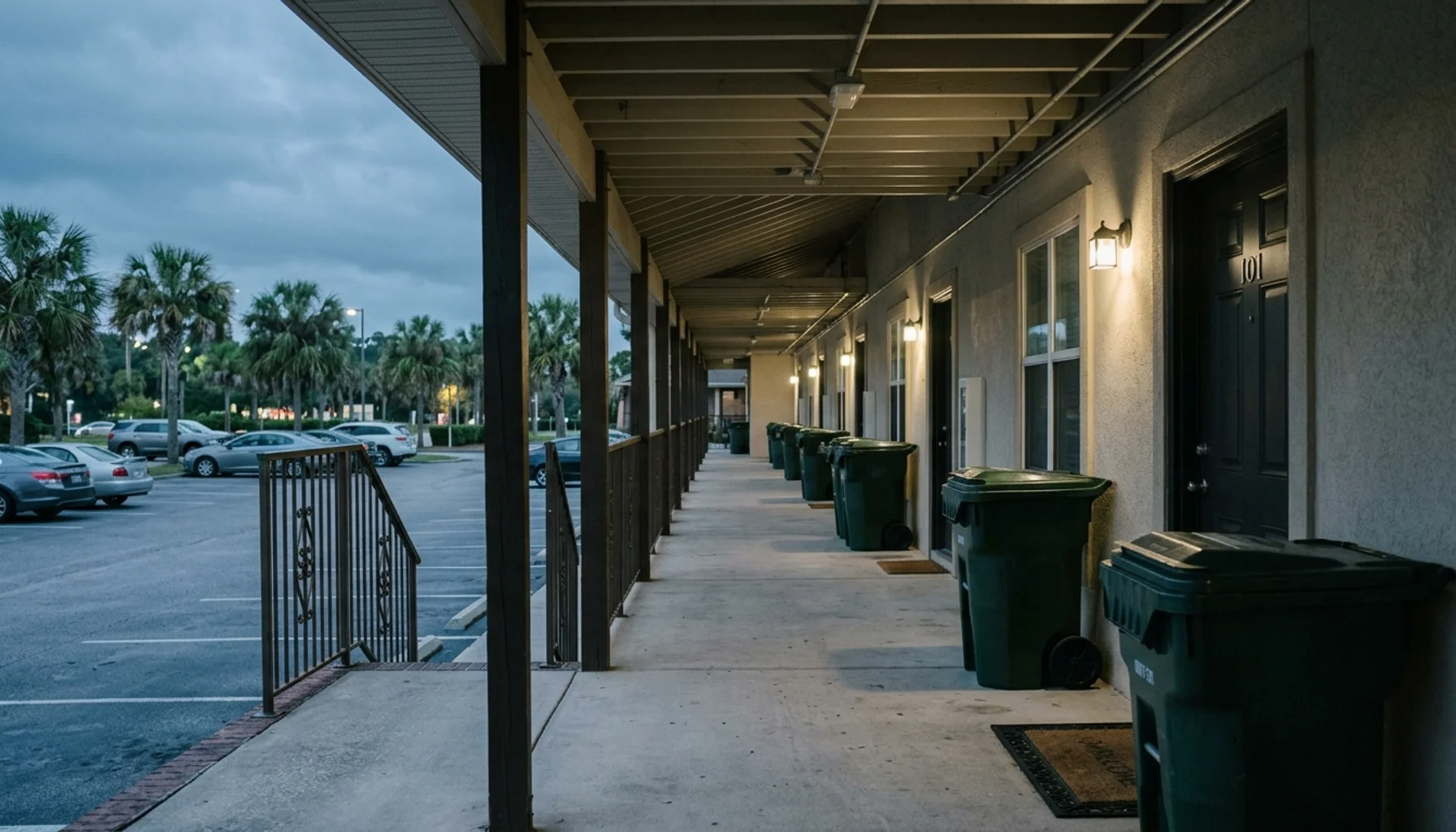
If chasing down trash complaints or bin compliance issues has taken up more of your week than it should, get started with Trash Day Made Easy and request a service quote, available Monday through Friday for every property type across Charleston and Atlanta.
Content powered by inkSTR.co