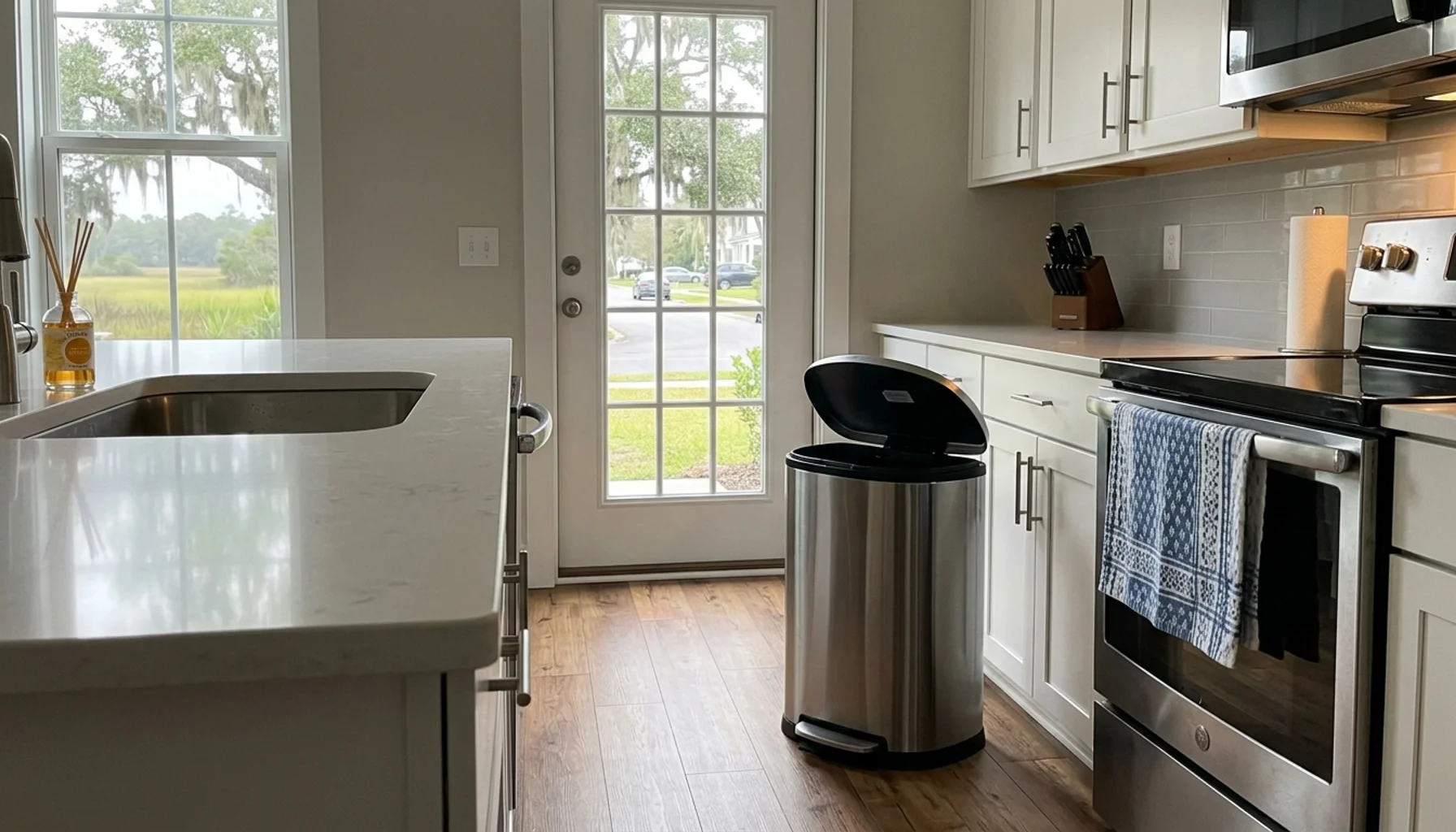
Short-term rentals get bad reviews over trash and cleanliness because guests interpret visible waste and lingering odors as evidence of a poorly maintained property, even when the rest of the unit is spotless. A missed trash pickup or a bag left by the door is often the single detail that tanks an otherwise strong stay.
Key Takeaways
- Guests use visible trash and sticky surfaces as proxy evidence that "hidden" areas like linens and HVAC systems might also be unclean, based on patterns seen across guest complaint data.
- Charleston, SC short-term rentals averaged 65% occupancy in the trailing 12 months across 3,368 active listings, per market data from 2026, with guests booking roughly 42 days ahead. Fast, reliable turnovers matter more than ever.
- Guest behavior research shows a persistent gap between host expectations and guest checkout habits: many guests don't consider taking out the rubbish part of their responsibility before leaving.
- Common hidden-trash spots include the cabinet under the bathroom sink, bedside-table drawers, and the gap beside the refrigerator. These are frequently missed during rushed turnovers and become the source of one-star reviews.
- Charleston-area short-term rentals have seen strong year-over-year revenue growth, which raises the stakes for operators who lose bookings to preventable cleanliness complaints.
- A structured trash removal system is the fix other management companies rarely mention: turnover deadlines, photo verification, and a dedicated waste vendor reduce the odds of a trash-related review entirely.
If you manage a short-term rental anywhere from the Charleston Historic District to Sullivan's Island, you already know the sinking feeling of opening a new one-star review and seeing the word "trash" in the first sentence. It happens more than most operators want to admit, and it rarely has anything to do with the property itself.
At Trash Day Made Easy, we work with short-term rental operators across the Charleston metro who deal with exactly this problem: a guest checks out, a cleaner has ninety minutes to turn the unit before check-in, and something gets missed. Usually it's trash. Sometimes it's the smell trash leaves behind even after the bag is gone.
This guide breaks down why trash and cleanliness complaints dominate short-term rental reviews in 2026, what separates normal turnover mess from a genuine cleanliness failure, and how a dedicated waste removal process prevents the complaint from happening in the first place.
What Makes Trash and Cleanliness the Top Cause of Bad Short-Term Rental Reviews?
Trash and cleanliness dominate short-term rental reviews because they are the most visible, most immediate signal a guest encounters upon arrival. A guest cannot assess whether the HVAC filter was changed or the mattress was rotated, but they can smell a full trash can or see crumbs in a couch cushion within the first sixty seconds of walking in.
Industry research consistently ranks cleanliness among the top guest complaints across short-term rental platforms, frequently cited alongside internet connectivity and general property maintenance. Guests treat visible trash as a proxy for the entire property's condition. A sticky remote or old food in the microwave signals to the guest that the host or cleaner rushed the turnover, and that suspicion extends to areas they cannot inspect, like bed linens or the inside of the dishwasher.
This psychology explains why a single overflowing bin can generate a review that reads like the whole property failed inspection. Guests are not grading on a curve. Operators who treat trash removal as an afterthought, rather than a scheduled, verified step in the turnover process, absorb a disproportionate share of one and two-star reviews relative to the actual severity of the issue.
What Counts as Normal Turnover Trash Versus Excessive Trash?
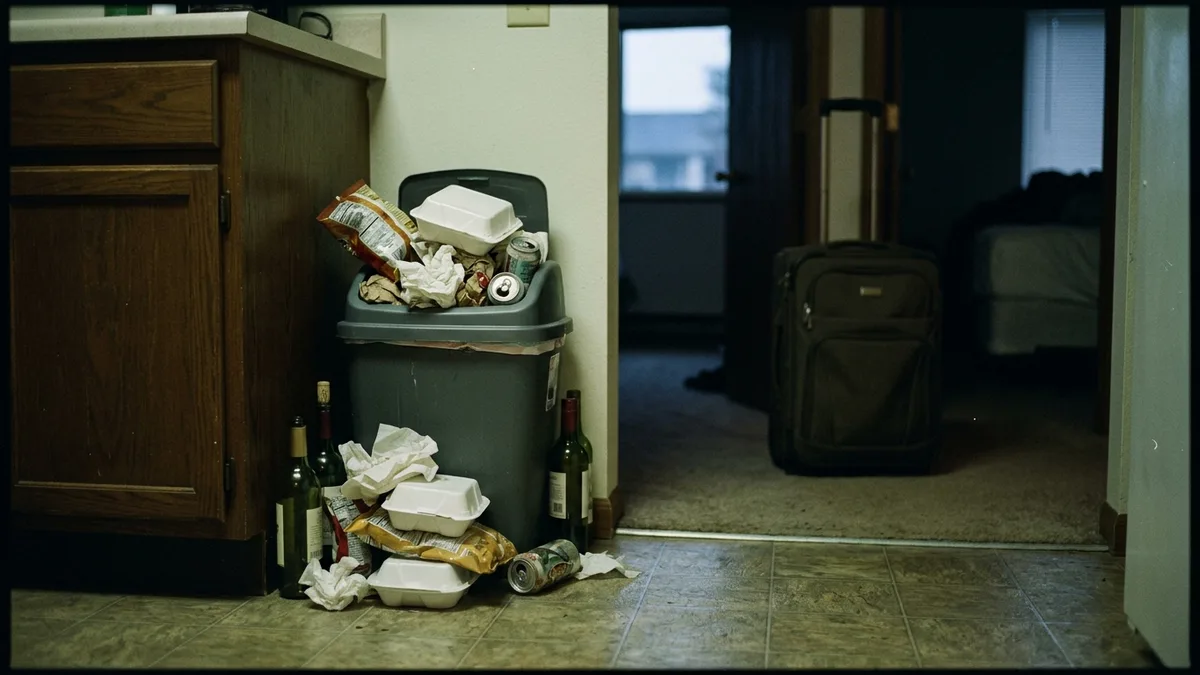
Normal turnover trash is the ordinary household waste one or two guests generate during a typical stay: food packaging, beverage containers, and bathroom trash. Excessive trash refers to waste that exceeds what a reasonable stay would produce, or trash left in places outside the designated receptacle, such as bagged garbage on the porch or cardboard piled in a closet.
Most host guidelines, including those from other services in the area, distinguish between the two. A weekend stay for four guests that fills one kitchen bag is normal. A weeklong stay that leaves five overflowing bags with pizza boxes stacked on the counter is excessive, and it usually indicates the guest either misunderstood checkout expectations or simply ignored them.
The distinction matters operationally. If your cleaner walks into a unit with excessive trash, the turnover clock you built your schedule around falls apart immediately. A ninety-minute turnover becomes a three-hour turnover, and the next guest either checks in late or checks into a rushed job that skips a room. This is precisely where a dedicated, on-demand trash removal service earns its keep: it absorbs the excessive-trash scenario without derailing the cleaner's schedule, which is a service Trash Day Made Easy builds specifically for short-term rental turnover cycles across the Charleston market.
Where Does Excessive Trash Most Often Come From?
Group bookings and events like bachelorette weekends on Isle of Palms or Sullivan's Island are the most common sources of excessive trash. Longer stays and larger guest counts compound the volume, and unclear house rules about checkout expectations make the problem worse.
Why Do Guests Assume Trash Problems Mean the Whole Property Is Dirty?
Guests use visible trash and surface-level cleanliness failures as evidence for judging the entire property's hygiene, including areas they never physically inspect. This is a documented pattern in guest behavior research: when a traveler encounters one obvious lapse, like a full trash can or a lingering odor, they extend that judgment to bedrooms, linens, and HVAC systems they have no way to verify.
A large-scale review analysis covering roughly 461,509 short-term rental reviews across the United States, United Kingdom, and Spain between 2020 and 2026 found that hygiene and cleanliness topics ranked above both aesthetics and price in guest sentiment. Guests forgive a dated couch far more readily than they forgive a dirty bathroom or a trash smell.
Odor is an underrated trigger. Musty HVAC systems, damp towels left in a hamper, and mildew in a coastal condo create a sensory red flag before a guest sees anything visually wrong. On the coast, humidity accelerates every one of these issues, which is exactly why properties near Sullivan's Island and James Island need more aggressive odor management than inland units.
A guest who mentions "the trash was overflowing" in a review is almost always telling you they also worried about what else was missed, even if they never say so directly.
How Do Cleaning Fees Affect Guest Expectations Around Trash?
Cleaning fees raise guest expectations to something closer to hotel-level service, so any visible trash or leftover mess feels like a broken promise rather than a minor inconvenience. A guest who pays a dedicated cleaning fee expects to walk into a unit that shows no evidence anyone else was ever there.
This creates a psychological trap for hosts. Charging a cleaning fee signals professionalism, but it also removes the guest's tolerance for imperfection. A guest staying somewhere free of a cleaning fee might shrug off a stray hair in the shower. A guest who paid a specific line-item cleaning charge treats the same hair as proof they were overcharged for undelivered service.
The value equation around trash removal becomes sharper as a result. Guests audit whether the fee they paid was earned. Operators who bundle a professional, photo-verified waste removal process into their turnover routine can point to that documentation if a dispute arises over the cleaning fee, which is a trust signal most independent cleaners cannot offer on their own.
What Does a Trash-Related Review Cost a Short-Term Rental Operator?
A trash-related bad review costs a short-term rental operator lost future bookings and reduced search ranking on booking platforms, and in many cases it triggers a formal refund request. Booking algorithms weight recent reviews heavily, so a single one-star cleanliness complaint can suppress a listing's visibility for weeks even after the underlying issue is fixed.
Charleston's short-term rental market makes this risk more expensive than it might be elsewhere. Charleston, SC vacation rentals averaged 65% occupancy over the trailing 12 months across 3,368 active listings, according to market data from 2026, up 5.0% year over year. North Charleston short-term rentals have also seen strong year-over-year revenue growth. Meanwhile, supply in nearby Isle of Palms grew between 17% and 30% year-over-year depending on the measurement window, meaning more competing listings for every guest search.
In a market with rising supply and rising occupancy expectations, a preventable trash complaint is not a minor annoyance. It is a direct hit to revenue at exactly the moment competition for guest attention is intensifying. Guest confidence in a listing's cleanliness reputation can evaporate fast and take longer to rebuild than it took to lose.
How Should Short-Term Rental Operators Handle Trash Between Guests?
You should treat trash removal as a scheduled, verified step in the turnover process, separate from general cleaning, rather than assuming the cleaning crew will handle it as an afterthought. This means building a specific checkpoint for waste removal into every turnover, with confirmation that it happened before the next guest arrives.
Here is a practical turnover sequence that prevents most trash-related complaints:
- Pre-arrival inspection first. Before cleaning begins, walk the unit and photograph any leftover guest items, damage, or excessive trash. This documents the prior guest's condition and protects you if a dispute arises.
- Remove all trash before deep cleaning starts. Pull every bin, check the three most commonly missed hidden-trash spots, the cabinet under the bathroom sink, bedside-table drawers, and the space beside the refrigerator, and bag everything before wiping a single surface.
- Stage fresh liners and stocked supplies. Reline every bin with a correctly sized bag, and confirm toilet paper, hand soap, dish soap, and paper towels are stocked at host-ready levels.
- Schedule trash pickup on a fixed nightly or on-demand basis. Do not rely on the cleaner to personally haul bags to a dumpster or curb between jobs. A dedicated valet trash or on-demand pickup service removes this burden and prevents delays when a cleaner is already behind schedule.
- Photo-verify the completed turnover. Document the empty bins, cleared counters, and staged supplies before locking up. This closes the loop and gives you evidence if a guest later disputes the property's condition.
- Track root causes after every trash-related complaint. If a review mentions trash more than once in a quarter, look for a pattern: same cleaner, same property, or a turnover window that's too tight.
This is the exact coordination problem Trash Day Made Easy was built to solve for short-term rental operators managing turnover across the Charleston metro. On-demand trash removal and bulk item pickup integrate directly into make-ready cycles, so a property is fully cleared before the next guest arrives, without you needing to coordinate a separate pickup or wait on municipal collection.
What Trash Logistics Challenges Are Unique to Coastal Charleston Rentals?
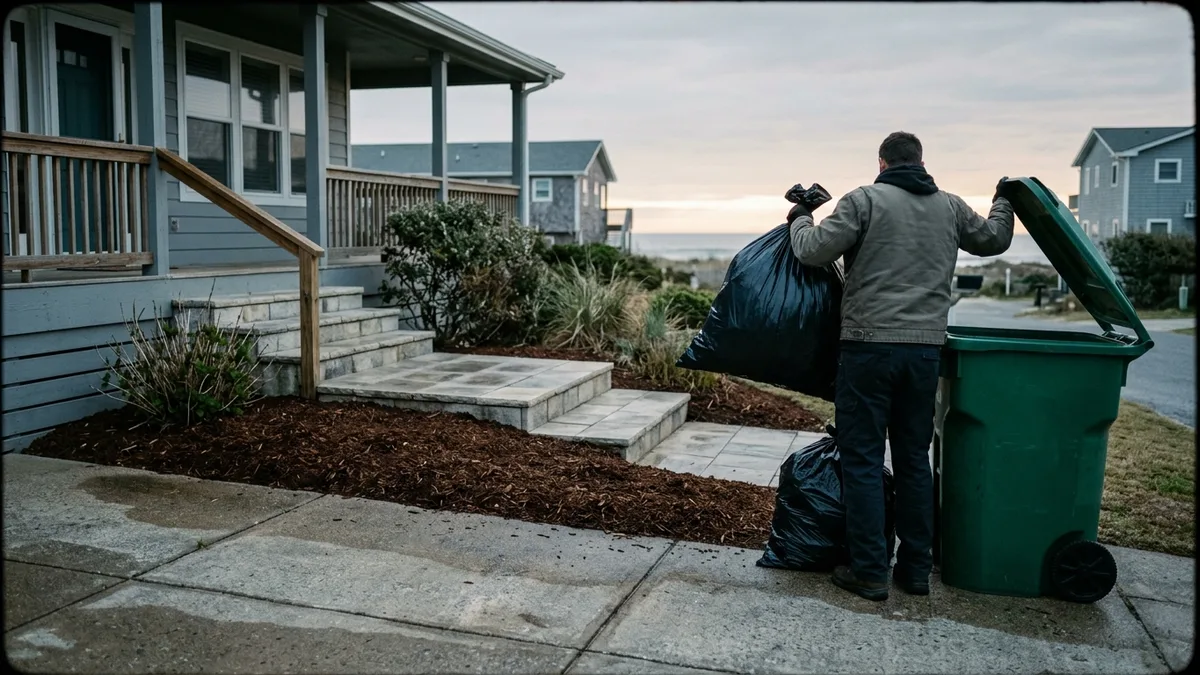
Coastal Charleston short-term rentals face trash logistics challenges that inland properties rarely encounter, including limited dumpster access and humidity-driven odor buildup. Properties on Sullivan's Island, Isle of Palms, and Johns Island often share dumpster enclosures with neighboring units or rely on curbside pickup with strict scheduling windows, which does not align well with the unpredictable checkout times typical of short-term rentals.
A guest checking out on a Sunday when municipal pickup runs Tuesday and Friday leaves trash sitting for days, attracting insects and odor in Charleston's humid climate. Wildlife exposure is a genuine operational concern too. Improperly secured bins on the barrier islands can attract raccoons overnight, leaving scattered trash across a yard by morning, which is a guest complaint no host wants to explain.
Recycling rules add another layer of complexity for hosts trying to keep guests happy while staying compliant with local ordinances. Guests unfamiliar with local sorting requirements often mix everything into one bag, leaving the host or cleaner to sort it after the fact.
Because these challenges vary so much by location, waste logistics planning has to be property-specific, not portfolio-wide. A single-family rental on James Island has different dumpster access than a condo on the Charleston peninsula. If you manage multiple properties across these submarkets, you benefit from a single waste vendor who understands the specific pickup logistics of each address, rather than coordinating municipal schedules individually for every unit.
Trash and Cleanliness Complaints: A Comparison of Common Failure Points
The table below breaks down the most frequently cited trash and cleanliness complaint categories, what typically causes them, and the operational fix that prevents recurrence.
| Complaint Category | Common Cause | Operational Fix |
|---|---|---|
| Overflowing kitchen or bathroom trash | Rushed turnover, bins not checked before cleaning began | Mandatory trash-first sequence before deep cleaning starts |
| Lingering odor (musty, mildew, stale food) | Damp towels, HVAC issues, humidity in coastal units | Odor check as a distinct inspection step, HVAC filter schedule |
| Trash left outside on porch or balcony | Guest confusion about pickup day, no clear disposal instructions | Clear house rules plus on-demand pickup instead of guest self-haul |
| Excessive trash from group or multi-night stays | High guest count, unclear checkout expectations | House rules specifying trash disposal, on-demand bulk removal available |
| Hidden trash in drawers or under sinks | Standard cleaning checklist skips low-visibility spots | Checklist item specifically covering the three most commonly missed spots |
| Wildlife-scattered trash (coastal properties) | Unsecured bins overnight near barrier islands | Secured bin storage, scheduled pickup rather than overnight sit time |
How Does Photo-Verified Trash Removal Protect Your Review Score?
Photo-verified trash removal is a documentation process where each waste collection or turnover cleanup is confirmed with a timestamped photo, giving you proof that service happened as scheduled. This matters directly for review protection because it eliminates the guesswork of whether a cleaner or vendor actually completed the trash removal step before the next guest arrived.
For example, if a guest leaves a one-star review claiming the unit smelled like trash on arrival, you can review the timestamp and image from that turnover to determine whether the issue originated with the cleaning crew, a delayed pickup, or something the guest caused after check-in. Without that record, every dispute becomes a guessing game.
This is the core differentiator behind the waste operations Trash Day Made Easy provides for short-term rental operators, multifamily communities, and build-to-rent developments across Charleston and Atlanta. Every collection visit is photo-verified at the door, giving you documented confirmation without needing to follow up or issue reminders to a vendor. For a portfolio spread across multiple neighborhoods, from the Charleston Historic District to Sullivan's Island, that documentation becomes the single source of truth when a guest complaint needs to be investigated.
What Should You Prioritize First If Trash Complaints Are Already Hurting Your Reviews?
If trash complaints are already appearing in your reviews, the first priority is separating cleaning failures from waste-logistics failures, because they require completely different fixes. A dirty bathroom is a cleaner training issue. A trash bag sitting on the porch three days after checkout is a logistics issue, and no amount of cleaner training solves it.
Start with these four steps, in order:
- Audit your last ten reviews for the specific complaint language. "Smelled bad" points to odor and HVAC. "Trash on the counter" points to a rushed cleaner. "Bags outside for days" points to pickup logistics, not cleaning quality.
- Separate your cleaning checklist from your trash removal schedule. Do not assume one person handles both well under time pressure. Build them as two distinct, trackable steps.
- Bring in on-demand support for bulk or turnover trash instead of relying on your cleaner to haul it. A cleaner's time is best spent cleaning, not driving bags to a dumpster across a property.
- Request documentation from whoever handles your waste removal. If your current process has no photo confirmation, you have no way to verify service completion, which means you cannot rule your own operation out when a complaint comes in.
If you manage a scattered portfolio across the Charleston metro, from multifamily buildings to individual short-term rental units, you'll often find the biggest single improvement comes from consolidating waste logistics under one vendor rather than patching together municipal pickup, a cleaner's personal effort, and occasional bulk hauls.
Frequently Asked Questions
How many nights a week does valet trash service typically run?
Valet trash service for multifamily communities typically runs on a nightly schedule, five nights per week, though some properties opt for fewer nights depending on resident volume and community size. For short-term rental operators, service is usually scheduled around turnover dates rather than a fixed weekly calendar, since checkout timing varies. Trash Day Made Easy offers both nightly scheduled collection for multifamily communities and on-demand pickup for short-term rental turnovers across Charleston and Atlanta.
Do residents or guests pay for valet trash service directly?
In most multifamily communities, valet trash is billed to residents as a monthly amenity fee set by the property, separate from the vendor's contract with the property manager. For short-term rentals, trash removal costs are typically absorbed by the host as part of turnover operations rather than charged to guests directly. Pricing structures vary by property type, so it's worth requesting a direct quote for your specific portfolio.
What is trash reimbursement for an apartment community?
Trash reimbursement generally refers to a line-item charge some multifamily properties pass through to residents to cover the cost of valet trash or waste removal services, separate from base rent. This is distinct from a bulk item removal charge, which typically applies to specific move-out or excess-waste situations. Property managers should confirm exact billing structures with their accounting team, as practices vary by property and lease agreement.
Who is responsible for picking up trash between short-term rental guests?
Responsibility for trash pickup between short-term rental guests typically falls to the host or their designated cleaning and turnover team, not the departing or arriving guest. Relying solely on a cleaner to also haul trash often creates scheduling bottlenecks, especially during back-to-back turnovers. Many operators in the Charleston market now use a dedicated on-demand trash removal service specifically to separate this task from the cleaning checklist.
How much do valet trash companies charge apartment communities?
Valet trash pricing for apartment communities varies based on unit count, service frequency, and portfolio scale, and most providers quote pricing per property rather than publishing flat rates. Multifamily and portfolio pricing is typically quote-based to account for building layout and collection logistics. Trash Day Made Easy provides quotes Monday through Friday for properties ranging from 10 units to more than 1,000 units across Charleston and Atlanta.
How much does trash removal typically cost per month for a rental property?
Monthly trash service costs for an individual rental property depend heavily on service type, frequency, and location, with residential valet trash service in select Charleston neighborhoods starting from $49 per month through Trash Day Made Easy. Multifamily and short-term rental portfolio pricing is quote-based due to variation in unit count and turnover frequency. Requesting a direct quote is the most reliable way to get an accurate monthly figure for your specific property.
Can a trash removal service be scheduled specifically around guest checkout times instead of a fixed weekly day?
Yes, on-demand trash removal services can be scheduled around irregular guest checkout times rather than a fixed weekly collection day, which is essential for short-term rental operators managing unpredictable turnover calendars. Trash Day Made Easy offers on-demand property waste support specifically for this scenario, integrating with make-ready and turnover cycles across Charleston and Atlanta short-term rental properties.
Does hiring a dedicated trash removal vendor actually reduce negative reviews about cleanliness?
A dedicated trash removal vendor reduces the likelihood of cleanliness-related complaints by separating waste logistics from the cleaning checklist, which prevents the two most common failure points, rushed cleaning and delayed pickup, from compounding each other. Photo-verified service also gives you documentation to identify whether a complaint originated with cleaning quality or waste logistics. No single fix eliminates every complaint, but consistent documented trash removal addresses one of the most frequently cited causes of negative short-term rental reviews.
Conclusion: Fixing Trash Complaints Starts With Separating Cleaning From Logistics
Trash and cleanliness complaints dominate short-term rental reviews because guests use visible waste as evidence for the entire property's condition, and in 2026's increasingly competitive Charleston market, with occupancy at 65% and rising and supply growing fast on the barrier islands, a preventable one-star review costs more than it used to. The fix is not a longer cleaning checklist. It's treating trash removal as its own scheduled, documented step, separate from cleaning, with proof that it happened.
Operators who consolidate that logistics problem under a single, photo-verified waste vendor consistently report fewer disputes and cleaner turnovers, because the guesswork disappears. That's the exact gap Trash Day Made Easy fills for short-term rental operators, multifamily communities, and build-to-rent developments across the Charleston metro and Atlanta, GA, moving into 2026 and beyond.

If turnover trash keeps threatening your review score, on-demand trash removal and bulk item pickup from Trash Day Made Easy integrates directly into your make-ready cycle, so every unit is clear before the next guest checks in. Request a service quote Monday through Friday to see how it fits your Charleston or Atlanta portfolio.
Content powered by inkSTR.co